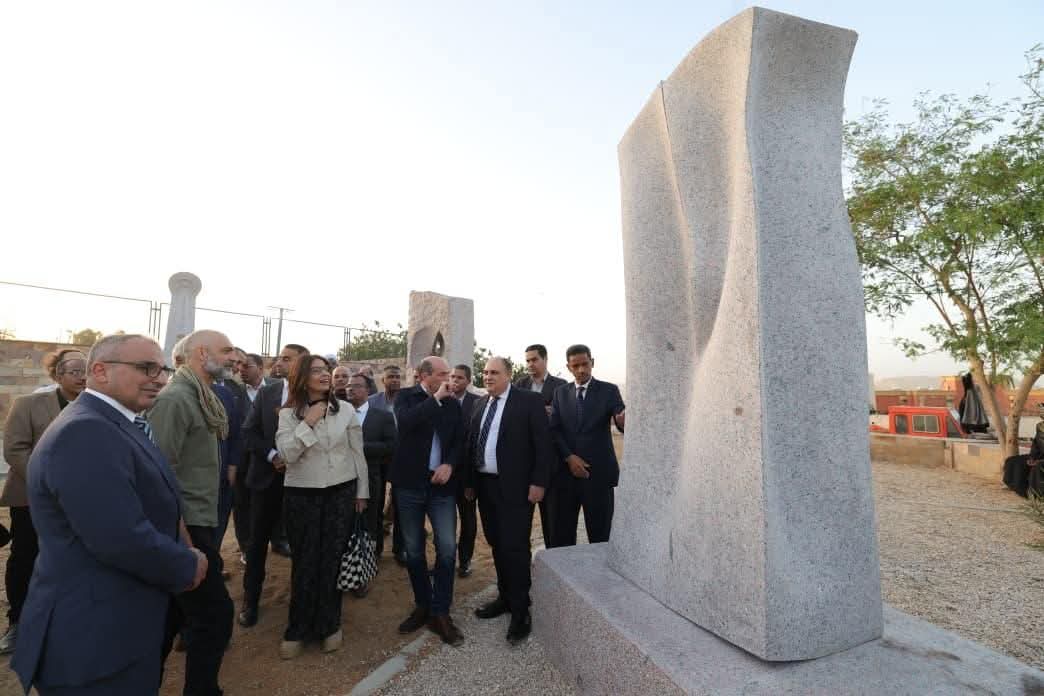

Egypt is stepping up efforts to transform public spaces through art and urban design, as the Ministry of Culture approved the continued display of sculptures from the renowned Aswan International Sculpture Symposium in key squares across the Suez governorate.
The decision, announced by Culture Minister Dr. Gehan Zaki, reflects a broader strategy to enhance the visual identity of Egyptian cities while preserving their architectural character.

Public Art at the Center of Urban Renewal
Under the plan, three sculptures created as part of the Aswan Symposium, an internationally recognized artistic event, will remain on display in Suez’s public squares. The works are part of a long-term collaboration between the Ministry of Culture and local governorates aimed at beautifying urban spaces and fostering cultural engagement.
The Cultural Development Fund, which oversees the symposium, will conduct periodic reviews to ensure the artworks are maintained, while local authorities in Suez will be responsible for their day-to-day care.
Zaki described the initiative as part of a national push to integrate art into everyday life, turning public squares into cultural landmarks that reflect both heritage and contemporary creativity.
Strengthening Coordination with Governorates
The minister emphasized that the coming period will see expanded cooperation between the National Organization for Urban Harmony and Egypt’s governorates to improve public spaces across the country.
The goal, she said, is to implement architectural and visual designs tailored to the unique identity of each province, ensuring that development efforts align with local history and character while maintaining the integrity of areas with distinctive architectural value.
Preserving Heritage While Modernizing Cities
The initiative is part of a wider national framework focused on protecting Egypt’s architectural heritage while addressing urban challenges such as visual pollution and unplanned development.
Projects led by the National Organization for Urban Harmony span Cairo and other governorates, combining restoration, planning regulations, and public awareness campaigns to safeguard historically significant buildings and enhance the urban landscape.
Zaki underscored that preserving Egypt’s “visual memory” is central to these efforts, noting that cultural identity plays a critical role in sustainable urban development.
By extending the presence of Aswan Symposium works into cities like Suez, the government aims to bridge cultural production with local development, ensuring that art is not confined to galleries but embedded within the fabric of daily life.