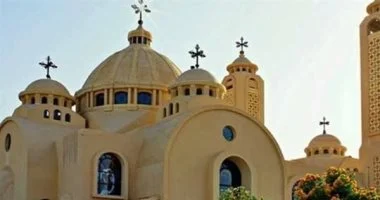


The debate surrounding the role of women in the higher echelons of church leadership continues to echo through the historic halls of Egyptian Christianity. For two millennia, the visual and spiritual landscape of these institutions has been deeply tied to ancient traditions. Today, the question of female ordination—specifically the appointment of women as priests or pastors—has transformed from academic theology into an institutional crossroads managed by councils, synods, and patriarchates.
While traditional institutions like the Coptic Orthodox Church remain firmly rooted in apostolic tradition that restricts the priesthood to men, the Evangelical community in Egypt navigates a complex intellectual journey. This exploration attempts to balance contemporary social evolution, theological interpretation, and community cohesion.

The Evangelical Presbyterian Church: Institutional Pause and Postponement
Recent sessions of the Nile Evangelical Synod, the supreme governing body of the Evangelical Presbyterian Church of Egypt, placed the issue of female ordination at the top of the agenda. In a decisive move to maintain institutional unity, Reverend Rifaat Fekry, pastor of the Evangelical Church in Rod El Farag, announced that the Synod has officially resolved to close the floor for discussion on this matter for the foreseeable future.
This resolution was passed by a clear majority, reflecting a strategic desire to preserve ecclesiastical solidarity and avoid internal polarization. According to the Reverend Dr. Andrea Zaki, President of the Protestant Community of Egypt, the Evangelical Presbyterian Church experiences three internal perspectives regarding this discourse:
An Absolute Refusal View: This perspective maintains that the ordination of women is not permissible, drawing upon specific theological interpretations and traditional social structures.
A Centrist View: This standpoint accepts the principle of female ordination from an academic theological stance but advises caution regarding immediate social implementation, preferring to wait for broader cultural consensus.
A Reformist View: This group advocates for immediate ordination, viewing spiritual capacity and calling as the sole criteria for pastoral leadership, irrespective of gender.
The Coptic Orthodox Church: Ordination for Men, Consecration for Women
The Coptic Orthodox Church of Alexandria maintains a definitive stance on this issue, grounded in historic liturgical and canonical frameworks. His Holiness Pope Tawadros II, Pope of Alexandria and Patriarch of the See of St. Mark, clarified the boundaries of holy orders in an official publication in El-Keraza Magazine.
His Holiness emphasized that within Orthodox theology, the priesthood is understood as a divine calling and a sacramental mystery, rather than a civic right or a career path. The framework outlines two distinct paths:
Holy Orders (Deacon, Priest, Bishop): These offices remain reserved for men, in alignment with biblical precedents and apostolic tradition.
Consecration: The Church recognizes, values, and promotes the ministry of women through the official order of consecrated sisters and deaconesses. This dedicated path offers a structured avenue for full-time spiritual and community service without entry into the sacramental priesthood.
The Coptic Orthodox Church emphasizes that holy orders represent spiritual stewardship rather than hierarchical promotion, maintaining that the gender requirement for the priesthood is a core component of the liturgical order preserved since the early centuries.
The Episcopal Church: Pastoral Stewardship and Global-Local Balance
The Episcopal/Anglican Church in Egypt occupies a unique position within this theological landscape. While several Western provinces of the global Anglican Communion have adopted policies permitting the consecration of women as priests and bishops, the Episcopal/Anglican Diocese of Egypt, North Africa and the Horn of Africa preserves its distinct Eastern identity.
Leadership within the diocese affirms that women constitute an integral pillar of the church community, driving essential developmental, educational, and pastoral initiatives. While women hold significant leadership and ministerial roles within the diocese, the institution does not grant them priestly ordination within the Egyptian territory. This approach respects local cultural dynamics and maintains ecumenical relations with other historic sister churches in the region.
Theology, Culture, and the Road Ahead
The conversation surrounding the role of women in church leadership in Egypt is influenced by global discussions on gender equity and institutional representation. However, the practical application remains closely linked to local community dynamics. Reverend Dr. Andrea Zaki noted that various Protestant denominations operate under distinct administrative autonomy, meaning there is no single approach across the entire evangelical spectrum.
The current institutional consensus focuses on maintaining stability and ensuring that differences in opinion do not disrupt community harmony. The decision by some institutions to postpone further debate serves as an indicator that major shifts in religious authority require deep, widespread readiness within the community.
A Continuing Journey
The discussion regarding female ordination in Egyptian churches rests at the intersection of theological text and cultural reality. While traditional churches continue to focus on historic practices, the Evangelical community keeps the conversation paused, waiting for future developments. For now, the focus across all denominations remains on expanding the vital, day-to-day contributions of women in service, education, and community development.