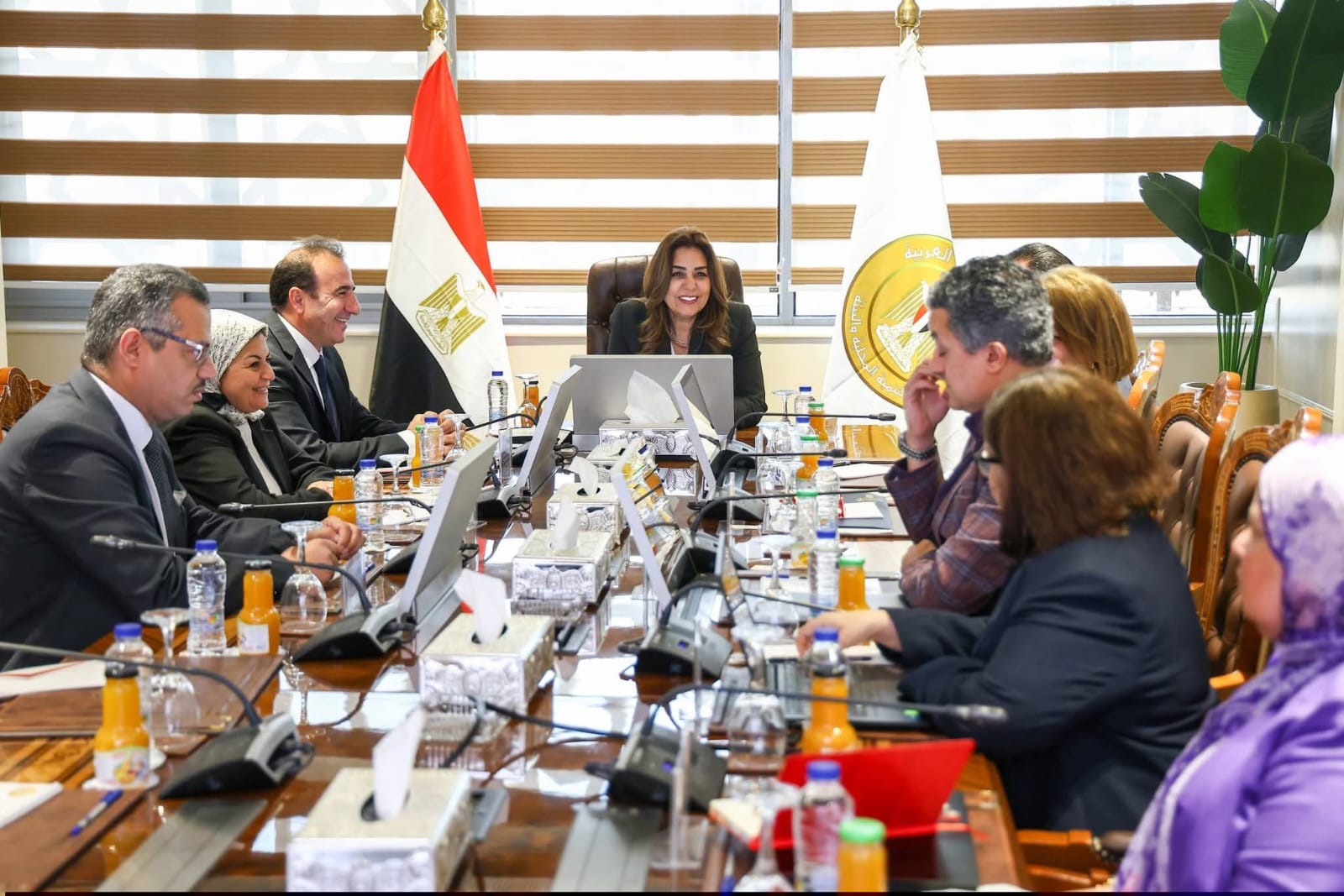


Egypt is accelerating efforts to embed sustainability into its economic framework, as the Ministry of Local Development and Environment strengthens cooperation with the banking sector to scale climate finance and develop a new generation of sustainability professionals.
In a high-level meeting, Minister of Local Development and Environment Dr. Manal Awad met with Dr. Dalia Abdel Kader, head of sustainable finance at the Commercial International Bank and chair of sustainable finance at the Federation of Egyptian Banks, to explore joint initiatives under a proposed Sustainable Finance Alliance and the national “Next Gen” program.

The talks reflect Egypt’s broader push to align financial systems with climate priorities under Vision 2030 and the National Climate Change Strategy.
Banking Sector Seen as Key Driver of Sustainability
Awad emphasized that partnership with the banking sector is critical to unlocking Egypt’s competitive advantages across its provinces, particularly by strengthening local value chains and supporting export-oriented production.
She highlighted opportunities to transform structural challenges—such as water scarcity, agriculture resilience, food security, and energy—into investment opportunities. These efforts would involve entrepreneurs, expand financial inclusion, and integrate the informal sector into formal economic activity.
“The banking sector can play a decisive role in translating national climate strategies into viable business models,” Awad said, noting that access to finance remains a central pillar in scaling sustainable development projects.
Focus on Localized Development and Value Chains
A key proposal discussed involves launching pilot projects based on each governorate’s unique economic strengths. The model would support end-to-end value chains, from production to export, with the goal of achieving self-sufficiency in select crops while boosting global competitiveness.
Egypt has already tested similar approaches in Upper Egypt, including olive processing in Fayoum, molasses production in Qena, and dried tomato manufacturing in Aswan—projects that leverage local resources and create jobs.
Sustainable Fashion and Circular Economy Initiatives
The ministry is also seeking collaboration with banks on emerging sectors such as sustainable fashion. One initiative involves developing an environmental awareness center in Maadi’s Maasara district into a creative hub focused on eco-friendly design, recycling, and women’s economic empowerment.
The project, supported by international development partners, reflects Egypt’s growing interest in circular economy models that reduce waste while generating economic value.
“Next Gen” Program Targets Skills Gap in Green Finance
A central pillar of the discussions was the “Next Gen” initiative, launched by the Federation of Egyptian Banks to address a critical talent gap in environmental and social risk management (ESRM).
The program targets final-year university students and recent graduates, offering practical training to bridge the divide between academic study and labor market needs. Participants will gain hands-on experience in sustainable finance, preparing them for careers in Egypt’s banking sector.
Awad stressed the importance of building a workforce capable of managing environmental risks within financial institutions, a prerequisite for scaling climate finance.
“There is an urgent need to create a generation equipped to evaluate environmental risks and support sustainable lending,” she said.
Aligning Policy, Finance, and Climate Goals
The proposed Sustainable Finance Alliance aims to formalize cooperation between government entities and financial institutions, ensuring that climate adaptation and mitigation projects receive the technical and financial backing they require.
Officials also discussed leveraging Egypt’s interactive climate risk mapping tools to guide investment decisions across sectors, helping banks identify both risks and opportunities.
For Egypt, the initiative signals a deeper integration of environmental priorities into economic planning—positioning the country to attract green investment while addressing pressing climate challenges.
As policymakers and financial leaders align strategies, the success of these initiatives may depend on execution—particularly in mobilizing capital, building technical capacity, and ensuring that sustainability goals translate into measurable economic outcomes.