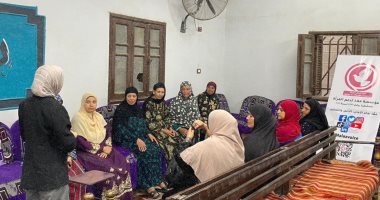

The Malaz Foundation for Women’s Support has launched specialized training on psychological first aid and building resilience in the face of stress and crises, as part of its protection and psychosocial support program.
The initiative focuses on equipping women and girls with practical skills to respond to psychological pressure and difficult situations while providing safe, respectful and compassionate support. By expanding access to basic psychological first aid knowledge, the program places women’s wellbeing, dignity and ability to respond to crises at the center of community support.

Building Awareness of Psychological First Aid
Psychological first aid is increasingly recognized as an essential humanitarian response for people experiencing distress following crises or intense pressure. For women and girls, economic and social challenges can create additional pressures while access to specialized mental health services may remain limited.
Against this backdrop, the Malaz Foundation’s training seeks to strengthen women’s ability to recognize psychological distress, respond appropriately and offer initial support without causing further harm.
The two-day program combined theoretical learning with practical exercises. Participants took part in discussions, role-playing activities and group work designed to translate key concepts into skills that can be applied in everyday situations and within their communities.
Practical Skills for Supporting Women and Communities
The training introduced participants to the principles and objectives of psychological first aid, as well as common psychological responses to stress and crisis situations.
It also addressed active listening, supportive communication and responsible ways of offering initial psychological assistance without judgment or compromising an individual’s privacy or dignity.
An important part of the training focused on recognizing situations that require professional intervention. Participants were introduced to the importance of safe referral mechanisms and understanding when specialized mental health services are needed.
These skills are particularly important for women who often play central roles in families and communities. Strengthening their capacity to respond to distress can help create wider networks of support and improve community resilience during difficult circumstances.
Mental Health as a Core Element of Women’s Empowerment
Radwa El-Khouly, Executive Director of the Malaz Foundation for Women’s Support, emphasized that investing in mental health has become an essential priority as women and girls face increasingly complex challenges.
She highlighted the connection between women’s empowerment and access to knowledge and practical skills that enable women to protect themselves, respond to difficult circumstances and support others in a safe and informed manner.
The foundation views psychological first aid as an important first layer of support during periods of crisis and stress. Its training approach is therefore designed not only to raise awareness but also to develop practical capabilities that women and girls can use in their families and local communities.
The First Stage of a Broader Protection and Psychosocial Support Program
The training represents the first stage of a broader program focused on protection and psychosocial support.
According to the foundation, subsequent stages will address more advanced areas, including psychosocial support techniques and approaches to dealing with trauma. The broader objective is to help develop community-based capacities capable of providing appropriate initial support and promoting a stronger culture of mental health awareness.
Through initiatives of this kind, the Malaz Foundation for Women’s Support is placing psychological wellbeing alongside protection, knowledge and skills as essential components of women’s empowerment.
For women and girls, access to mental health awareness is not simply about coping with difficult moments. It is also about building the confidence, knowledge and resilience needed to navigate challenges and contribute to stronger, more supportive communities.