
Long before social media transformed the way women build public profiles and reach audiences, Arab women were shaping public awareness through journalism, literature and cultural work.
Today, influencers and content creators dominate social media, while fashion, beauty products and brands often drive some of the most widely circulated content. It can therefore be difficult to imagine a time when women built their public presence through entirely different means. There were no smartphone cameras, likes or rapidly changing digital trends. The written word was one of the most important tools for reaching minds and contributing to public debate.
More than a century ago, Arab women were entering public life through journalism, writing and cultural activity at a time when women’s public presence was exceptional and surrounded by considerable challenges.
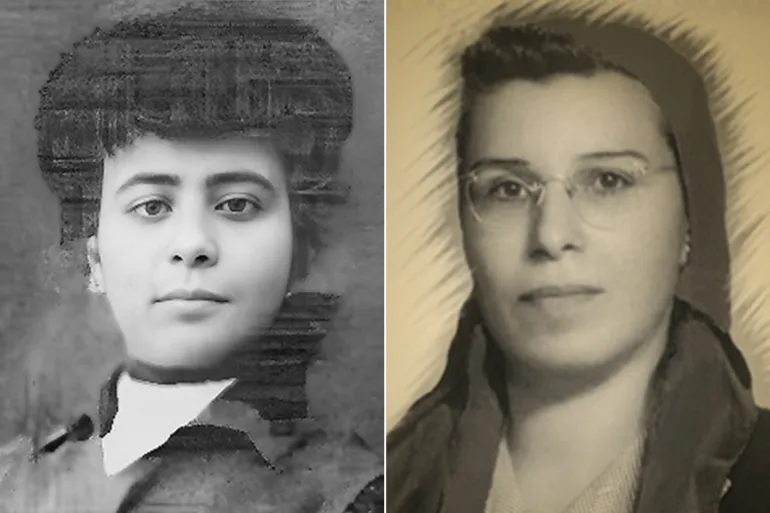
Among them were Syrian writers and journalists Mary Ajami and Widad Sakakini, whose work extended beyond their own era and helped establish a form of female public engagement grounded in knowledge, intellectual production and participation in social and cultural debates.
When Magazines Were the TikTok of Their Time
Today, a short video posted on Instagram or TikTok can become a trend within hours and reach millions of people. A single event can generate enormous online engagement, with audiences following everything from fashion and beauty to everyday details of a creator’s life.
At the beginning of the 20th century, however, newspapers and magazines were among the principal spaces where public opinion was shaped and questions surrounding education, culture and women’s role in society were discussed.
Articles were read at a slower pace, discussed in greater depth and allowed their influence to accumulate over time. Women’s magazines of that period were not limited to everyday matters. They provided platforms for shaping public awareness and opening discussions around social issues that had rarely been addressed so openly.
Mary Ajami: When the Written Word Became a Position
The concept of content creation has expanded dramatically in the digital age. A woman who posts a recipe, a beauty video, a hair-coloring tutorial or an ordinary moment from daily life can now be described as an influencer. Visibility is increasingly associated with reach, engagement and the speed at which content circulates.
More than a century ago, reaching an audience followed a very different path. Articles, positions and cultural debates provided the means through which women could build a public presence and contribute to intellectual life.
Mary Ajami emerged as one of Syria’s early female journalists and prominent women writers in the early 20th century. In 1910, she founded Al-Arous magazine in Damascus. At a time when women’s journalism was still in its early stages, establishing and editing a magazine headed by a woman was itself a significant development in a conservative society.
Al-Arous was not simply a light publication. It adopted a clear reformist orientation and addressed issues including women’s education, their right to participate in public life, literature and the wider Arab cultural renaissance.
Ajami also wrote for major Arab newspapers and magazines, becoming one of the relatively few women to enter the public sphere through journalism and writing.
Her work was not centered on personal celebrity. Instead, it was closely connected to social reform, cultural advancement and questions concerning women’s position in society, leaving her name associated with writing as a form of cultural engagement rather than simply a journalistic career.
Widad Sakakini: Writing as Critical Awareness
Widad Sakakini represented another important dimension of women’s participation in Arab cultural life. She went beyond literary writing to engage in literary criticism and intellectual essays at a time when these fields were largely dominated by male writers and critics.
Sakakini devoted much of her work to reading and analyzing modern Arabic literature and examining its transformations. She also wrote about the representation of women in literature and their position between lived reality and literary portrayal.
Her work was not limited to storytelling. Through criticism and analysis, she questioned literary texts and examined the cultural ideas embedded within them, giving her writing a distinctly critical character.
In a cultural environment in which women were often treated as subjects to be written about, Sakakini’s position as a female critic represented a significant shift. She was not merely appearing within the cultural narrative; she was also examining, interpreting and questioning that narrative.
Her legacy is therefore associated less with public spectacle and more with sustained intellectual work that placed Arab women in the position of readers, critics and participants in the production of cultural knowledge.
From Magazines to Social Media: Depth Versus Speed
Despite the enormous difference in time and technology, magazines of the past and social media platforms today share one fundamental characteristic: both provide channels through which people can reach audiences and influence public discussion.
The nature of that influence, however, has changed considerably.
During the era of Mary Ajami and Widad Sakakini, women’s public presence was closely associated with intellectual production and participation in cultural and social debates. Today, digital platforms tend to favor fast-moving content driven by images, promotion and immediate consumption, with fashion, beauty and lifestyle occupying a prominent place in the public digital space.
This creates a deeper contrast between the two eras. Influence is no longer necessarily associated with the depth of an idea but can instead depend on how quickly that idea, image or moment circulates.
The impact of earlier female pioneers was often measured by the knowledge and awareness their work left behind. Much contemporary digital visibility, by contrast, is measured through views, followers and immediate engagement.
From “Pioneer” to “Influencer”: How the Meaning of Influence Changed
In earlier periods, women who opened new paths in journalism, literature and intellectual life were often described as pioneers, a term associated with breaking new ground and contributing to social change.
Today, the term “influencer” has become dominant in many contexts, referring primarily to digital visibility, audience size and the ability to generate engagement.
As the terminology has changed, so too has the way influence is understood. The emphasis has shifted in many cases from ideas and positions toward images and immediate interaction, raising broader questions about what allows a person to leave a lasting mark on public memory.
Millions of followers may generate enormous visibility for contemporary influencers, but digital attention can also fade as trends change. By contrast, names such as Mary Ajami and Widad Sakakini remain part of the history of Arab cultural and intellectual life because their work was built around ideas, writing and sustained engagement with society.
The tools and eras may be radically different, but one distinction remains: influence is not measured by reach alone. Its longer-term significance can also be seen in what survives after the attention fades and continues to shape how later generations understand their society and its cultural history.