
Egypt is positioned to play a larger regional role in the beauty and digital influence industries through locally made products, according to Germine Amer, writer, media professional, and researcher in digital media and mass communication.
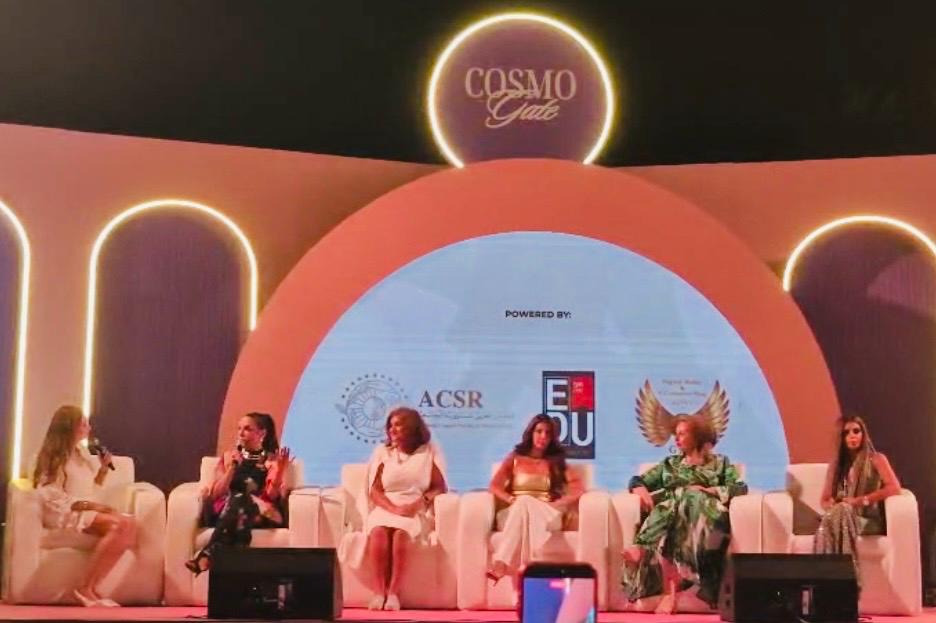
Speaking during the second edition of the Cosmo Gate Conference in Cairo on August 16, 2026, Amer emphasized that beauty has evolved into an integrated industry combining economics, technology, media, and social influence.
The conference brought together specialists in media, corporate communications, content creation, women’s empowerment, education, culture, sustainable development, and entrepreneurship. Participants included Dr. Randa Rizk, Dr. Nour El-Zein, Paula El-Sait, Yasmin Tharwat, and Germine Amer, with the session moderated by Dina Hosny.
Beauty Industry and Digital Influence
The session, titled “Leadership Through Influence in the Digital Age,” examined the beauty industry and the role of brands and influencers in shaping audience behavior and consumption patterns.
Participants discussed how women leaders can contribute to building influential brands and creating purposeful impact, as well as the growing relationship between brands, influencers, and consumers.
This relationship is increasingly reshaping the beauty industry as consumers move away from relying solely on traditional advertising and increasingly seek personal experiences and digital recommendations before making purchasing decisions.

Global Beauty Industry Expected to Reach $590 Billion by 2030
Participants reviewed global indicators reflecting the continued growth of the beauty industry, which is estimated at approximately $441 billion, with expectations that it will reach $590 billion by 2030, according to a 2026 McKinsey report.
The Middle East, particularly Saudi Arabia, the United Arab Emirates, and Egypt, was identified as one of the fastest-growing markets in the region amid changing consumption patterns, expanding e-commerce, and the growing influence of digital content.
Participants emphasized that Egypt has the capabilities to play a larger regional role in the beauty industry, supported by the growth and competitive quality of Egyptian brands under the “Made in Egypt” label.
Egyptian brands also benefit from their understanding of Arab consumers and their needs, their ability to build trust, and the continued development of e-commerce and social media platforms.
Germine Amer Highlights the Growing Role of Influencers
Germine Amer said influencer media has become one of the most important elements of the current and future specialized content economy within the beauty industry.
She cited research by Goldman Sachs estimating the size of the content economy at $250 billion, with expectations that it will reach $480 billion in 2027.
Amer explained that traditional advertising addressed consumers through a direct message, while influencers communicate through the experience itself, making them an important partner in shaping consumer behavior.
Social Media Is Redefining Beauty Standards
Amer also addressed the social impact of the beauty industry, particularly its influence on perceptions of women and men, with men increasingly becoming a competing consumer group for beauty and skincare products.
She highlighted the role of social media platforms in redefining beauty standards through both positive and negative forms of influence.
Social media can contribute to self-confidence and personal identity expression, but it can also promote idealized and unrealistic images of beauty.
The Risks of Digital Influence in Beauty
Amer warned that the risks associated with digital influence increase when the boundaries between personal experience, sponsorship and financial gain, and medical advice become unclear.
She stressed the importance of regulatory authorities in protecting consumers and ensuring that brands comply with applicable rules, while also emphasizing the need to raise public awareness about how to verify products before using them.
Germine Amer Proposes a “Triangle of Responsibility”
During the session, Amer introduced the concept of a “Triangle of Responsibility” to help organize the relationship between the beauty industry and digital influence.
The first side of the triangle is the brand, which bears responsibility for selecting the appropriate influencer based on specific criteria, including credibility, the nature of their audience, and the extent to which the influencer aligns with the brand’s values.
The second side is the influencer, who is responsible for transparency when publishing paid content, clearly distinguishing personal experience from medical information, and avoiding the promotion of products that could put audiences at risk.
The third side is represented by regulatory authorities, which are responsible for establishing rules, monitoring compliance, and addressing content or products that violate those rules.
Egypt’s Potential in the Regional Beauty Industry
The discussions at Cosmo Gate highlighted the expanding relationship between beauty, economic activity, digital content, and consumer influence.
For Egypt, the growth of local brands, the development of e-commerce and social media platforms, and the ability of Egyptian companies to understand Arab consumer needs were presented as factors supporting a larger regional role for the country’s beauty industry.
Amer’s participation also highlighted the growing importance of digital influence in shaping consumer behavior and the need for greater responsibility among brands, influencers, and regulatory authorities as the beauty and content industries continue to expand.