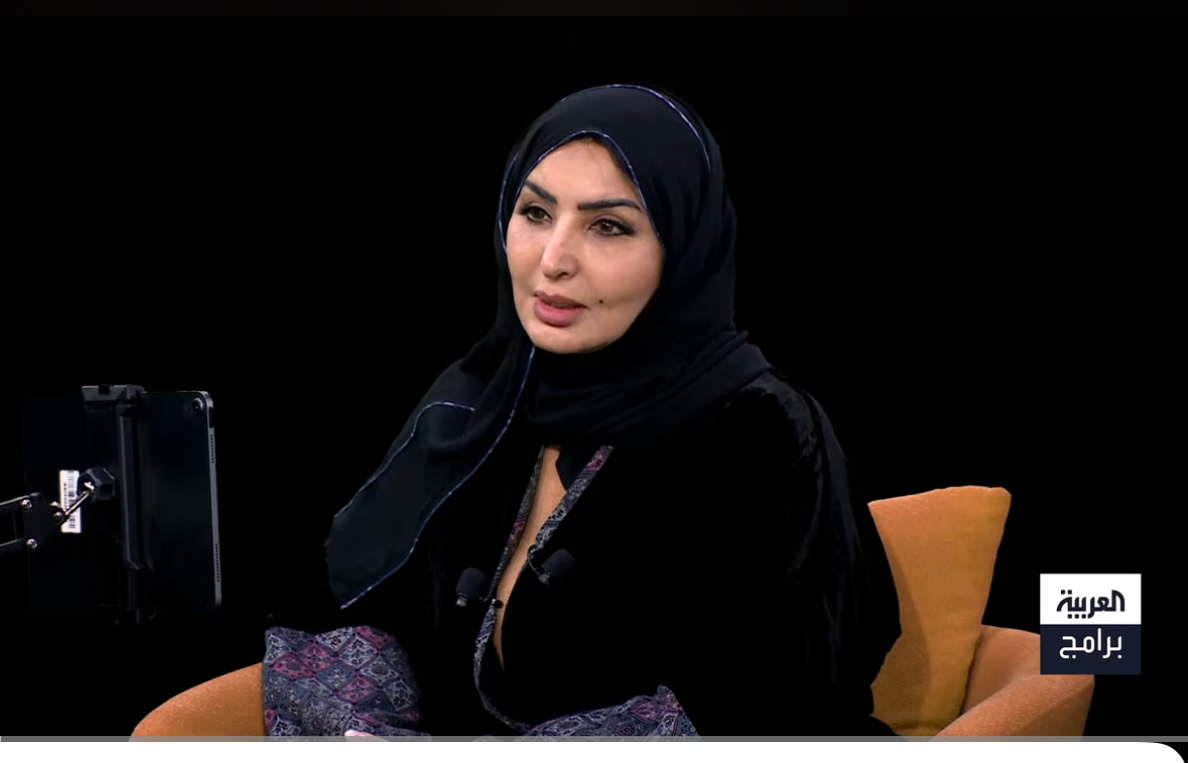

Ancient inscriptions from the Arabian Peninsula offer a different picture of women’s status before Islam, revealing their participation in writing, trade, religion, politics and social life, according to Dr. Fathia Aqab, Professor of Ancient Arab History and Ancient Arab Civilizations at King Saud University.
Speaking on the television program “Sijal,” Aqab explained that archaeological evidence challenges stereotypical portrayals of women in pre-Islamic Arabia and provides direct evidence of their participation in different areas of public and social life.

Ancient inscriptions document women’s literacy
Aqab pointed to Thamudic inscriptions dating back to before the seventh century BC as evidence that some women in the Arabian Peninsula knew how to read and write.
She referred to a Thamudic inscription that indicates explicitly that a woman wrote the text herself. Other inscriptions, she said, document women’s social and economic activities and their involvement in transactions.
These archaeological records provide important evidence for understanding the position and activities of women in ancient Arabian societies beyond traditional historical narratives.
Women held religious, financial and leadership roles
According to Aqab, women in ancient Arabian civilizations held important positions and reached leadership, religious and financial roles.
The inscriptions also record women’s participation in trade, offering sacrifices and resolving disputes, demonstrating that their activities extended beyond the domestic sphere.
Aqab also cited evidence of women taking part in armed defense. She referred to a Thamudic inscription about a woman named “Lubaba,” who carried weapons and confronted enemies.
Archaeology challenges stereotypes about pre-Islamic Arabia
Aqab argued that describing pre-Islamic Arab society as completely ignorant does not correspond with the archaeological evidence discovered in the Arabian Peninsula.
She highlighted the existence of advanced centers of civilization in the region and noted that significant parts of its history still require further archaeological excavation and study.
For Aqab, inscriptions and archaeological remains offer direct evidence that can contribute to a more accurate understanding of ancient Arabian society and the roles women played within it.
A call to revisit the history of Arab women
Aqab called for the history of ancient Arab women to be reconsidered through inscriptions and archaeological evidence rather than relying on stereotypical images reinforced by some written accounts and dramatic works.
She emphasized the richness of the history of the Arabian Peninsula, noting that only a small part of this history has so far been uncovered.
The archaeological record, she argued, provides an opportunity to examine the lives and contributions of ancient Arab women through direct evidence and to develop a more nuanced understanding of their roles in writing, trade, religion, politics and society.