
Women involved in the justice system often face complex social, legal, and psychological challenges that extend far beyond their period of detention. Addressing these barriers requires more than legal reforms—it demands comprehensive rehabilitation, mental health support, economic opportunities, and institutions capable of responding to women’s unique needs.
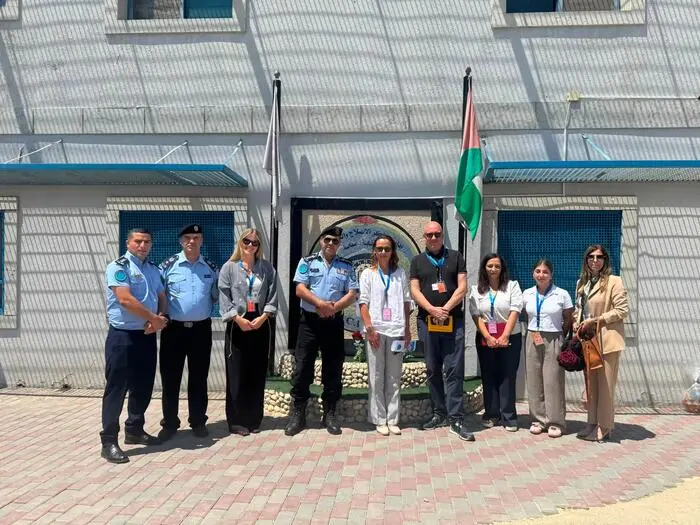
To advance these goals, the Sawasya Joint Programme organized a field visit for international development partners to the Jericho Correction and Rehabilitation Center, highlighting ongoing efforts to strengthen gender-responsive justice services and expand rehabilitation opportunities for women in Palestine.
A Collaborative Approach to Women’s Rehabilitation
The visit showcased the partnership between UN Women, through the Sawasya Joint Programme, and the Palestinian Center for the Treatment and Rehabilitation of Victims of Torture (TRC). Together, the organizations are working to improve rehabilitation services for women in correction and rehabilitation centers across the West Bank.
The initiative focuses on delivering integrated legal, psychosocial, and social support services designed to protect women’s dignity, improve their well-being, and prepare them for successful reintegration into society after completing their sentences.
The partnership also invests in strengthening the capacities of social workers and correctional staff, enabling them to provide services that are more responsive to women’s specific needs while aligning with international human rights standards.
Mental Health and Reintegration at the Center of Justice
During the visit, development partners observed a range of activities supported through the Sawasya Programme, including individual, group, and family counseling sessions, therapeutic and recreational activities, mental health initiatives for staff, and specialized capacity-building programs that promote gender-sensitive practices within correctional institutions.
According to Hanan Qamar, Rule of Law and Protection Specialist and Sawasya Programme Manager at UN Women, access to justice is a fundamental right for everyone, particularly marginalized groups such as women in detention.
She emphasized that the programme works alongside national institutions and civil society organizations to provide integrated legal, psychological, and social services that preserve women’s dignity while supporting their rehabilitation and reintegration. The programme also seeks to improve timely legal assistance, ensure early legal representation and fair trials, and promote alternatives to detention that comply with international human rights standards.
Investing in Women’s Economic Independence
The field visit also highlighted the importance of economic empowerment as part of successful rehabilitation.
Recognizing that financial independence plays a crucial role in reducing social exclusion and supporting long-term reintegration, the Sawasya Programme has introduced vocational and entrepreneurship initiatives for women in correction and rehabilitation centers.
In 2026, nineteen women participated in specialized training on accounting for small businesses, gaining practical knowledge in financial literacy, bookkeeping, pricing strategies, and entrepreneurship. These skills are intended to improve employment prospects and help participants establish sustainable livelihoods after release.
At the institutional level, the programme also strengthened the capacities of eight female officers and additional correctional personnel, contributing to higher-quality rehabilitation services for women.
Measurable Impact in 2026
The programme has already demonstrated measurable progress during the first half of 2026.
A total of 55 women received mental health and psychosocial support services, including psychological first aid, individual counseling, group therapy, and family counseling sessions. Meanwhile, 30 women participated in sports and recreational activities across four correction and rehabilitation centers, helping improve psychological well-being and strengthen social connections.
These interventions reflect a holistic approach to justice that recognizes rehabilitation, mental health, and economic opportunity as essential components of long-term social reintegration.
Building a More Inclusive Justice System
The field visit reaffirmed the importance of sustained cooperation among justice institutions, civil society organizations, and international development partners in strengthening gender-responsive justice across Palestine.
Through the Sawasya Joint Programme, UN Women continues to support efforts aimed at building a justice system that is more accessible, accountable, inclusive, and responsive to the needs of women, girls, and marginalized communities. By combining legal protection with psychosocial care, economic empowerment, and institutional reform, the programme seeks to ensure that women are equipped not only to rebuild their lives after detention but also to participate fully in their communities with dignity and opportunity.