
For more than half a century, Iceland has pursued one of the most ambitious experiments in gender equality in the democratic world. Its objective was straightforward: reduce the dominance of men in public life and create a society in which women could participate equally in positions of power.
By many traditional measures, Iceland has achieved remarkable results.

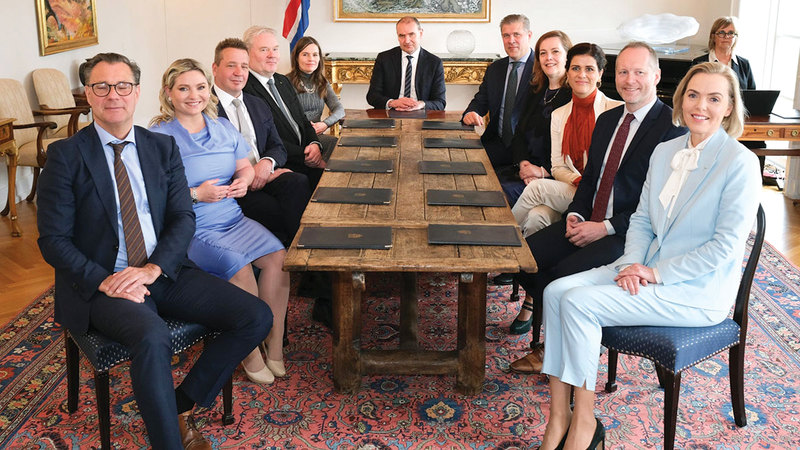
The country is widely recognized as one of the world’s most gender-equal societies. Women have held the country’s highest political offices, including the presidency and prime ministership, while also occupying senior positions across government, education, healthcare, universities, municipalities, social services, the police and the wider public administration.
The so-called Icelandic model has consequently attracted international attention, with political leaders, researchers and international organizations frequently looking to the country for lessons on advancing gender equality.
But Iceland’s success raises another question: what happens when a society spends decades correcting an imbalance and eventually develops a different form of institutional concentration?
The question is not whether women should hold positions of authority. They should, and women’s participation in leadership remains essential to equal representation. Instead, the debate concerns whether public institutions benefit when large sections of the state are dominated by one gender and, in some cases, by highly similar professional and ideological backgrounds.
A New Institutional Elite
For decades, Icelandic women’s organizations and progressive political movements challenged the privileges historically enjoyed by men.
Yet institutional privilege is a less frequently discussed issue.
Institutional privilege refers to the ability to influence public policy, educational priorities, government spending, professional language and social norms from within organizations that may become increasingly similar in their composition and outlook.
This does not necessarily require a deliberate plan.
Institutions naturally develop cultures over time. People often recruit individuals with similar professional backgrounds and perspectives. Universities educate future employees, government agencies cooperate with organizations whose staff share comparable expertise and values, and professional networks become increasingly interconnected.
Over generations, these patterns can create institutional cultures that influence how problems are identified and how solutions are designed.
The Cost of Staying Silent
One of the less discussed consequences of Iceland’s changing institutional culture concerns men and their relationship with public life.
This does not mean that Icelandic men share one experience or one opinion. They do not.
However, some observers describe a growing combination of frustration, caution and what could be called a sense of powerlessness.
The concern is not necessarily open conflict. Instead, it can appear as hesitation: worrying about saying the wrong thing, asking the wrong question or expressing an opinion that could be interpreted negatively.
As a result, some people simply choose to remain silent.
That matters because healthy democracies require more than legal freedom of expression. They also depend on social trust—the confidence that people can disagree, ask difficult questions, make jokes and occasionally make mistakes without assuming the worst intentions of one another.
When that confidence weakens, public debate can become narrower, even when formal freedom of speech remains fully protected.
When Women Become the Majority in Public Institutions
Iceland’s public sector is unusually large for a country with a population of fewer than 400,000 people.
Large public sectors naturally create substantial employment in fields such as education, human resources, public administration, social work, regulatory oversight, child protection, equality offices and nonprofit organizations.
Women are heavily represented across many of these professions.
According to figures cited in the original report, women account for around 62% of employees in Iceland’s central government and approximately 70% of municipal employees. Women are also significantly more likely than men to work in the public sector.
In Reykjavík, women reportedly account for more than 70% of the city’s workforce.
The concentration becomes particularly visible in certain institutions.
In Reykjavík’s public schools, for example, women make up the overwhelming majority of school principals and deputy principals. Similar patterns appear in several government ministries and public agencies, where women significantly outnumber men among professional and administrative staff.
The figures highlight an important distinction in the gender equality debate.
Women’s representation in positions of authority is a positive development. But democratic diversity also depends on ensuring that institutions contain a sufficiently broad range of experiences, professional backgrounds and perspectives.
Where Are the Men?
The answer is largely found in Iceland’s private sector.
Men remain heavily represented in industries such as fishing, seafood processing, construction, energy, aluminum production, transportation, shipping and engineering.
These sectors are among the country’s major economic and export activities and continue to rely heavily on male workers.
According to figures cited in the report, around 85% of employed Icelandic men work in the private sector, compared with a substantially higher proportion of women working in public employment.
This creates a striking gender divide in the labor market.
Women are highly concentrated in public institutions and care-oriented professions, while men remain strongly represented in physically demanding, industrial and export-oriented sectors.
Neither contribution should be dismissed.
Public-sector workers provide essential services, including education, healthcare, policing, administration and infrastructure. At the same time, private-sector workers in industries such as fishing, construction, energy and transportation make a major contribution to Iceland’s economy.
The issue is therefore less about which group contributes more and more about how sharply the labor market remains divided along gender lines.
Why Institutional Diversity Matters
Every institution develops its own professional vocabulary and way of understanding society.
Social workers may naturally focus on vulnerability and protection. Teachers may approach problems through education. Human resources professionals may identify patterns of workplace bias. Policymakers develop priorities based partly on the experiences and professional environments in which they work.
None of this is inherently problematic.
The question is what happens when a major institution becomes overwhelmingly composed of people with similar professional experiences, educational backgrounds and social perspectives.
Modern democracies routinely discuss the importance of diversity in terms of ethnicity, religion, language and socioeconomic background.
Institutional and ideological diversity can be more difficult to discuss.
Yet the principle is similar: organizations can develop blind spots when too many decision-makers share the same experiences.
The challenge is not that women are incapable of providing diverse perspectives. On the contrary, women are not a homogeneous group, and female leadership can bring experiences and approaches that were historically absent from decision-making.
The concern arises when gender becomes only one part of a broader pattern of institutional uniformity.
Iceland’s Next Gender Equality Challenge
Iceland’s experience offers an important opportunity to expand the conversation about gender equality.
The goal should not be to replace women’s participation with male dominance, nor to treat women’s success as a problem.
Instead, the next stage may be about achieving a deeper form of balance—one that values women’s leadership while also ensuring that public institutions remain open to different experiences, professional backgrounds and viewpoints.
Iceland spent decades challenging a public sphere in which men held disproportionate power.
Its success demonstrates that institutional change is possible.
But every successful social movement eventually faces a new challenge: ensuring that the structures created to correct an old imbalance do not become so rigid that they create new blind spots.
For Iceland, the next chapter of the gender equality debate may therefore be less about choosing between women and men and more about building institutions where both are represented, heard and able to contribute.
That could become the country’s next lesson for the rest of the world: gender equality is not simply about who holds power. It is also about whether the institutions that exercise that power remain diverse enough to question themselves.