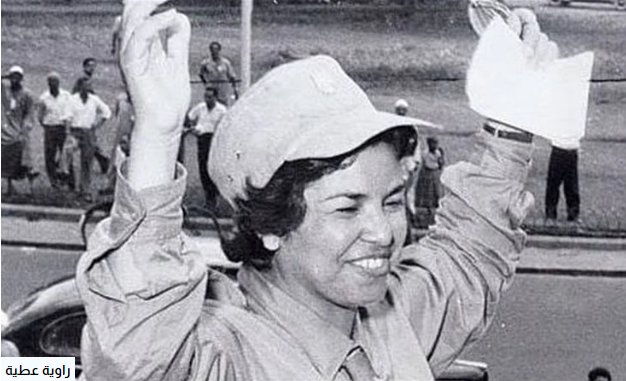


May 9th marks the anniversary of the passing of Rawia Atiya, an avant-garde figure whose name is synonymous with the historical breakthroughs of Egyptian and Arab women in public life. A revolutionary, an officer, and a legislator, Atiya spent her life dismantling barriers, ensuring that the doors she opened would stay open for generations of women to follow.
Born on April 19, 1926, in Giza, Atiya was a product of a deeply political household. Her father was a prominent leader in the Wafd Party, and his frequent imprisonment for his nationalistic stances served as Rawia’s first lesson in activism. From a young age, she was a fixture in anti-colonial protests, displaying a level of courage that made her a localized icon of resistance long before she entered the halls of power.
Atiya’s academic journey was equally impressive. Defying the social norms of the 1940s, she graduated from Cairo University in 1947 and went on to earn diplomas in education, psychology, and Islamic studies, followed by a Master’s degree in journalism. Her diverse background as an educator and journalist provided her with the intellectual foundation to tackle complex social and political issues with unprecedented clarity.
Her commitment to Egypt was never more evident than during the Tripartite Aggression (Suez Crisis) in 1956. Rawia Atiya became the first Egyptian woman to join the army as a commissioned officer. Holding the rank of Captain, she took charge of training approximately 4,000 women in first aid and nursing to support the war effort. Her military service earned her several medals of honor, cementing her status as a national hero.
However, her most famous “first” came in 1957. Following the 1956 Constitution, which finally granted Egyptian women the right to vote and run for office, Atiya contested the parliamentary elections. She secured a historic victory, becoming the first woman in the Arab world to be elected to a national parliament. Under the dome of the People’s Assembly, she became the leading voice for family justice and social equality.
As a lawmaker, Atiya was decades ahead of her time. She was the first female MP to demand comprehensive reforms to the Personal Status Laws, advocating for legal protections that would ensure the social and financial dignity of Egyptian women. Her legislative work focused on the family as the bedrock of society, pushing for reforms that balanced tradition with modern justice.
When Rawia Atiya passed away on May 9, 1997, she left behind a blueprint for female leadership. She proved that a woman could be a soldier on the battlefield and a pioneer in the parliament. Today, she remains an inspiration for every woman navigating the worlds of politics and policy, a reminder that the first step toward change is the courage to be the first.