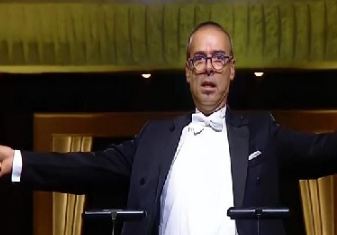

Egyptian conductor Maestro Nader Abbassi has praised the growing presence of women in orchestra conducting, describing it as one of the most significant developments in the world of classical music. Speaking during the television program El Setat, hosted by Mofida Shiha and Soheir Gouda, Abbassi said female conductors have become increasingly visible on international stages, particularly across Europe, where many are achieving remarkable professional success.
According to Abbassi, women are now assuming leading roles in orchestras at an unprecedented pace. He noted that several European countries are witnessing the rise of highly accomplished female conductors, adding that in some musical institutions, women have become even more active than their male counterparts.
Addressing the historical underrepresentation of women in the profession, Abbassi explained that orchestra conducting has always been academically accessible to both men and women. He suggested that the limited number of female conductors in previous decades was not the result of institutional barriers or restrictions on education, but rather reflected the fact that fewer women chose to pursue the profession at the time. As more women enter the field with confidence, he said, their presence continues to expand.
Beyond discussing music, Abbassi reflected on the broader role of women within family life and society. He described women as highly capable managers of daily life, emphasizing that they often possess the ability to organize complex responsibilities with intelligence and diplomacy.
He also highlighted the multiple responsibilities many women undertake within their families, including managing households, caring for children, and supporting their spouses. In his view, these responsibilities demonstrate women’s organizational skills and their ability to manage situations effectively while maintaining family stability.
Abbassi further shared his personal perspective on interpersonal relationships, suggesting that successful partnerships are often built on complementary roles rather than constant competition. While acknowledging that his remarks reflected his own viewpoint, he emphasized his appreciation for the important contributions women make both within the family and in professional fields.
His comments also reflect a broader international trend within classical music, where female conductors are increasingly breaking long-standing barriers, leading major orchestras, and reshaping leadership in one of the world’s most traditionally male-dominated artistic professions.