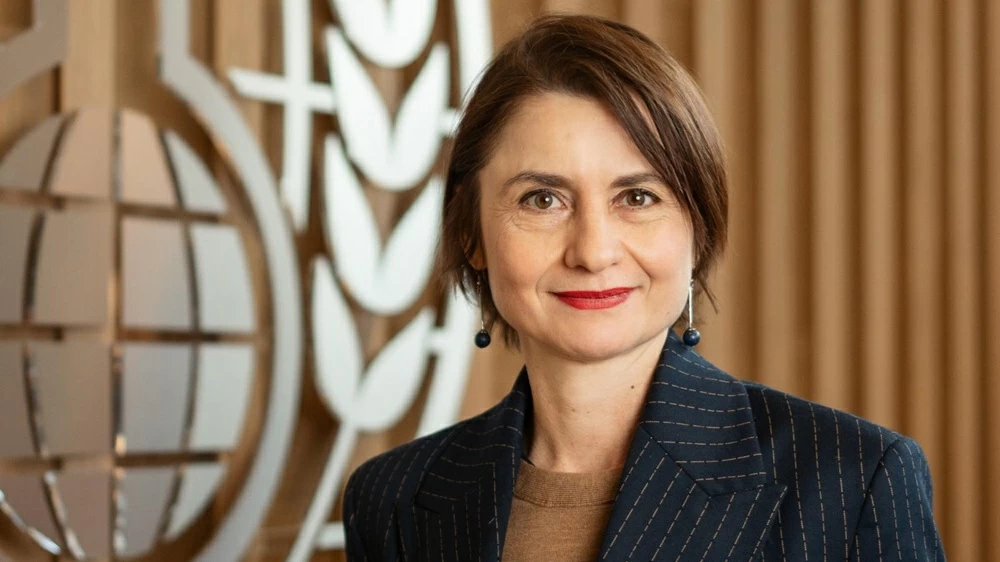

Sabrina Dallafior has made history as the first woman to lead the Organisation for the Prohibition of Chemical Weapons, marking a significant milestone for women in international diplomacy and global security.
The Swiss diplomat officially assumed office as the OPCW’s fifth Director-General on July 27, 2026, beginning a four-year term at the organisation’s headquarters in The Hague.

Her appointment also makes her the first Swiss national to serve as Director-General of the OPCW, which oversees the implementation of the Chemical Weapons Convention and works with 193 Member States to eliminate chemical weapons worldwide.
Who Is Sabrina Dallafior?
Dallafior is a Swiss career diplomat with approximately 25 years of experience in diplomacy, disarmament, arms control, non-proliferation and international security.
Before taking charge of the OPCW, she served as Switzerland’s Ambassador to Finland. She also held several senior positions related to international security and multilateral diplomacy, including serving as President of the Conference on Disarmament in Geneva and chairing international bodies working on disarmament and arms control.
Her diplomatic career also included assignments involving Switzerland’s relations with the European Union, NATO, the Organization for Security and Co-operation in Europe and the United Nations.
This combination of diplomatic experience and expertise in international security positioned her as a prominent candidate to lead an organisation responsible for one of the world’s most important disarmament regimes.
How Did She Become OPCW Director-General?
Dallafior was unanimously appointed by the Conference of the States Parties in November 2025, following a recommendation from the OPCW Executive Council.
She was selected for a four-year term beginning in July 2026, succeeding Fernando Arias of Spain, who served as Director-General from 2018 until July 2026.
Her appointment represents a historic change for the organisation. The OPCW was established in 1997, and Dallafior is its fifth Director-General and its first female leader.
Her Priorities as the First Woman to Lead the OPCW
Dallafior takes over the organisation at a time when chemical security remains a major international concern.
In outlining her early priorities, she identified four key areas of focus.
The first is protecting the global norm against chemical weapons and strengthening the organisation’s ability to establish the facts surrounding credible allegations of chemical weapons use.
The second is strengthening compliance with the Chemical Weapons Convention and ensuring that the organisation has the tools required to respond to emerging challenges.
The third is working closely with Member States on implementation of the Convention, including countries dealing with the legacy of chemical weapons programmes.
The fourth is increasing awareness of the OPCW’s work and strengthening its relationships with partners, including the chemical industry.
Why Her Appointment Matters for Women in Global Leadership
Dallafior’s appointment carries significance beyond the OPCW itself.
International security, arms control and disarmament have historically been fields in which senior leadership positions have often been held by men. Her appointment demonstrates the growing role of women in high-level decision-making on issues traditionally associated with diplomacy, defence and international security.
Her career also highlights a broader shift in women’s participation in diplomacy. Rather than limiting their contribution to social or humanitarian policy, women diplomats increasingly occupy senior positions dealing with arms control, international security and multilateral negotiations.
Dallafior’s new position places her at the centre of one of the world’s most sensitive international security institutions.
A New Era for the Organisation
The OPCW is responsible for implementing the Chemical Weapons Convention, the international treaty designed to eliminate chemical weapons and prevent their development, production, acquisition, stockpiling and use.
The organisation says that all declared chemical weapons stockpiles from its 193 Member States, amounting to 72,304 metric tonnes of chemical agents, had been verified as irreversibly destroyed under its verification regime by 2023. The OPCW received the Nobel Peace Prize in 2013 for its extensive efforts toward eliminating chemical weapons.
Dallafior begins her term as the organisation faces an evolving international security environment and new technological challenges.
Her leadership agenda includes adapting the OPCW to emerging developments while maintaining the principles of the Chemical Weapons Convention.
For women watching the changing landscape of international diplomacy, her appointment represents more than a historic first. It is another example of women taking leadership roles at the highest levels of global decision-making, including in areas where their presence has traditionally been limited.
As Sabrina Dallafior begins her four-year term, her leadership will be closely watched—not only for the direction she gives the OPCW, but also for what her appointment represents for the future of women in international security and diplomacy.