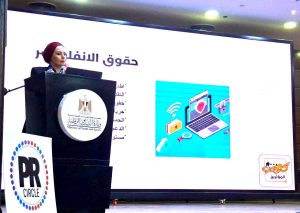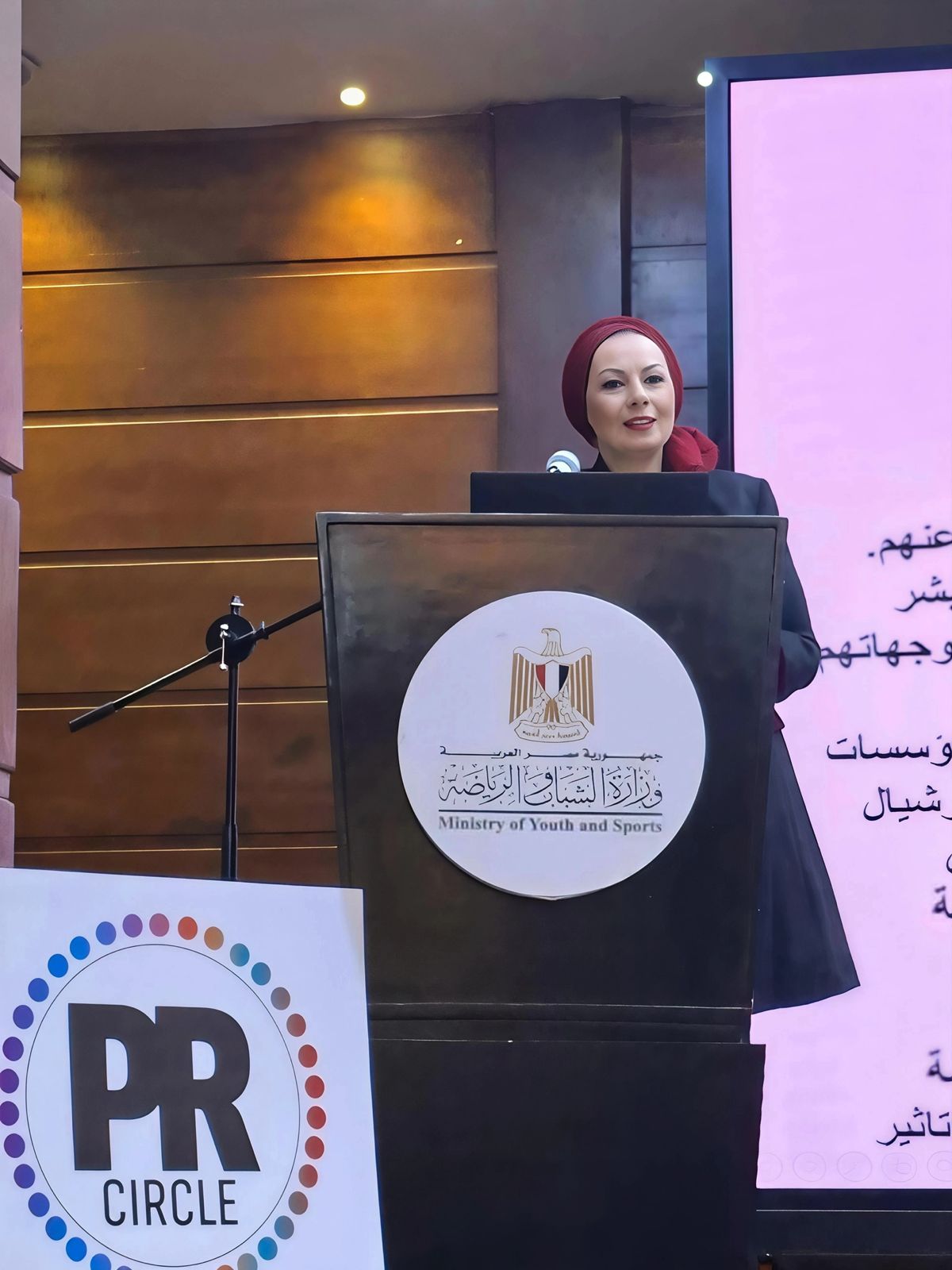

At the inaugural edition of the PR Circle Forum, media and communications expert Germien Amer delivered a compelling analysis of how influencers are redefining the architecture of trust in today’s digital ecosystem.
PR Circle Forum, organized by MFM Egypt, convened a distinguished group of thought leaders to address both the challenges and opportunities facing the communications sector.

A Platform Bridging Academia and Industry
Shabrawi Khater, the mastermind of the platform, outlined its mission to advance professional standards and foster dialogue across the public relations industry. He emphasized the importance of collaboration and knowledge exchange in navigating a rapidly evolving communications landscape.
Academic voices added depth to the discussion. Thuraya El Badawy and Sami El Sherif examined the strategic evolution of public relations, while Reem Adel and Ahmed Khattab highlighted the need to align academic training with market demands.
Additional contributions from Adel Refaat and Ahmed Farouk Radwan reinforced the importance of strengthening ties between academia and professional practice.
From Strategy to Execution: Industry Insights
On the professional front, speakers provided practical frameworks for applying communications strategies in real-world contexts.
Shenouda Azer discussed translating strategy into execution in branding, while Ahmed Said Abdelkader explored the role of marketing and business development in driving growth.
Meanwhile, Doaa El Helawy presented models for converting training into measurable impact in public relations performance.
The forum also recognized influential figures in the field, including Ali Agwa and Lola Zaklama, for their longstanding contributions to communications and media development.
Influencers as the New Architects of Trust
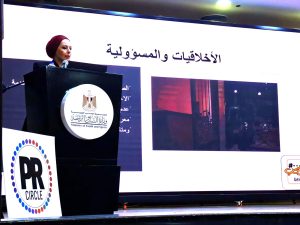
Amer’s session stood out as a central highlight, offering a nuanced perspective on what she described as the “new architecture of digital trust.”
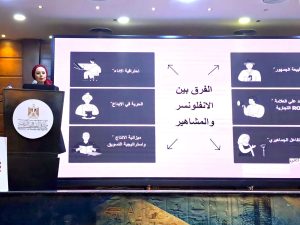
She argued that influencers have evolved into critical trust intermediaries, bridging the gap between institutions and audiences. No longer limited to promotional roles, they now function as powerful agents of recommendation—shaping perception, influencing behavior, and reinforcing institutional credibility.
“In today’s environment, trust is built through relatability, consistency, and authenticity—not just visibility,” Amer noted.
The Shift to Recommendation Economy
A key theme of the discussion was the transition from traditional advertising to what Amer described as a recommendation-driven economy, fueled by the rise of digital content and changing audience expectations.
She emphasized that modern audiences are increasingly resistant to overt advertising, favoring instead content that feels organic, relevant, and trustworthy. In this context, influencer campaigns—when executed strategically—can deliver returns of up to $5 for every $1 invested, underscoring their growing commercial value.
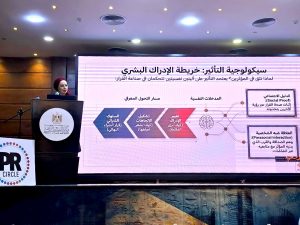
Amer also explored the psychology behind influence, pointing to factors such as social proof, emotional resonance, repetition, and familiarity as core drivers of audience engagement and persuasion.
Lessons from Egypt’s Market Dynamics
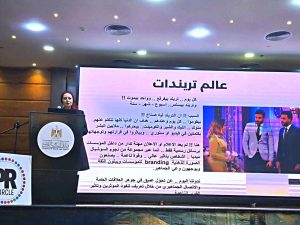
Grounding her analysis in local context, Amer highlighted successful campaigns in Egypt, including Mother’s Day initiatives and awareness campaigns led by the Ministry of Finance.
These campaigns, she explained, succeeded by leveraging relatable voices to simplify complex messages—particularly in areas like financial literacy—making them more accessible to younger audiences.
“The goal is no longer just to communicate information,” she said. “It is to design pathways of trust that enable audiences to understand and act with confidence.”
Advancing Egypt’s Communications Landscape
Despite the opportunities, Amer cautioned against the structural risks facing the influencer economy, including over-commercialization, declining authenticity, and blurred lines between paid and organic influence.
She stressed that the long-term sustainability of the sector depends on establishing clear ethical standards and professional guidelines to preserve credibility.
Besides, Amer pointed to emerging trends such as AI-generated influencers and hybrid communication models, calling for the development of a formal code of ethics to ensure transparency and accountability.
Closing the forum, Khater noted that initiatives like PR Circle Forum reflect a broader vision to elevate Egypt’s communications sector through talent development, knowledge exchange, and industry innovation.