
Women are emerging as strong contenders in the race to become the next United Nations Secretary-General, with the possibility of the organization appointing its first woman to the top post since its establishment.
The race to succeed current Secretary-General António Guterres is gaining momentum as his second term is set to end on December 31, 2026.

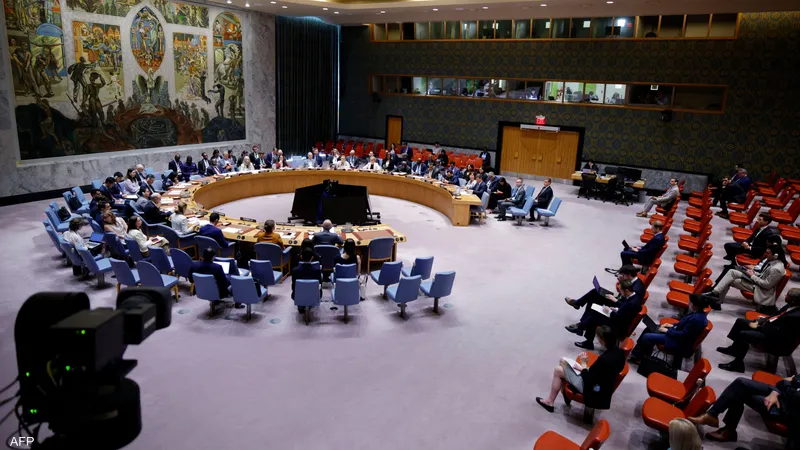
The UN Security Council held its second informal straw poll on Friday to assess the candidates, but no clear consensus has yet emerged among the Council’s members.
Eight candidates are currently in the race, including five women and three men. The strong presence of female candidates has brought renewed attention to the possibility of a historic breakthrough for women in global leadership.
Women Take the Lead in the Race
Women have so far dominated the top positions in the informal voting process.
In the first straw poll, held on July 30, former Costa Rican Vice President and current Secretary-General of the United Nations Conference on Trade and Development Rebecca Grynspan received the most favorable votes. She was followed by Guyana’s former Foreign Minister Carolyn Rodrigues-Birkett, while Argentine diplomat Rafael Grossi, Director General of the International Atomic Energy Agency, ranked third.
The second informal poll reportedly showed a slight lead for Rodrigues-Birkett, according to sources familiar with the process, although the results have not been publicly disclosed.
The candidates currently in the race are Rebecca Grynspan, Rafael Grossi, Carolyn Rodrigues-Birkett, Michelle Bachelet, María Fernanda Espinosa, Macky Sall, Yvonne Abdallah and Olara Otunnu.
Yvonne Abdallah: A Candidate with Lebanese Roots
Yvonne Abdallah has attracted particular attention as a candidate with Arab roots. An Ecuadorian diplomat from a Lebanese immigrant family, she officially entered the race this week with the support of Tonga.
Abdallah participated in discussions with the UN General Assembly and Security Council, presenting her vision for renewing the United Nations and strengthening its ability to respond to international crises and conflicts.
Drawing on her personal experience during the Lebanese Civil War, which she lived through in Beirut, Abdallah has emphasized conflict prevention and the protection of civilians as priorities for the next UN Secretary-General.
If elected, she has pledged to focus on preventing conflicts and renewing the United Nations. She has also stressed the importance of having the Secretary-General directly engage with countries and parties involved in conflicts rather than operating primarily from the organization’s headquarters in New York.
Abdallah has also called for reforming the Security Council to make it more representative of today’s geopolitical realities rather than maintaining a structure shaped by the international order that emerged after World War II.
How Is the UN Secretary-General Chosen?
The selection process begins at the Security Council, where its 15 members conduct confidential informal polls to assess the candidates.
For a candidate to move forward, they must secure sufficient support within the Council while avoiding a veto from any of its five permanent members: the United States, Russia, China, France and the United Kingdom.
Once the Security Council agrees on a candidate, the name is formally recommended to the UN General Assembly for approval.
Geographical representation also traditionally plays a role in the selection process. Under the customary regional rotation, the next Secretary-General is widely expected to come from Latin America and the Caribbean.
Why the Race Remains Wide Open
Although Rafael Grossi is considered one of the best-known candidates, no contender currently appears to have a decisive advantage.
The outcome remains closely tied to the positions of the five permanent members of the Security Council, whose preferences have yet to become clear.
The election is also taking place during one of the most challenging periods in the UN’s history, marked by deep divisions within the Security Council, growing pressure on multilateral institutions and significant financial challenges facing the organization.
Several countries are also pushing for a woman to become Secretary-General for the first time, giving the current race particular significance for women in global leadership.
If a female candidate succeeds, the appointment would mark a historic milestone for the United Nations, making her the first woman to lead the organization since its establishment in 1945.