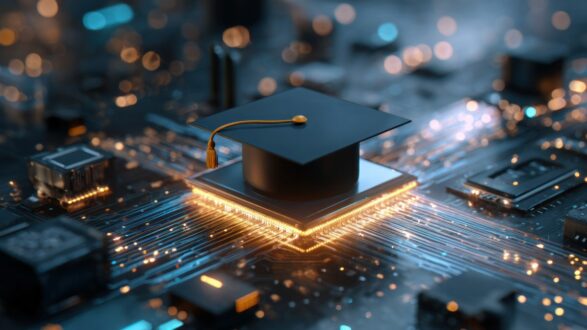

As artificial intelligence transforms industries and automates routine tasks, many people have begun questioning whether earning a university degree is still worthwhile. Rising tuition costs, student debt, and changing hiring practices have fueled the debate, leading some to believe that traditional higher education has lost its value.
However, while the job market continues to evolve, research suggests that a university education remains one of the strongest long-term investments for career growth, financial stability, and personal development.

AI Is Changing Jobs—Not Eliminating the Need for Education
Artificial intelligence is rapidly reshaping white-collar professions by automating repetitive cognitive tasks and introducing AI-powered tools into workplaces across nearly every industry.
According to a 2025 Gallup survey, the use of AI among American employees nearly doubled from 21% in 2023 to 40% in 2025. This transformation has prompted many to question whether a four-year degree is still necessary.
Yet automation is changing the nature of work rather than replacing the need for educated professionals. As technology evolves, employers increasingly seek individuals who can analyze information, solve unfamiliar problems, and make thoughtful decisions.
Critical Thinking Is Becoming More Valuable
Technical skills can become outdated within a few years, but critical thinking remains one of the most enduring professional strengths.
A quality university education teaches students how to evaluate evidence, conduct research, communicate effectively, collaborate with diverse teams, and approach complex challenges with analytical reasoning. These abilities remain relevant regardless of technological change.
Understanding artificial intelligence itself also requires critical thinking. Professionals who can assess AI-generated information, recognize limitations, and apply ethical judgment will play an increasingly important role in shaping how these technologies are used responsibly.
University Graduates Continue to See Better Career Outcomes
Although today’s graduate job market is more competitive, university graduates continue to enjoy lower unemployment rates, stronger career stability, and higher long-term earning potential compared to those without degrees.
Recent labor market analyses have consistently shown that workers with bachelor’s degrees experience lower unemployment rates than those with only a high school diploma. Even during periods of economic uncertainty, graduates tend to recover more quickly from downturns and adapt more successfully to changing industries.
Rather than preparing students for a single profession, higher education equips them with transferable skills that support lifelong career flexibility.
The Workplace Rewards Adaptability
Many students entering university today will eventually work in careers that do not yet exist.
Because industries evolve rapidly, employers increasingly value professionals who can learn continuously, adapt to new technologies, and develop new competencies throughout their careers.
Universities provide an environment where students learn not only subject knowledge but also independent learning, problem-solving, effective communication, and intellectual curiosity—qualities that remain difficult for artificial intelligence to replicate.
AI Makes Human Skills Even More Important
Ironically, the rise of AI is increasing demand for uniquely human capabilities.
Employers continue to prioritize candidates who demonstrate sound judgment, creativity, communication, ethical reasoning, collaboration, and emotional intelligence. While AI excels at processing information, humans remain responsible for interpreting context, making strategic decisions, and leading organizations through uncertainty.
The future workforce will increasingly reward professionals who combine technical knowledge with strong human-centered skills.
Higher Education Is an Investment in Lifelong Success
A university degree should not be viewed solely as vocational training or a direct path to immediate employment. Its greatest value lies in developing the intellectual flexibility needed to navigate decades of technological and economic change.
Higher education has also been associated with improved health outcomes, higher lifetime earnings, greater civic participation, stronger career satisfaction, and increased opportunities for personal growth.
Preparing for an Uncertain Future
No degree can guarantee professional success. However, the ability to think critically, communicate effectively, adapt to change, and continue learning has never been more important.
As artificial intelligence reshapes the global economy, those who can combine technological understanding with analytical thinking and lifelong learning will be best positioned to succeed. In that future, a university education remains one of the strongest foundations for long-term personal and professional achievement.