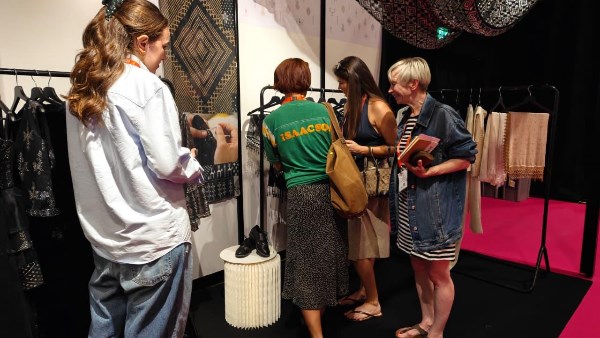

Egyptian craftsmanship captured international attention as the National Council for Women (NCW), in partnership with UN Women Egypt, presented a dedicated pavilion at Source Fashion London, one of Europe’s leading international sourcing exhibitions for the fashion industry. Held at London’s ExCeL Centre from 7–9 July 2026, the event provided a global platform to introduce the artistry of traditional Egyptian Tally embroidery while creating new commercial opportunities for women artisans.
The exhibition highlighted Egypt’s growing commitment to linking cultural heritage with sustainable economic development, positioning traditional handicrafts as competitive products in international fashion markets.

Showcasing the Timeless Beauty of Egyptian Tally
According to Mai Mahmoud, Director General of Skills Development at the National Council for Women, the Egyptian pavilion featured an extensive collection inspired by the country’s historic Tally embroidery tradition. The display included scarves, shawls, ready-to-wear garments, leather bags, and handcrafted accessories that blended authentic Egyptian heritage with contemporary fashion trends.
The collection demonstrated how traditional craftsmanship can successfully meet the evolving demands of international buyers while preserving Egypt’s unique cultural identity.
Empowering Women Through Heritage Craftsmanship
The pavilion featured handcrafted products coordinated by Egyptian designer Asmaa El Degwy, working alongside the Tally Shandweel brand and skilled women artisans from the governorates of Assiut and Sohag. Modern fashion pieces created by Egyptian designers Asmaa El Degwy, Mohamed Samy, and Amal Shabib illustrated how heritage embroidery can be reimagined for global fashion markets.
International market development and commercial negotiations were led by Hesham El Gazzar, helping connect Egyptian artisans with potential retailers, designers, and wholesale buyers across Europe.
This collaborative approach reflects Egypt’s broader strategy of transforming traditional crafts into sustainable sources of income while preserving centuries-old artistic techniques.
Strong International Interest from Global Buyers
The Egyptian pavilion attracted significant attention throughout the exhibition, receiving visits from international retailers, fashion buyers, designers, and sourcing specialists representing the United Kingdom and several European markets.
The positive commercial response underscored the competitive potential of Egyptian handmade products and reinforced growing international demand for ethically produced, culturally authentic, and sustainably crafted fashion items.
The exhibition also enabled participating artisans and organizers to explore emerging trends in sustainable fashion, gain insights into evolving consumer preferences, and better understand international quality and sourcing requirements—all while maintaining the authenticity of Egypt’s traditional craftsmanship.
Supporting Women’s Economic Empowerment Through Global Markets
The participation forms part of the National Council for Women’s ongoing efforts to strengthen women’s economic empowerment by expanding market access for heritage-based enterprises. It also supports the objectives of Egypt’s National Strategy for the Handicrafts Sector (2025–2030), which aims to preserve traditional crafts while increasing their contribution to economic development and exports.
The exhibition was organized under the “Social and Economic Empowerment of Rural Women in Assiut and Sohag” project, implemented by UN Women Egypt in partnership with the National Council for Women, with funding from the Italian Agency for Development Cooperation (AICS). The initiative seeks to enhance the livelihoods of rural women by developing heritage products, improving production capacities, and creating sustainable pathways to international export markets.
By bringing Egyptian Tally embroidery to one of Europe’s most influential fashion sourcing events, the initiative demonstrates how cultural heritage, women’s entrepreneurship, and sustainable fashion can work together to generate inclusive economic growth while preserving one of Egypt’s most treasured artistic traditions.