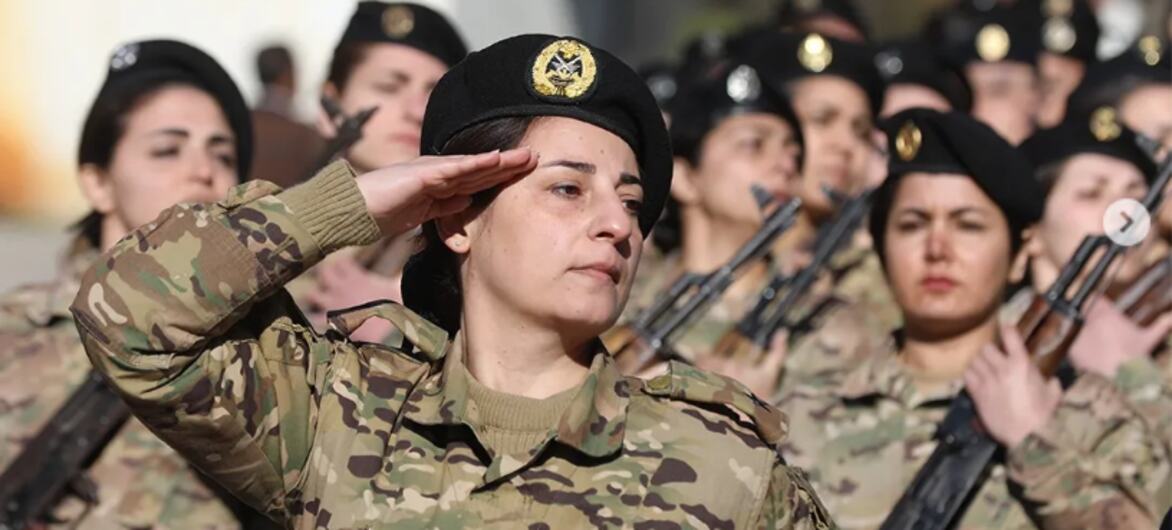

Women’s participation in Lebanon’s military and security institutions has steadily expanded over the past three decades, reflecting a broader shift toward gender inclusion in national security. Although women remain a minority across the armed forces and law enforcement agencies, they continue to break barriers, assume leadership responsibilities, and contribute to institutional reform while challenging long-standing stereotypes.
A Growing Presence in Lebanon’s Security Sector
Women currently represent just over 5% of the Lebanese Armed Forces, approximately 6% of the Internal Security Forces, and around 12% of the General Security Directorate. While these figures remain modest, they illustrate gradual progress supported by institutional reforms and increasing recognition of women’s contributions to peace, security, and public service.

The expansion of women’s participation has been driven by both internal leadership initiatives and international efforts to strengthen gender equality within security institutions.
Breaking Barriers Through Leadership
Many of Lebanon’s pioneering female officers entered institutions that had traditionally been dominated by men. Over time, they advanced into positions where they now help shape policies, oversee gender integration strategies, and support institutional modernization.
Their experiences demonstrate that professional advancement depends on competence, perseverance, and leadership rather than gender alone.
Beyond Administrative Roles
Women now contribute across a broad range of operational and technical fields, including logistics, engineering, medicine, criminal investigations, forensic science, border security, military policing, and specialized security units.
Their expanding responsibilities highlight the growing confidence in women’s capabilities and their ability to perform effectively in demanding environments.
Institutional Reforms Supporting Inclusion
Lebanon’s security institutions have introduced several reforms to improve workplace inclusion, including updated recruitment practices, maternity policies, specialized facilities, gender focal points, and strategies to prevent workplace harassment and discrimination.
These initiatives align with broader efforts to implement the United Nations Women, Peace and Security agenda and encourage equal opportunities throughout the security sector.
Challenges That Still Remain
Despite notable progress, women continue to face structural and cultural barriers. Leadership positions within combat and operational units remain limited, while societal expectations and traditional gender roles continue to influence career opportunities.
Expanding female representation requires continued investment in infrastructure, policy reform, professional development, and cultural change within both institutions and society.
Looking Ahead
The increasing participation of women in Lebanon’s military and security institutions reflects a broader transformation toward more inclusive leadership and stronger public institutions. As more women enter operational, leadership, and decision-making roles, their contributions are expected to play an increasingly important role in strengthening national security, promoting equality, and supporting long-term peace and stability.