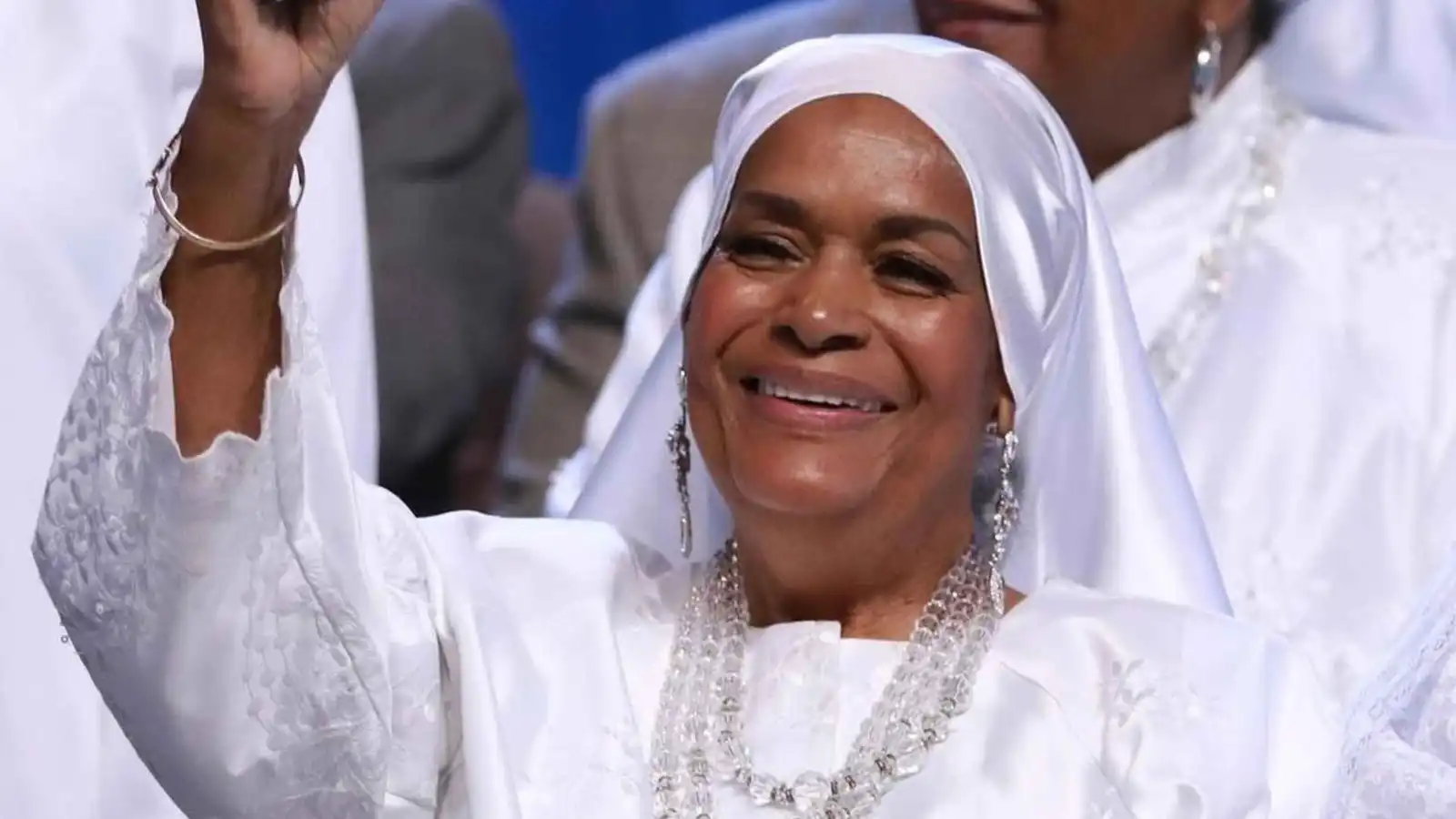

While many people recognized Khadijah Farrakhan as the wife of Nation of Islam leader Louis Farrakhan, her influence extended far beyond that title. Throughout decades of the organization’s development, she played a central yet often unseen role in administration, finance, communications, media, and women’s leadership, making her one of the most influential women in the movement’s modern history.
Following news of her passing at the age of 90, renewed attention has turned to her remarkable contributions and the lasting impact she left behind.

From Betsy Ross to Khadijah Farrakhan
Born Betsy Ross on November 26, 1935, she married Louis Walcott in 1953. Two years later, both embraced Islam after being influenced by Malcolm X, adopting new names and beginning a lifelong commitment to the Nation of Islam.
As the organization evolved, Khadijah steadily became one of its most trusted figures, helping build its institutional foundations away from the public spotlight.
Building the Organization Behind Closed Doors
When Louis Farrakhan reorganized the Nation of Islam in 1977, Khadijah transformed their Chicago home into the movement’s first operational headquarters.
She served as its first treasurer, established administrative systems, organized communications, and helped create the operational structure that supported the organization’s expansion across the United States and internationally.
Her work demonstrated how strategic leadership behind the scenes can become essential to the growth of major institutions.
Supporting Independent Media
Khadijah also contributed directly to launching The Final Call, the Nation of Islam’s flagship newspaper.
During its early years, production and distribution operations were coordinated from the basement of her own home, reflecting her commitment to building independent media channels that could reach wider audiences.
Championing Modest Fashion
Beyond administration and media, Khadijah Farrakhan influenced Muslim women’s fashion within the organization.
She designed the well-known “Vanguard Uniform,” combining modesty with a disciplined, professional appearance. Her designs were later featured in fashion presentations across the United States and several African countries, helping establish a recognizable visual identity for women within the movement.
A Legacy Beyond the Spotlight
Although Khadijah Farrakhan rarely sought public attention, her influence was deeply embedded in the Nation of Islam’s organizational development. Through leadership, planning, financial management, media support, and women’s initiatives, she demonstrated how meaningful change is often driven by individuals working quietly behind the scenes.
Her legacy continues to be remembered as an example of strategic leadership, commitment to community building, and the often-overlooked contributions of women in shaping influential institutions.