

Throughout history, nations have often been named after explorers, monarchs, tribes, geographical features, or political figures. Yet among the world’s sovereign states, one country stands apart for a particularly unique reason: it is widely recognized as the only independent nation named after a historical woman.
Nestled in the eastern Caribbean, Saint Lucia carries the name of Saint Lucy of Syracuse, a Christian martyr who lived during the fourth century. While countless places around the world bear the names of saints, Saint Lucia occupies a distinctive place in global history because it is considered the only sovereign state named after a female historical figure.
A Name Rooted in History
According to historical records preserved by Saint Lucian institutions, the island’s modern name dates back to the early sixteenth century. Tradition holds that French sailors named the island after Saint Lucy when they encountered it on or near her feast day, celebrated annually on December 13.
Long before European arrival, however, the island was home to Indigenous peoples. The Kalinago, often referred to as Caribs, called the island “Hewanorra”—a name that remains an important part of Saint Lucia’s cultural heritage and identity today.
The transition from its Indigenous name to its colonial-era designation reflects centuries of exploration, migration, and political change that helped shape the Caribbean region.
An Island Fought Over by Empires
Saint Lucia’s strategic location and natural beauty made it one of the most contested territories in the Caribbean.
During the seventeenth and eighteenth centuries, Britain and France repeatedly battled for control of the island. Historical accounts note that sovereignty changed hands fourteen times, with both powers governing the territory on multiple occasions before Britain ultimately secured permanent control in 1814.
This turbulent history earned Saint Lucia the nickname “Helen of the West Indies,” a reference to Helen of Troy, whose legendary beauty sparked one of history’s most famous conflicts. The comparison reflects how fiercely European powers competed for possession of the island.
Home to One of the Caribbean’s Most Spectacular Landscapes
Today, Saint Lucia is celebrated not only for its history but also for its extraordinary natural beauty.
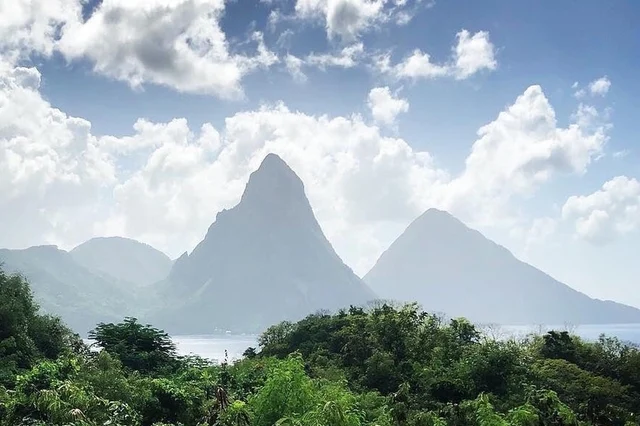
The island’s most iconic landmarks are the Pitons, two volcanic peaks that rise dramatically from the Caribbean Sea. These majestic formations have become a symbol of Saint Lucia and are recognized as part of a UNESCO World Heritage Site.
The designation acknowledges the area’s exceptional natural beauty as well as its unique geological features, making it one of the Caribbean’s most treasured environmental landmarks.
A Rare Place in Global Geography
Many countries around the world are named after influential men. Saudi Arabia derives its name from the House of Saud, Bolivia honors independence leader Simón Bolívar, Colombia commemorates Christopher Columbus, and the Philippines was named after King Philip II of Spain.
Against this backdrop, Saint Lucia occupies a singular position. According to widely accepted historical interpretations and national records, it remains the only sovereign nation named after a historical woman.
More than a geographical distinction, the island’s name serves as a reminder that women’s legacies have shaped history in profound ways. In a world where nations, monuments, and institutions have often been named after men, Saint Lucia stands as a rare and enduring tribute to a female figure whose name has become synonymous with an entire country.
For travelers, historians, and anyone fascinated by the stories behind the world’s nations, Saint Lucia offers more than stunning beaches and breathtaking scenery—it offers a remarkable chapter in the history of women’s enduring influence on the world.