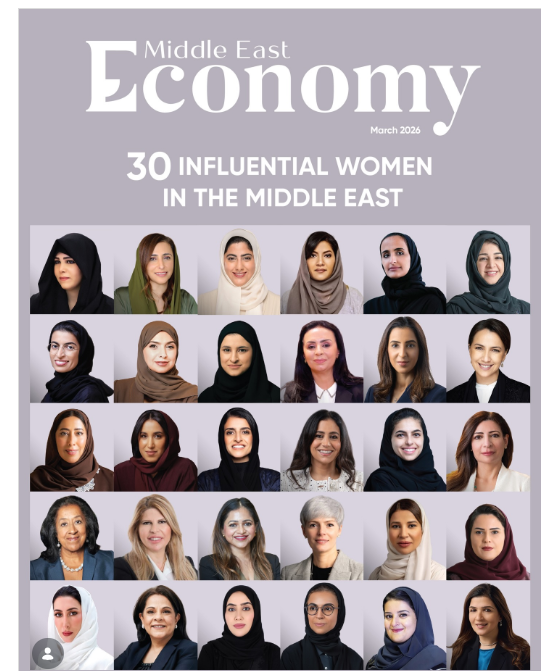

Within the Economy Middle East “30 Influential Women” list, Maya Morsy stands as Egypt’s distinct and deeply impactful model of influence in the region’s evolving economic narrative.
Across the Middle East, the list brings together leaders shaping industries, institutions, and global markets. Figures such as Hana Al Rostamani exemplify the scale and sophistication of regional finance, leading one of the largest banking groups through digital transformation and international expansion.

Within this dynamic landscape, Maya Morsy’s leadership reflects another critical dimension—the power of policy in shaping inclusive and sustainable economies.
Policy, Inclusion, and Economic Participation
Through her role in government and her leadership of national women’s empowerment initiatives, Maya Morsy has contributed to embedding inclusion as a core economic driver. Her work has focused on:
- Advancing women’s economic participation and financial inclusion
- Strengthening social protection systems at scale
- Aligning national strategies with long-term development frameworks
This approach positions policy not as a supporting function, but as a foundational force that enables broader economic growth.
Complementary Models of Influence
What emerges from the regional landscape is not a single definition of power, but a complementarity of leadership models:
- Leaders like Hana Al Rostamani represent institutional scale, capital strength, and global market integration
- Leaders like Maya Morsy reflect structural impact—shaping how societies participate in and benefit from economic progress
Holistic Leadership Perspective
Egypt’s presence through Maya Morsy highlights the importance of holistic economic leadership—where growth is not only measured by expansion, but by access, inclusion, and long-term resilience.
Together with her regional peers, she represents a generation of women who are not only advancing economies, but redefining what sustainable influence looks like in the Middle East.