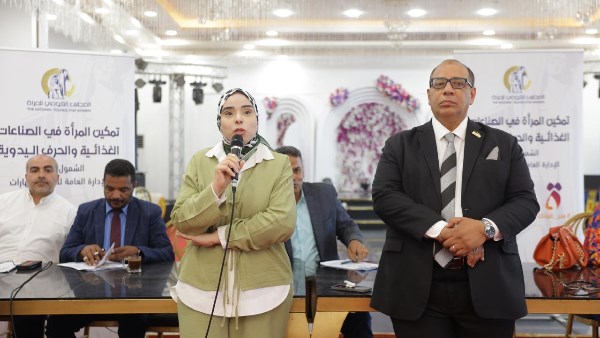

The National Council for Women (NCWC) has successfully concluded its comprehensive training program aimed at empowering rural women in the Beni Suef Governorate. This initiative is a key pillar of the National Project for the Development of the Egyptian Family and the “Haya Karima” (Decent Life) presidential initiative. Operating under the umbrella of the Financial Inclusion Program and the “Tahwisha” (Savings) project, the training specifically targeted women in the villages most in need.
Nashwa Mostafa, Acting National Director of the Financial Inclusion Program at the NCWC, highlighted that the “Tahwisha” initiative is a transformative tool for both economic and social empowerment. She praised the exceptional quality of the products developed by the participants, noting that these women are now better equipped to contribute to their local economies.

Mai Mahmoud, Director General of the Women’s Skills Development Center, added that the program’s success stems from its integrated training methodology. By blending theoretical knowledge with hands-on application, the Council is effectively building the specialized capacities of rural women to meet market demands.
The commitment of the trainees was also celebrated by Nermine Mahmoud, Rapporteur of the NCWC branch in Beni Suef. She emphasized that the Council’s support does not end with training; the focus will now shift to providing diverse marketing opportunities to ensure these micro-enterprises can scale and thrive.
To ensure long-term business sustainability, the curriculum covered a wide range of technical skills. Dr. Momtaz Hegab, Senior Program Consultant, explained that the sessions included training in food industries, dairy processing, health education, marketing, and professional packaging. The goal was to qualify women to manage small projects based on sound economic principles.
The program concluded with an impressive exhibition of the participants’ work, featuring a variety of food and dairy products. The items stood out for their high quality and natural ingredients, serving as a testament to the potential of rural Egyptian women when given the right tools and opportunities.