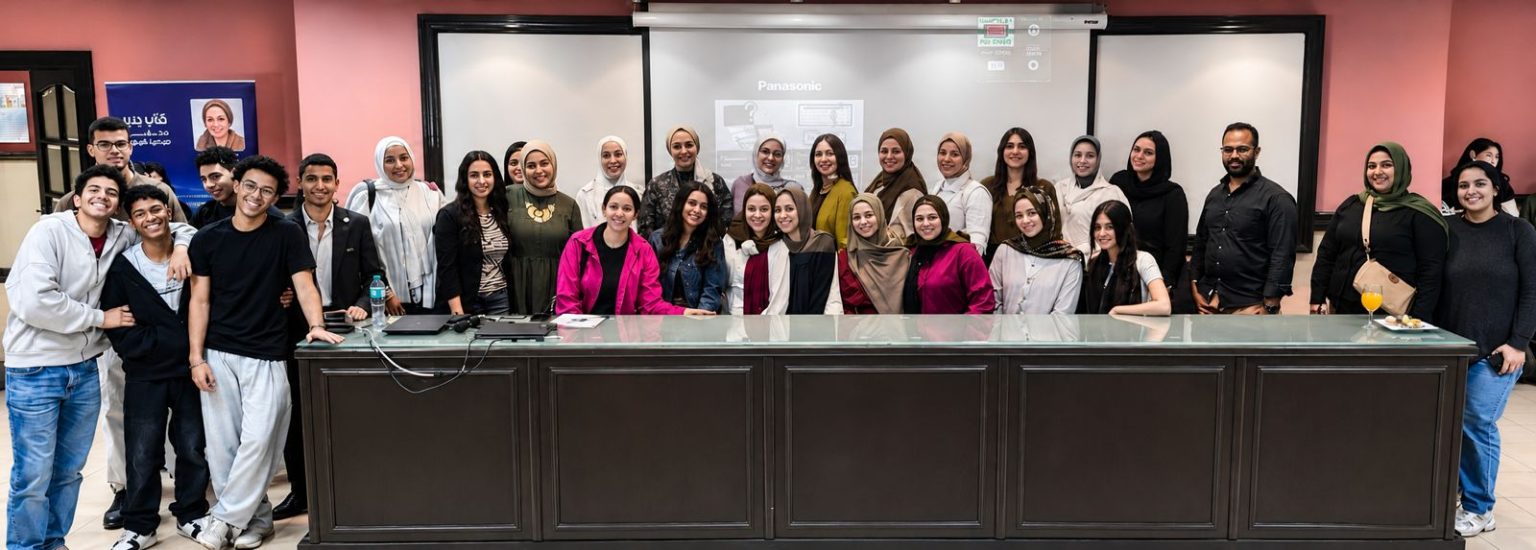

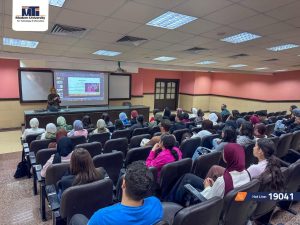
The Faculty of Mass Communication at the Modern University for Technology and Information (MTI) organized a specialized seminar titled “Digital Marketing and the Influence Industry,” featuring writer, media personality, and influencer media specialist Germine Amer at the university campus. The event was held as part of the university’s efforts to keep pace with rapid global developments in the digital media environment and prepare students to understand modern influence dynamics in the age of social media platforms.
The seminar discussed theories of digital influence and the influencer industry, as well as the concept of the influencer and its historical development from traditional opinion leaders to digital platform creators. It also examined the content economy as one of the main drivers of the modern influence industry, in addition to highlighting the differences between influencers and celebrities, and distinguishing between the roles of influencers, content creators, and opinion leaders within the digital media landscape.

In the field of digital marketing communications, the seminar reviewed the role of influencers as a bridge of trust between institutions and audiences, and their ability to improve institutional image and deliver messages in a more human way, in addition to their role in crisis management through practical examples from real campaigns.
The seminar also addressed the role of influencers in digital marketing, beginning with the awareness stage, passing through consideration, and reaching the conversion and purchasing stage, while explaining the mechanisms for selecting suitable influencers and the concept of brand ambassadors within marketing strategies.
In a related context, the seminar reviewed different categories of influencers, including the most influential and potentially risky groups, while also exploring the psychology of influence through concepts such as social proof and parasocial relationships, and the impact of experience on shaping audience opinions and decisions.
Another section focused on influencer creation, discussing the main qualities and practical steps for success, content types, content writing mechanisms, storytelling techniques, digital identity building, audience growth, and consistency. It also warned against credibility risks such as fake followers and paid hype, as well as the impact of behavioral crises on an influencer’s reputation.
The seminar also highlighted the influencer landscape in Egypt, including specialized influencers, social issue influencers, meme influencers, shadow influencers, and what are known as “influence celebrities,” in addition to analyzing hybrid influencer patterns. It also discussed examples of influencer campaigns in Egypt in sectors such as taxation, tourism, and digital banking services, reflecting their growing role in supporting public policies and community awareness.
The seminar further addressed the ethical and legislative framework of the influence industry, including advertising disclosure rules, governance, and influencer rights amid the growing need to regulate this rapidly expanding field.
The event concluded with a number of practical recommendations for influencers and content creators, alongside discussions on the future of the influence industry, especially with the rise of artificial intelligence and virtual influencers, and the transformation of influencers from message carriers into strategic partners or brand owners, in addition to the challenges related to maintaining trust in the age of digital saturation.
On the sidelines of the seminar, Dr. Sami El Sherif, Dean of the Faculty of Mass Communication at MTI University, stated that the university places significant importance on integrating digital transformations into the educational process, believing that the influence industry has become a form of soft power capable of shaping public awareness and supporting development efforts.
He added that the workshop comes within the framework of the university’s strategy to prepare graduates capable of understanding and responsibly employing modern influence tools.
For her part, Dr. Mai Mahmoud, Head of the Marketing Communications Systems Department at the Faculty of Mass Communication at MTI University, affirmed that the faculty is keen on linking academic study with practical application, particularly in modern media and digital influence.
She added that the seminar was designed to provide students with a comprehensive understanding of how influencers can be integrated into public relations and marketing strategies, while emphasizing purposeful content, professional ethics, reputation management, and building audience trust.
In her remarks, Germine Amer explained that the influence industry today is no longer based solely on reach, but rather on credibility and the ability to build a genuine and sustainable relationship with audiences.
She also noted that the industry is moving from an emphasis on inflated numbers to the quality of influence, which requires redefining the role of influencers as trusted intermediaries and strategic partners for institutions.