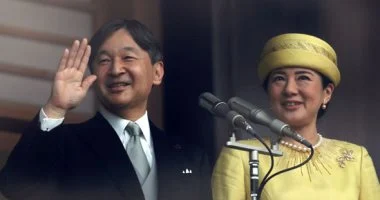


Japan is once again confronting a long-standing constitutional and cultural debate as concerns grow over the future of the Imperial Family. With only a handful of eligible male heirs remaining, questions are resurfacing about whether women should be allowed to inherit the Chrysanthemum Throne for the first time in more than a century.

Although Japan has had a female prime minister, current succession laws continue to prohibit women from ascending the Imperial throne, raising concerns about the long-term stability of the world’s oldest continuing hereditary monarchy.
A Shrinking Pool of Male Heirs
The Japanese Imperial Family currently has only three eligible male heirs, two of whom are over the age of 60. This increasingly limited line of succession has prompted lawmakers and constitutional experts to warn of a potential succession crisis.
Unlike many constitutional monarchies that have adopted gender-neutral succession rules, Japan continues to follow a male-only inheritance system under the Imperial House Law, limiting succession exclusively to men from the paternal Imperial lineage.
As the Imperial Family has welcomed more daughters than sons in recent decades, the shortage of eligible successors has become increasingly apparent.
Government Proposes Expanding the Male Line
Rather than revising succession laws to allow women to inherit the throne, the Japanese government has proposed restoring former collateral branches of the Imperial Family whose male descendants could re-enter the line of succession.
The proposal aims to expand the number of eligible male heirs while preserving the existing male-line succession system. Legislative approval is expected to be considered by Japan’s parliament.
However, the proposal has reignited public debate over whether excluding women remains appropriate in modern Japan.
Historians Point to Female Emperors in Japan’s Past
Scholars argue that history offers evidence that women have successfully ruled Japan before.
According to Professor Makoto Okawa of Chuo University, there is little logical justification for permanently excluding women from the throne.
Japan has had eight reigning empresses throughout its history, most serving during periods when male heirs were too young to govern.
The legal prohibition against female succession was formally established with the Imperial House Law of 1889 during the Meiji Era, institutionalizing male-only succession.
Political Opposition Remains Strong
Despite growing discussion, political support for changing the succession rules remains limited.
Conservative members of the ruling Liberal Democratic Party (LDP) continue to oppose allowing women to become Emperor.
Earlier this year, Prime Minister Sanae Takaichi stated during parliamentary discussions that restricting succession to male descendants of the Imperial line remains appropriate.
Current government proposals do not include any provision allowing Imperial princesses to inherit the throne.
Furthermore, under existing rules, female members of the Imperial Family lose their Imperial status upon marrying commoners, and their children are excluded from the line of succession.
More Than a Ceremonial Institution
Although the Japanese Emperor exercises a largely ceremonial constitutional role, the Imperial Family remains a powerful national symbol representing unity, continuity, and cultural heritage for Japan’s population of approximately 123 million people.
For many observers, the succession debate extends beyond constitutional law to broader questions about gender equality, historical tradition, and the future of one of the world’s oldest surviving monarchies.
As the number of eligible heirs continues to decline, Japan faces increasing pressure to determine whether preserving centuries-old succession rules should take precedence over ensuring the long-term continuity of the Imperial institution.