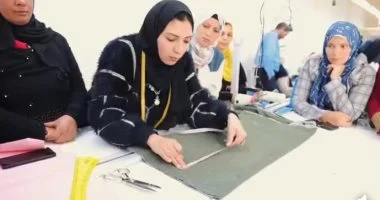

Across Egypt, women are increasingly proving that creativity, determination, and access to opportunity can become powerful drivers of economic independence. In Kafr El Sheikh Governorate, many women have transformed traditional skills and artistic talents into thriving small businesses, creating handmade products that celebrate Egyptian craftsmanship while generating sustainable income for their families.
Supported through training programs and community initiatives, these women are building successful entrepreneurial journeys rooted in local heritage, innovation, and self-reliance.

Crafting New Opportunities
For many participants, a training workshop became the starting point of a completely new chapter. Through programs focused on women’s economic empowerment and entrepreneurship, participants learned practical skills ranging from handmade accessories and embroidery to carpet weaving and decorative crafts.
The result has been the emergence of a growing network of women-led microenterprises producing a variety of handmade items, including beaded handbags, embroidered cushions, resin accessories, jewelry, and traditional woven carpets.
These projects demonstrate how local talent can be transformed into sustainable economic opportunities when combined with training, mentorship, and market access.
Building Businesses from Handmade Creativity
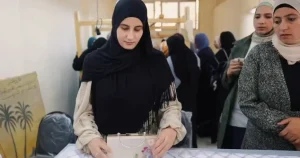
One inspiring example is Mariam Mahmoud Amer from Borg El Burullus in Motobas, who participated in a handicrafts workshop focused on designing handbags using beads and crystals.
After completing the training, she launched her own small business producing handmade bags and began marketing her creations within her community and neighboring villages. She also leveraged social media to promote her products and expand her customer base.
Her experience highlights the growing role of digital platforms in helping women entrepreneurs reach wider markets while maintaining home-based businesses.
Reviving Traditional Weaving Skills
Another success story comes from Norhan Kamal Sarhan, a 25-year-old entrepreneur who received training in carpet and gobelin weaving through programs designed to strengthen women’s economic participation.
Inspired by the skills she acquired, she invested in her own loom and established a business producing handmade carpets, woven accessories, and decorative items. The venture has contributed to increasing her family’s income while preserving traditional Egyptian weaving techniques.
For Norhan, entrepreneurship became more than a source of income—it became a pathway to independence and long-term growth.
Women Driving Sustainable Development
According to Dr. Amani Shaker, Rapporteur of the Kafr El Sheikh Branch of the National Council for Women and Vice President for Community Service and Environmental Development at Kafr El Sheikh University, the governorate has witnessed numerous successful women-led projects across various sectors, including handicrafts, textile arts, and environmentally conscious enterprises.
Many of these initiatives have also participated in Egypt’s National Initiative for Smart Green Projects, demonstrating how women entrepreneurs are contributing not only to economic development but also to environmental sustainability and climate-conscious innovation.
By combining traditional craftsmanship with modern business practices, these projects create solutions that generate social, economic, and environmental value.
The Power of Role Models
A key component of many training programs is showcasing successful women entrepreneurs who can inspire others to pursue their ambitions.
Sharing real-life success stories helps strengthen confidence among women and young people, encouraging them to transform creative ideas into viable businesses with measurable impact. These examples illustrate that entrepreneurship is accessible to women from diverse backgrounds when the right support systems are in place.
Creating a Future of Inclusive Growth
The experiences emerging from Kafr El Sheikh demonstrate the transformative power of skills development, entrepreneurship training, and community support. By investing in women’s talents and helping them build sustainable businesses, these initiatives are strengthening local economies while preserving valuable elements of Egypt’s cultural heritage.
As more women turn creativity into opportunity, they are not only improving their own livelihoods but also contributing to a broader vision of inclusive and sustainable development. Their stories serve as powerful reminders that every skill can become a new beginning—and every handcrafted product can represent a pathway toward empowerment, independence, and lasting success.