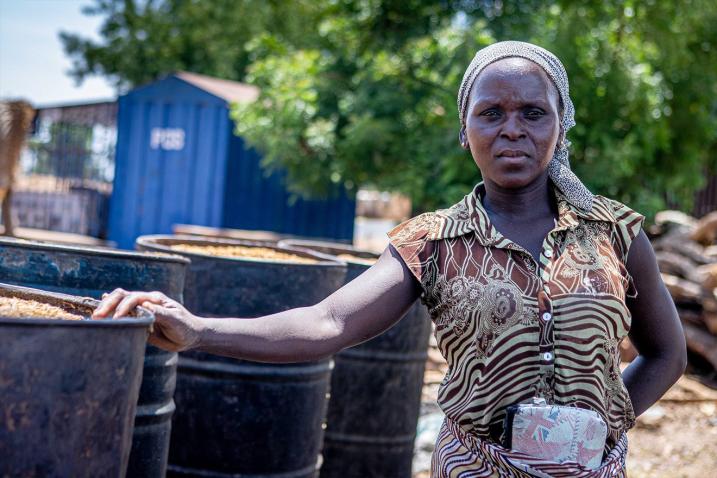

In the rural farming community of Namu in Nigeria’s Plateau State, rice mill owner Victoria Ali begins her work before sunrise every day. For years, unreliable electricity made operating her business slow, costly, and unpredictable. Stable power was unavailable, affecting not only agricultural processing but also local businesses, market traders, and fishing communities that depended on refrigeration and extended operating hours.
Today, Victoria’s business has been transformed through access to reliable electricity generated by a solar-powered minigrid. The improved energy supply has increased productivity, reduced operating costs, and significantly boosted her income.
Expanding Access to Clean Energy Across Nigeria
Energy poverty remains one of Africa’s most pressing development challenges. Nearly 600 million people across Sub-Saharan Africa still lack access to electricity, limiting economic opportunities, education, healthcare, and overall quality of life.
To address this challenge, the United Nations Development Programme (UNDP) launched the Africa Minigrids Program (AMP), one of its largest sustainable energy initiatives. The program delivers reliable, affordable electricity through solar-powered minigrids, helping underserved communities transition toward cleaner and more resilient energy systems.
In Nigeria, the initiative is supported by funding from the Global Environment Facility (GEF) and implemented in partnership with:
- United Nations Development Programme (UNDP)
- Global Environment Facility (GEF)
- RMI
- African Development Bank
- Rural Electrification Agency (REA)
The program is investing more than US$5.9 million across 23 solar minigrid sites, including the community of Namu.
These projects support climate-smart agriculture, rural enterprise development, and gender-responsive economic growth while aligning with:
- Nigeria’s Electricity Act 2023
- Energy Transition Plan
- National Electrification Strategy
- Paris Agreement climate commitments
Over the lifetime of these investments, the program is expected to prevent approximately 74,000 metric tons of carbon dioxide emissions by replacing diesel generators and fuelwood with clean solar energy.
Solar Energy Is Empowering Women Entrepreneurs
During 2025 alone, the Africa Minigrids Program brought solar-powered electricity to more than 14 communities across Nigeria’s six geopolitical zones, improving the lives of over 20,000 people.
For women, reliable electricity represents far more than lighting.
It enables:
- Electric grain-processing equipment that reduces physically demanding work
- Solar-powered water systems that improve household water access
- Refrigeration that minimizes food waste
- Greater opportunities for income generation
- Improved access to education and business development
By reducing unpaid domestic labor, women gain additional time to expand businesses, pursue education, and participate in community leadership.
Addressing Gender Barriers in Rural Communities
Despite these opportunities, women have historically benefited less from electrification initiatives.
A gender analysis supported by the Africa Minigrids Program found that patriarchal social norms often limit women’s access to financial resources, decision-making processes, and participation in energy planning.
Women also shoulder a disproportionate share of unpaid household and caregiving responsibilities, leaving less time for training, entrepreneurship, and community engagement.
Additionally, women are frequently concentrated in small-scale agricultural processing and informal trade, while men dominate larger commercial activities requiring greater capital investment.
Recognizing these challenges, the Africa Minigrids Program has integrated gender equality into its implementation strategy.
The initiative established a dedicated Technical Working Group on Gender Equality, bringing together teams from multiple African countries to develop inclusive policies, strengthen accountability, and ensure that women’s needs are incorporated into the planning, financing, and governance of renewable energy projects.
Women Leading Nigeria’s Renewable Energy Sector
The transition to clean energy is also creating opportunities for women to lead within the renewable energy industry itself.
One notable example is Habiba Ali, Chief Executive Officer of Sosai Renewable Energy, which oversees two Africa Minigrids Program sites supplying a combined 100 kilowatts of solar power to approximately 600 households.
Beyond developing renewable energy infrastructure, Habiba actively supports women entering the energy sector by encouraging networking, mentorship, and greater visibility for female professionals.
Her leadership demonstrates that women are becoming key drivers of Africa’s clean energy transition.
Digital Technology Is Supporting Expansion
Scaling renewable energy requires more than infrastructure—it depends on accurate data and informed investment decisions.
To support long-term growth, the Africa Minigrids Program is developing regional and national digital platforms in partnership with LocateIT, a Kenyan information technology company specializing in spatial data and energy market analytics.
Expected to become fully operational during 2026, these platforms will enable:
- Real-time project monitoring
- Investment verification
- Data-driven planning
- Improved regulatory oversight
- Greater investor confidence
These digital systems are designed to accelerate renewable energy deployment across Africa.
A Multi-Billion-Dollar Opportunity
According to UNDP modeling, solar minigrids represent the most cost-effective electrification solution for approximately 265 million people across the program’s 21 participating countries by 2030.
This represents an estimated US$46 billion market opportunity.
Achieving this vision would require:
- More than 110,000 solar minigrids
- Electricity access for over 200,000 schools and healthcare facilities
- Reliable power for approximately 900,000 businesses
Most importantly, expanding access to sustainable energy will enable millions more women like Victoria Ali to build thriving businesses, strengthen local economies, and assume greater leadership roles within their communities.
As clean energy reaches more underserved regions, it is becoming a powerful catalyst not only for climate resilience but also for women’s economic empowerment and inclusive development across Africa.