
Cairo, November 26, 2026
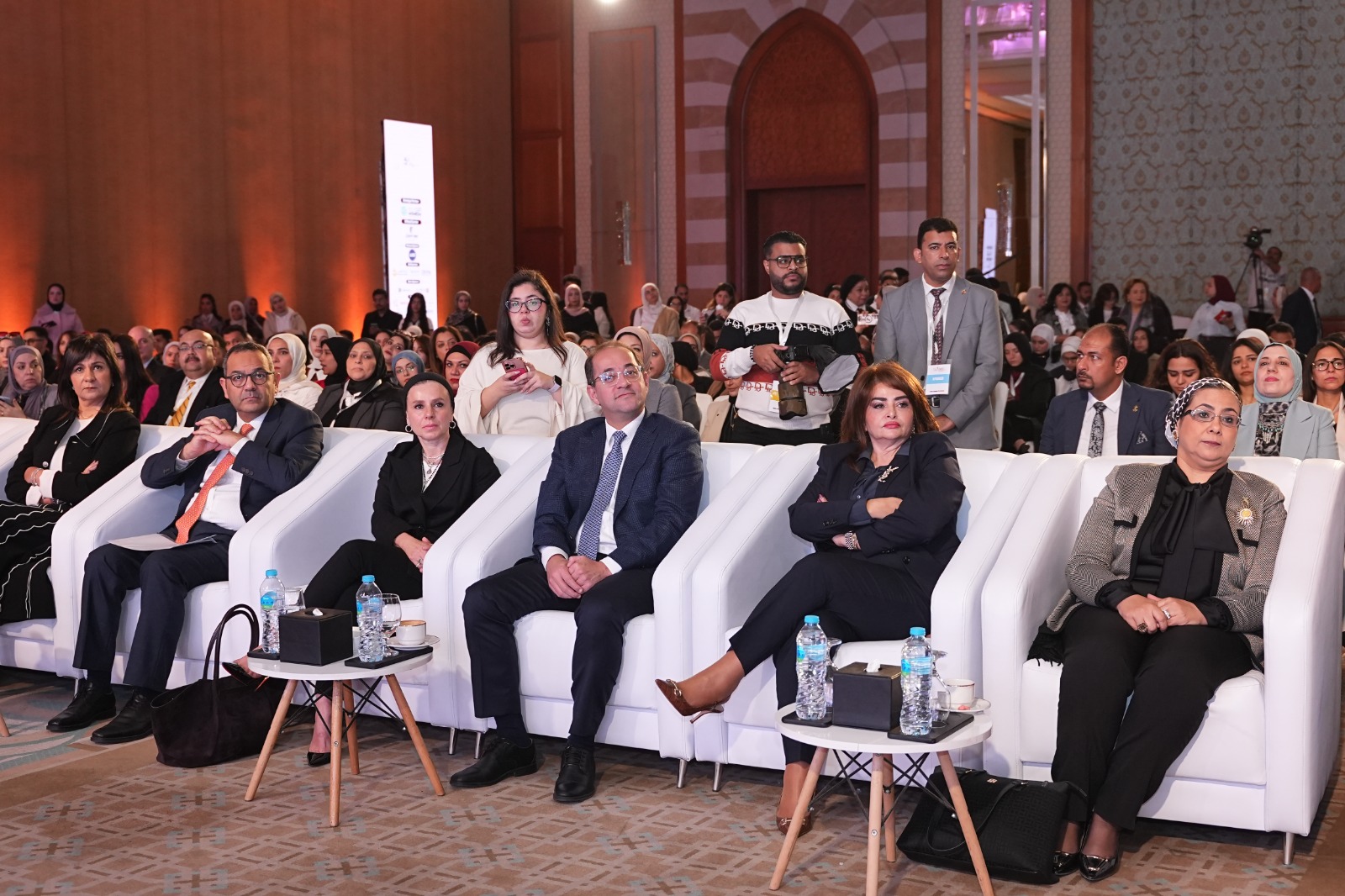
H.E. Ahmed Kouchouk, Minister of Finance, and Counselor Amal Ammar, President of the National Council for Women, today inaugurated the fifth edition of the Egyptian Women’s Summit 2026, organized by the Top 50 Women Forum under the theme “From Learning to Earning.” The summit brings together approximately 4,000 students and graduates from diverse academic disciplines, alongside senior executives from leading economic, financial, technology and industrial institutions, policymakers and entrepreneurs.
The summit is being held under the auspices of seven ministries: Finance; Social Solidarity; Agriculture and Land Reclamation; Housing, Utilities and Urban Communities; Communications and Information Technology; Industry; and Investment and Foreign Trade. It is also supported by the National Council for Women, the Micro, Small and Medium Enterprise Development Agency (MSMEDA), the United Nations Population Fund (UNFPA), and the Italian Agency for Development Cooperation.
The event features the participation of university presidents, private sector representatives and international institutions. Its program includes a series of panel discussions and interactive sessions addressing labor market transformations, the skills required for future jobs, emerging career and investment opportunities, ways to align educational outcomes with the needs of the economy, and how to help young people transition from learning to employment and productive economic participation.
The opening ceremony was attended by Ambassador Nabila Makram, Head of the Technical Secretariat of the National Alliance for Civil Development Work; Mostafa Ismail, CEO of MSMEDA; Germine Haddad, Acting Representative of UNFPA; and Lobna Helal, Chairperson of Telecom Egypt.
In her address at the opening ceremony, Eng. Hoda Darweesh, Advisor to the Minister of Communications and Information Technology for Digital Community Development, emphasized that rapid advances in technology and artificial intelligence are making it essential to rethink traditional approaches to training and qualification. These efforts, she noted, must go beyond equipping young people with knowledge and skills to preparing them for future jobs and enabling them to turn what they have learned into employment opportunities, sources of income and economic stability.
Darweesh said that technology offers extensive opportunities to improve people’s lives, given the growing ease of access to knowledge and the development of learning and training tools. The challenge, she explained, lies in translating this knowledge into productive work that contributes to economic stability and community development.
She added that the Ministry of Communications and Information Technology is working to expand digital opportunities for all segments of society and leverage technology to broaden participation and bridge existing gaps, with particular attention to young people, women and persons with disabilities, while taking into account the distinct needs and circumstances of each group.
She explained that the ministry’s capacity-building efforts encompass the development of digital, personal and professional skills, as well as career guidance and counseling, labor market preparation and entrepreneurship support. She also noted that the ministry’s training programs graduate approximately 50,000 or more trainees annually.
Darweesh pointed out that the rapid evolution of artificial intelligence applications and modern technologies is creating new professions and opportunities, making it essential to accelerate efforts to prepare young men and women for the jobs of the future. She stressed that training is the starting point, while empowerment is achieved when knowledge becomes a skill, that skill translates into an employment opportunity, and that opportunity generates income and economic stability.
Meanwhile, Dina Abdel Fattah, President and Founder of the Top 50 Women Forum, said that the fifth edition of the Egyptian Women’s Summit marks the beginning of a series of meetings and events that the Forum plans to organize in the coming period. These initiatives aim to expand its activities, strengthen direct engagement with institutional leaders, and raise awareness of its initiatives and plans.
In her address at the summit’s opening, she added that the Forum is working to activate cooperation agreements with the National Council for Women, with the aim of extending its initiatives and activities to governorates across Egypt rather than limiting them to Cairo.
She explained that cooperation with the Council extends beyond technical and logistical support to include utilizing its premises across the governorates to organize introductory meetings, work programs and training activities, thereby reaching a wider range of beneficiaries.
Dina Abdel Fattah emphasized that the summit seeks to bridge the gap between academic education and labor market requirements through direct dialogue bringing together universities, the private sector and policymakers to discuss the skills demanded by emerging jobs and the career pathways created by economic and technological transformations.
She added that the theme “From Learning to Economic Empowerment” highlights the need to move beyond acquiring knowledge within educational institutions and translate it into meaningful economic participation. Addressing the gap between educational outcomes and institutional needs, she noted, requires giving young people opportunities to explore practical experiences and diverse career paths.
She explained that the summit brings together leaders from the finance, agriculture, communications, technology, industry, investment and entrepreneurship sectors, recognizing that future opportunities are not confined to a single industry. Rather, they emerge from the interconnectedness of economic activities, academic disciplines and diverse skill sets, broadening young people’s choices and opening up new avenues for employment, innovation and business creation.
She stressed that competence, merit and equal opportunity are central themes of the summit’s discussions. She also noted that diversity and complementarity between men and women in the workplace, leadership positions and decision-making contribute to better decisions, innovation and productivity. Investing in talent and ensuring equal access to opportunities, she added, are key factors in institutions’ ability to grow, remain sustainable and compete.
The summit’s sessions explore the future of jobs in light of the technological revolution and artificial intelligence applications, including how these technologies can be leveraged to increase productivity and create new employment opportunities. Discussions will also examine career paths that may not yet be readily apparent to graduates and explore opportunities across the telecommunications, finance, industry, agriculture, engineering consultancy and business development sectors.
The program also addresses the relationship between economic policies and human capital development, as well as the role of government institutions and the private sector in preparing young professionals and developing skills that align with the economy’s evolving needs. It will further showcase experiences in establishing, managing and expanding businesses, examining the challenges associated with launching ventures, securing financing and competing in the market, as well as approaches to transforming innovative ideas into scalable businesses.
Part of the summit’s discussions will focus on the transition into professional life, including understanding workplace rights and responsibilities, building a professional presence and navigating different work environments. Other topics include financial literacy, money and wealth management, understanding investment mechanisms and making informed financial decisions, alongside the importance of continuous learning and the ability to adapt to changing professional and technological landscapes.
Discussions will also explore ways to strengthen the economic participation of both men and women, the challenges they face in the business world, and the impact of stereotypes on career and investment paths. Participants will share practical experiences of overcoming traditional barriers through expertise, competence and the ability to deliver results.
As part of the summit, a career, consulting and training fair will be held, featuring more than 70 exhibitors from companies and institutions operating across various sectors. The fair will provide young people with direct access to labor market representatives, enabling them to explore job opportunities, career pathways and available training programs, as well as receive professional and career development guidance.
The exhibition aims to strengthen the alignment between educational outcomes and institutional requirements, create practical opportunities for professional preparation and employment, and support the development of career pathways. It will also introduce participants to the skills and programs that can help them prepare for the demands of emerging jobs.
Companies participating in the summit represent a range of sectors, including credit information, investment, telecommunications and automotive industries. These include the Egyptian Credit Bureau (i-Score), Valu Holding, Telecom Egypt (WE), Nissan Egypt, and EFG Hermes ONE, reflecting private sector engagement in the summit and its efforts to support youth training and facilitate connections with the labor market.
It is worth noting that the Top 50 Women Forum was established in 2016 and brings together leading women from across various sectors of the economy. The Forum works to support economic development, strengthen the participation of qualified professionals in leadership and decision-making positions, and prepare the next generation of young leaders for the labor market through initiatives, training programs and partnerships with government institutions, the private sector and international organizations.
The fourth edition of the summit, held in December 2025, featured the participation of the Ministers of Planning, Finance, Agriculture and Labor, representatives of international institutions, presidents and representatives of 28 Egyptian and foreign universities, as well as senior executives from institutions and companies and private sector representatives.