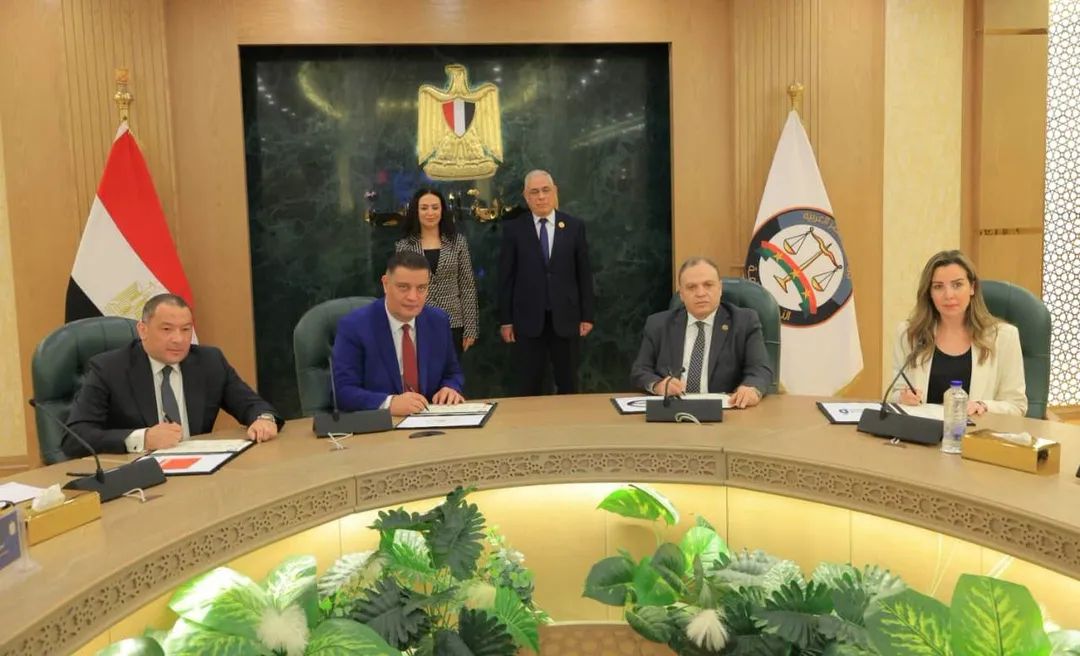

Egypt is advancing its social protection and digital transformation agenda after Maya Morsy and Mohamed Shawky oversaw the signing of two major cooperation protocols between the Ministry of Social Solidarity Egypt and the Egyptian Public Prosecution.
The agreements aim to protect family rights, enhance access to justice, and expand digital inclusion, particularly for women and people with disabilities—marking a significant step toward more efficient, citizen-centered public services.

Digital integration to safeguard family rights
The first protocol, signed with Nasser Social Bank’s Family Insurance Fund, focuses on preserving public funds and ensuring timely access to family financial rights, especially for women and children.
The agreement introduces:
- Digital archiving of court rulings for faster retrieval
- Automated data exchange between state entities
- Streamlined legal procedures to reduce delays
- Enhanced governance and judicial enforcement mechanisms
Officials say the system will significantly reduce the time required for mothers to obtain legally mandated financial support, while strengthening accountability for non-compliance.
Morsy described the protocol as a “turning point” in protecting Egyptian families, emphasizing that digitalization will eliminate prolonged legal delays and reinforce the principle of swift justice.
Expanding access for people with disabilities
The second protocol—signed with the Differently Abled Fund and Orange Egypt—aims to remove barriers to legal services for people with disabilities through digital solutions.
The agreement introduces:
- Simplified, low-cost digital access to prosecution services
- Free SIM cards for high-achieving individuals with disabilities
- Mobile-enabled platforms for easier legal engagement
The initiative reflects a broader national push to ensure that digital transformation is inclusive and accessible to all citizens, regardless of physical ability.
A coordinated approach to inclusion
Zeina Tawakkol, Executive Director of the Differently Abled Fund, underscored the importance of institutional coordination in delivering meaningful impact.
She noted that data-driven planning and cross-sector partnerships are essential to improving service delivery, adding that the protocol will help streamline procedures, expand outreach to underserved groups, and ensure that support reaches those who need it most.
Tawakkol also emphasized that strengthening collaboration between government entities and development partners is key to building a more inclusive and responsive social protection system.
Toward a comprehensive protection system
Morsy highlighted that the collaboration between social institutions, judicial authorities, and private-sector partners represents a “comprehensive protection system” designed to safeguard citizens’ rights and dignity.
“When these institutions work together, we create a framework that guarantees access, efficiency, and justice,” she said.
Aligning with Egypt’s national priorities
The protocols align with Egypt’s broader development agenda, including:
- Advancing financial and social inclusion
- Expanding digital government services
- Enhancing transparency and efficiency in the justice system
- Supporting women and vulnerable communities
Officials say the agreements will help bridge longstanding service gaps and deliver faster, more equitable outcomes—particularly for marginalized groups.