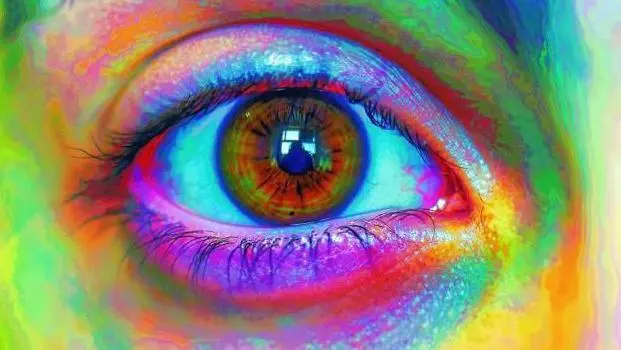

Most women do not see more colors than men. However, a small percentage of women may have a rare genetic trait that allows them to distinguish finer color differences than most people.
Scientists call this ability tetrachromacy, or four-color vision. Most people have three types of cone cells in the retina that detect red, green, and blue light. Some women, however, inherit a fourth type of cone cell because of genetic variations on the X chromosome. Since women typically have two X chromosomes while men usually have one, women are far more likely to possess this rare genetic combination.

Researchers estimate that about 12% of women carry the genetic potential for tetrachromacy. However, only a much smaller number appear to have functional tetrachromacy, meaning their brains can process the extra visual information and actually perceive more subtle color differences.
Studies have found that women with functional tetrachromacy may distinguish many more shades between similar colors than people with typical color vision. Scientists are still investigating whether they actually perceive entirely new colors or simply detect much finer variations within the existing color spectrum.
Research in animals also supports the theory that additional color receptors improve color discrimination. In several species of New World monkeys, females with extra color receptors identify ripe fruit more efficiently than males with fewer color receptors.
Scientists caution that proving tetrachromacy remains difficult because color perception is a highly subjective experience. Modern computer and smartphone screens display colors using only red, green, and blue pixels, making online “tetrachromacy tests” unreliable. The most accurate diagnosis requires genetic testing alongside specialized laboratory vision assessments.
Some women who may have functional tetrachromacy report noticing color differences that others cannot see. They may also be unusually sensitive to harsh LED or fluorescent lighting, preferring warmer light sources because artificial lighting can appear uncomfortable or overwhelming.
Researchers are also exploring whether the brain learns to use the additional color information over time. Some experts believe long-term experience working with colors, such as painting, design, or art, may help individuals develop the ability to recognize the extra color distinctions provided by the fourth cone cell.
Although the idea that all women see more colors than men is a myth, scientific evidence suggests that a small group of women may possess one of the most remarkable forms of human vision. As research continues, tetrachromacy could provide valuable insights into genetics, perception, and the extraordinary diversity of human eyesight.