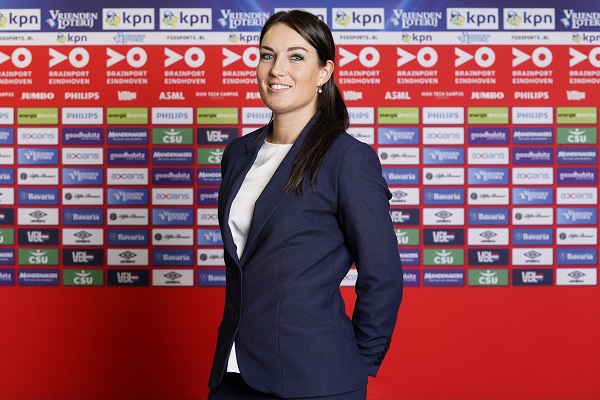


In a sporting world where leadership roles remain largely dominated by men, Dr. Susan Horman is breaking barriers and making history at the FIFA World Cup 2026.
Among the 48 national teams competing in the tournament hosted by the United States, Canada, and Mexico, Dr. Horman stands out as the only woman serving as Head of Medical Staff for a men’s national team. She currently leads the medical team of the Curacao national football team, making her one of the most visible female medical leaders on football’s biggest stage.

Her achievement is particularly remarkable considering that, in the nearly century-long history of the men’s FIFA World Cup, only a handful of women have held comparable roles. Dr. Horman follows in the footsteps of Dr. Celeste Geertsema, who became the first female team doctor at a men’s World Cup with New Zealand in 2010, and Dr. Celia Schwaerz, who joined Germany’s men’s national team medical staff in 2023.
Interestingly, Dr. Horman initially viewed her historic position as simply another day at work.
“When FIFA told me I was the only woman leading a medical team at the World Cup, I didn’t think much about it,” she explained in media interviews. “I’m used to being the only woman—or one of very few women—in the room. But I hope that changes soon because there are many highly qualified women who can do this job.”
A Career Built on Excellence
Originally from Brazil and professionally trained in the Netherlands, Dr. Horman has built an impressive international career in sports medicine.
Her professional experience includes working with major sports organizations such as Real Madrid, PSV Eindhoven, the Netherlands Under-16 National Team, and the Netherlands Women’s Handball Team. Her expertise and dedication have earned her recognition across multiple disciplines of elite sports.
She graduated from medical school in 2008 and later specialized in sports medicine in 2014. During her medical studies, women represented the majority of students. However, she noticed a significant decline in female representation once she entered the field of sports medicine.
This experience highlighted a challenge that continues to affect women pursuing careers in professional sports healthcare.
Navigating a Male-Dominated Environment
While Dr. Horman does not describe working in football as intimidating, she acknowledges that women often face additional hurdles when entering leadership positions in male-dominated industries.
According to her, competence and professionalism remain the strongest tools for overcoming bias.
“If people see that you are qualified and delivering results, they will eventually accept you,” she says. “But women often have to prove themselves first.”
At Curacao Football Federation, she remains the only woman traveling with a delegation of nearly 50 players and staff members, illustrating how underrepresented women still are in many areas of professional football.
Balancing Career and Personal Life
Dr. Horman also points to the demanding nature of professional sports as a barrier that discourages many women from entering the field.
The expectation of constant travel, long working hours, and year-round availability can create challenges for women who are balancing family responsibilities, pregnancy, or caregiving roles.
She believes that more flexible employment structures could help attract and retain talented female medical professionals.
Countries such as Sweden have experimented with rotational medical staffing systems, allowing physicians to share responsibilities while maintaining continuity of care. Dr. Horman sees such models as a promising way to make sports medicine careers more accessible.
A Historic Moment for Women in Football
The 2026 tournament has already delivered one remarkable milestone. During Curacao’s match against Germany, the event featured an all-female external medical team for the first time in men’s World Cup history.
The medical group included FIFA-accredited Match Doctor Dr. Emma Lunan, Curacao’s Head of Medical Staff Dr. Susan Horman, Germany’s Team Doctor Dr. Celia Schwaerz, Emergency Physician Dr. Kari Baconas, and Injury Surveillance Officer Dr. Kerry Beck.
The moment symbolized a broader shift toward greater female representation in elite sports medicine and football leadership.
Inspiring the Next Generation
For Dr. Horman, progress ultimately depends on opening doors for future generations of women.
Her message to young women interested in sports medicine is clear: persistence matters.
“I’ve heard many times that certain things are impossible because I’m a woman,” she says. “But if you are qualified, professional, and committed, you can absolutely succeed.”
As FIFA 2026 continues, Dr. Susan Horman’s story serves as a powerful reminder that expertise knows no gender. Her presence on football’s biggest stage is not only a personal achievement—it is a milestone for women everywhere striving to lead, innovate, and redefine what is possible.