
Engineer Hazem El-Ashmouni, Governor of Sharqia, emphasized the importance of community initiatives aimed at supporting women’s economic and social empowerment, stressing that the Egyptian state places great importance on building women’s capacities and preparing them for active participation in society and sustainable development.
He noted that women represent a fundamental pillar in building both the family and society, making their empowerment a national priority within Egypt’s broader development vision.

For her part, Engineer Lobna Abdel Aziz, Deputy Governor of Sharqia, explained that the “Fekra Lebokra” initiative is considered the first initiative of its kind among Egypt’s governorates. The program comes within Sharqia’s efforts to strengthen the social, economic, and intellectual development of Egyptian women as part of the urgent population action plan’s first phase in Belbeis City.
She added that the initiative is being implemented under the supervision of the Central Population Unit at the Ministry of Local Development as part of state efforts to advance women’s economic empowerment and support Egypt’s Sustainable Development Strategy 2030 goals.
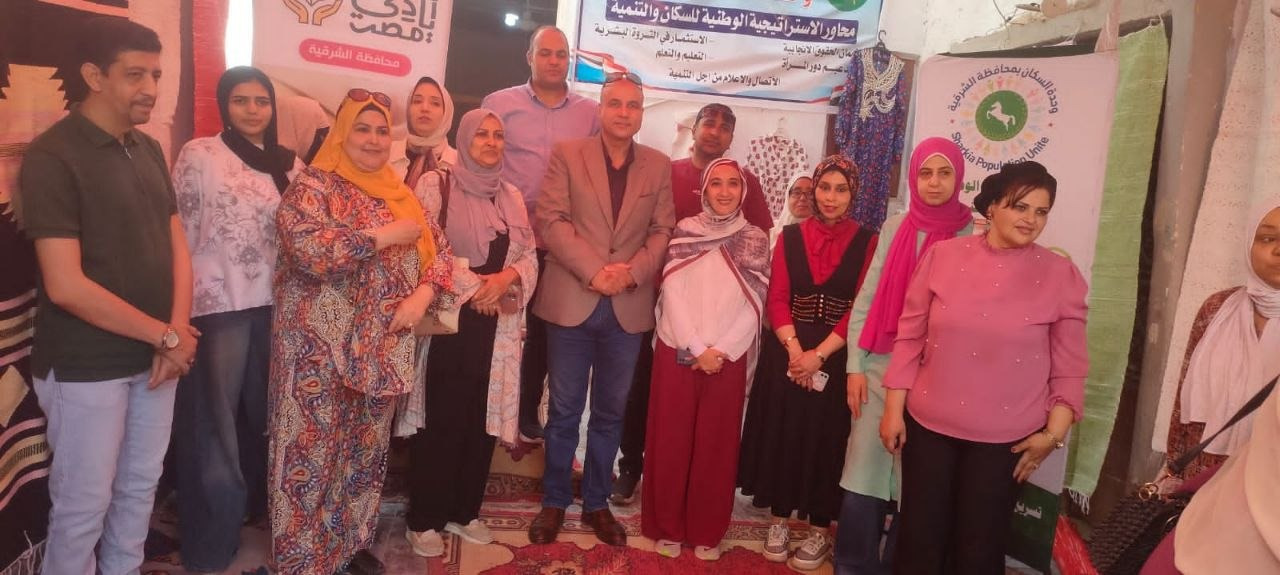
In the same context, Riham Ragab, Director of the Population Unit in Sharqia, stated that the initiative was officially launched on Wednesday in Belbeis in the presence of Major General Ahmed Shaker, Head of the City Center.
The initiative aims to train women interested in launching small businesses and handicraft projects based on their specific training needs while also providing training spaces, financial support, and professional trainers in cooperation with several partner entities.
Ragab added that the initiative was implemented through the Future Youth Care Association, affiliated with the Directorate of Social Solidarity, in cooperation with the National Council for Women, the Directorate of Social Solidarity, Ayadi Misr Unit, Zagazig University, and the Directorate of Health Affairs.
Training programs within the initiative include a variety of vocational and craft-based fields such as tailoring and sewing, crochet, detergent production, pickles manufacturing, perfume making, food preservation, and frozen food preparation, among other practical skills designed to help women establish sustainable income opportunities.