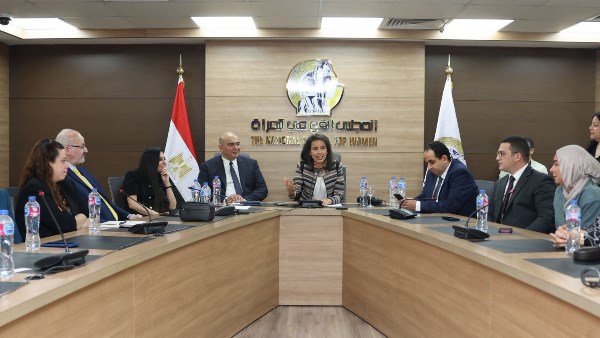

The National Council for Women (NCWC) has hosted a landmark roundtable titled “Combatting Digital Violations Against Women: From Policy to Implementation,” in strategic partnership with the FDC Summit. The session brought together an elite group of decision-makers, technology experts, and representatives from the government, private sector, and civil society to reinforce Egypt’s commitment to a safe and supportive digital environment for women.
The roundtable was chaired by Dr. Marianne Amir Azer, NCWC member and Rapporteur of the Scientific Research, Technology, and Cybersecurity Committee. Joining her were Engineer Tarek Shabaka, CEO of FDC Summit, and Dr. Mohamed Hegazy, a prominent member of the Cybersecurity Committee. The discussions focused on moving beyond theoretical frameworks toward concrete, actionable solutions that protect women and girls in the digital space.

During the session, Dr. Marianne Azer emphasized that the NCWC’s priority has shifted from merely identifying challenges to activating robust enforcement mechanisms. She noted that while policies and legislation are essential, the real victory lies in ensuring that every woman—particularly students in universities and technical/applied—has direct access to protection and simplified reporting tools. Dr. Azer highlighted the need for a unified response, integrating the efforts of government bodies, tech giants, and NGOs to develop more efficient responses to digital abuse.
Supporting this vision, Engineer Tarek Shabaka stated that digital safety is no longer just a technical issue but a societal one that affects every household. He called for a stronger synergy between the public and private sectors to transform high-level policies into practical measures. According to Shabaka, effective partnerships are the cornerstone of creating an online landscape where women can thrive without fear of harassment or privacy breaches.
The roundtable featured extensive dialogues on the psychological and social impacts of digital violations. Participants addressed the hurdles women face when reporting abuse and evaluated the effectiveness of current privacy and data protection laws. A significant portion of the debate was dedicated to the accountability of social media platforms, focusing on their speed and transparency in removing harmful content and developing better user-protection tools.
The event concluded with a set of decisive recommendations. Most notably, the Council called for a national digital safety awareness campaign specifically tailored for university and vocational school students. The initiative will focus on self-protection skills and digital literacy, leveraging the power of media and influencers to foster a culture of digital security. Participants also agreed on the need for a clear executive roadmap to bridge the gap between existing policies and real-world application.