
More than a century after Grazia Deledda made literary history, her work continues to offer a powerful portrait of human nature, morality, destiny and life in her native Sardinia. In 1926, the Italian writer became the second woman to receive the Nobel Prize in Literature, following Swedish author Selma Lagerlöf, and the first Italian woman to win the prestigious award. (Nobel Prize)
Her literary achievement was the result of an extraordinary body of work that extended across novels, short stories, poetry, drama, essays and translations. Her writing was deeply connected to Sardinia, while its themes of guilt, redemption, fate, love and human struggle gave her work a universal reach.

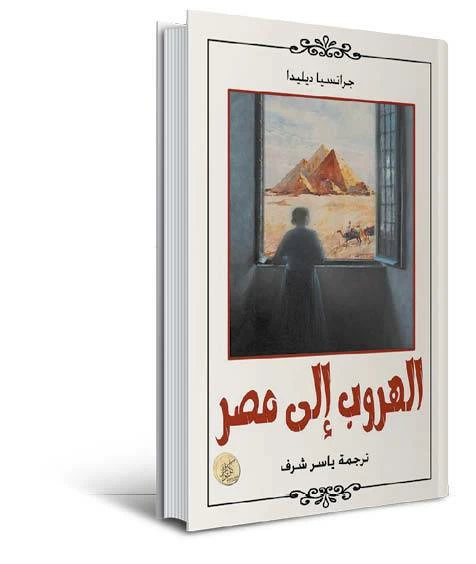
Among her notable novels is The Flight into Egypt, originally published in Italian as La fuga in Egitto in 1925, just one year before she was awarded the Nobel Prize. (Nobel Prize)
Grazia Deledda and the Making of a Literary Legacy
Born in Nuoro, Sardinia, in 1871, Deledda grew up in an environment shaped by local traditions, oral storytelling and the cultural heritage of the island. Her early exposure to Sardinian stories and folklore became an important influence on her literary imagination.
Her formal education was limited by the social expectations placed on girls at the time, but she continued developing her knowledge independently and began publishing stories while still very young.
Her first novel, Flower of Sardinia, was published in 1892. However, Deledda later identified Elias Portolú, published in 1903, as her first major literary success. The novel was subsequently translated into several European languages and helped establish her international reputation. (Nobel Prize)
Her literary output eventually included numerous novels and collections of short stories, many of which drew on Sardinian landscapes, traditions and social life.
A Woman Who Changed Literary History
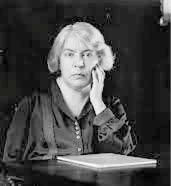
Deledda’s Nobel recognition was significant not only because of the quality of her writing but also because of what it represented for women in literature.
The Nobel Prize in Literature was awarded to her in 1926 for writing that portrayed life on her native island with clarity while addressing broader human questions with depth and sympathy. (Nobel Prize)
She was only the second woman to receive the Literature Nobel after Selma Lagerlöf. Her achievement also established her as the first Italian woman to win the prize, placing her among the most influential female writers of the early 20th century.
Her success demonstrated that a literary voice rooted in a specific place and culture could cross national boundaries and speak to readers far beyond its original setting.
The Flight into Egypt
Published in 1925, The Flight into Egypt, or La fuga in Egitto in Italian, belongs to the later stage of Deledda’s literary career. The novel was first published serially before appearing as a book. (NOR Edizioni)
The story revolves around Giuseppe, an aging elementary-school teacher approaching retirement after decades of service. His stable life is disrupted when his adopted son, who has left home and built a life elsewhere, invites him to join his family and begin a new chapter.
The invitation forces Giuseppe to confront questions surrounding family, memory, responsibility and the possibility of starting over.
As the story develops, Deledda creates a complex network of characters and relationships, using their personal histories to explore moral conflict and the consequences of choices made in the past.
The novel reflects themes that run throughout Deledda’s work: guilt and redemption, human vulnerability, family relationships and the struggle between individual desires and forces that appear beyond human control.
Sardinia at the Heart of Her Writing
One of the defining characteristics of Deledda’s work is the central role of place.
Sardinia was not simply a backdrop in her fiction. Its landscapes, traditions, folklore and social structures became an integral part of her storytelling. Her writing transformed the local world she knew into a literary space through which she could explore universal questions.
The Nobel Prize’s own description of her work emphasized precisely this ability to portray life on her native island while addressing human problems more broadly. (Nobel Prize)
This connection between local identity and universal themes remains one of the reasons her work continues to attract readers and scholars.
A Remarkably Diverse Body of Work
Deledda’s contribution to literature extended far beyond a handful of celebrated novels.
Her bibliography includes works such as Elias Portolú, Ashes, The Mother, The Dance of the Necklace, The Flight into Egypt and Annalena Bilsini. She also produced collections of short stories and writings inspired by Sardinian folklore. (Nobel Prize)
She also translated Honoré de Balzac’s Eugénie Grandet into Italian, demonstrating the breadth of her engagement with European literature. (Nobel Prize)
Her work therefore occupied several literary worlds at once: fiction, folklore, cultural observation and translation.
A Literary Legacy That Outlived Her
Grazia Deledda died in Rome on August 15, 1936, at the age of 64. (Encyclopedia)
Yet her literary legacy continued long after her death. Her novels have remained part of the international history of Italian literature, while her recognition as a pioneering female Nobel laureate has given her an enduring place in the history of women in literature.
Nearly a century after her Nobel Prize, Deledda’s career remains a reminder that literary influence does not necessarily begin in major cultural capitals. Her voice emerged from Sardinia, drew deeply from its traditions and eventually reached one of the highest platforms in world literature.
Her story is also significant for another reason: she became a major international writer at a time when women faced considerable barriers to education, publishing and recognition.
Through persistence, imagination and an unmistakably personal literary voice, Grazia Deledda turned the world she knew into literature that travelled far beyond it.
And among the works that preserve that legacy, The Flight into Egypt remains an important example of her enduring interest in family, destiny, moral conflict and the difficult journey of confronting one’s past.