

Cairo, November 26, 2026
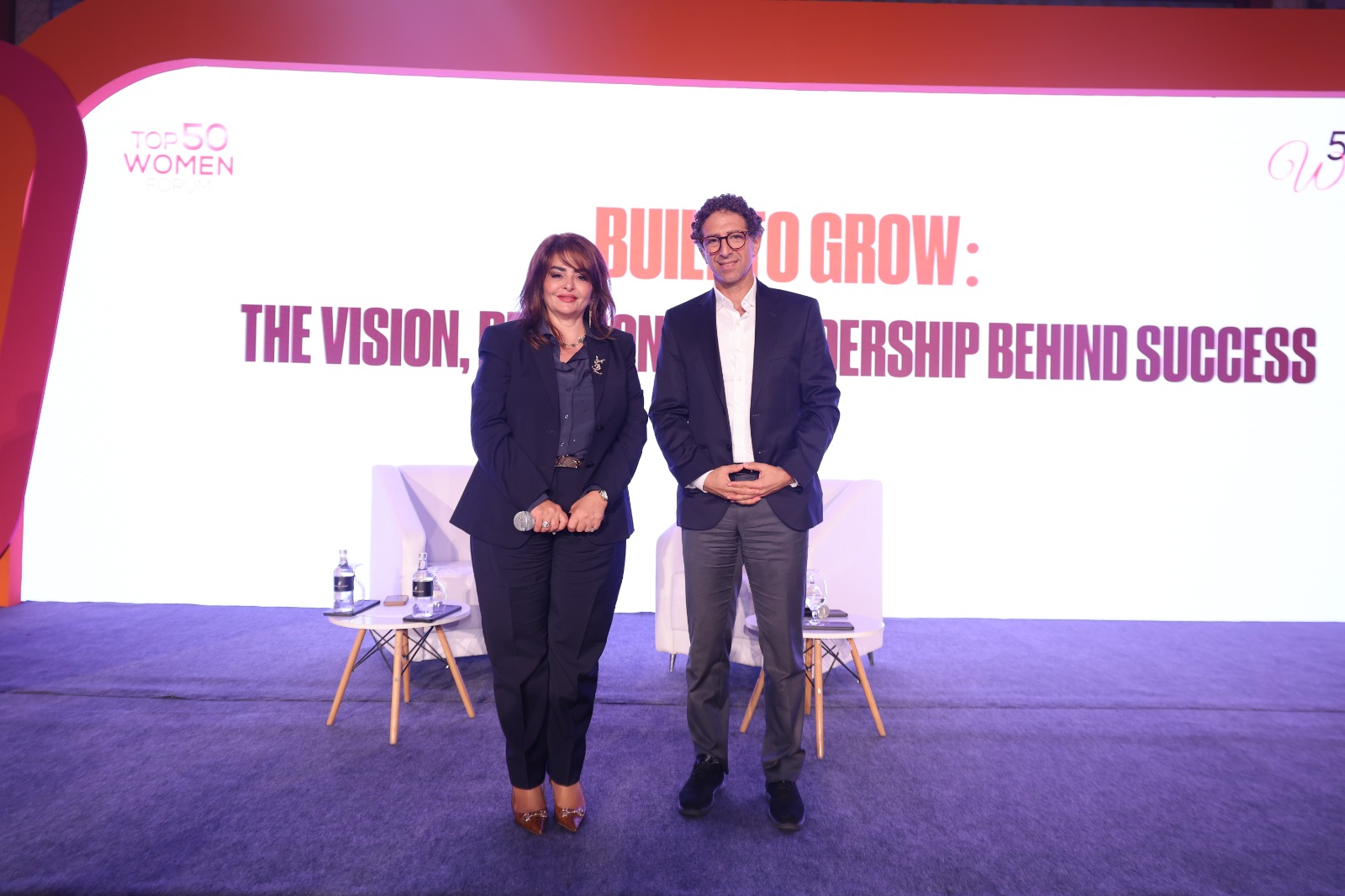
Monir Nakhla, Founder and CEO of MNT-Halan, shared the key milestones in the company’s establishment and the evolution of its business activities, as well as the lessons he has learned throughout his entrepreneurial journey. He stressed the importance of understanding market needs, maintaining direct communication with customers, being prepared to seize opportunities and make well-informed decisions, and building an institutional entity capable of sustaining its operations and achieving growth.
His remarks came during an interview conducted by Dina Abdel Fattah, President of the 50 Most Influential Women Forum, with Nakhla on the sidelines of the fifth edition of the Egyptian Women’s Summit 2026. Held under the title “From Zero to the Top: Lessons in Building Success,” the discussion explored MNT-Halan’s founding journey, the expansion of its business activities, and its approach to navigating challenges and setbacks along the way.
Nakhla said his business journey began in 2010 with retail and installment-based sales through two branches in El Helmeya and Shubra El Kheima, before gradually expanding into other activities and entering the technology sector in 2017.

He noted that the group currently operates in four markets: Egypt, Türkiye, the UAE, and Pakistan. It serves nearly 2 million customers and has a financing portfolio of approximately $2 billion, according to figures he shared during the interview.
He explained that his decision to enter the financing and installment sector stemmed from his conviction that assessing market size and the number of potential customers are essential criteria when establishing any business. He pointed out that lower-priced products can reach a broader consumer base, even when profit margins per transaction are relatively small, as higher sales volumes can compensate for lower margins.
He added that his initial financing activities focused on funding equipment and machinery, following field research into market needs and direct engagement with business owners, drivers, and traders. This approach allowed him to understand the nature of their businesses, operating cycles, profit margins, and costs, rather than relying on theoretical assumptions.
Nakhla explained that examining the economics of purchasing and operating equipment revealed financing opportunities, particularly given that business owners could recover the cost of their equipment through operating revenues within a reasonable period. This enabled the company to offer a product that addressed an actual market need.
He stressed that direct communication with customers is one of the key drivers of business success, explaining that employees who interact most closely with customers are best positioned to understand their needs and provide the information that helps an institution develop products and services in line with market requirements.
Addressing the factors behind business success, Nakhla highlighted timing, readiness to seize opportunities, and the ability to make decisions as influential elements in any business journey. He emphasized the importance of carefully examining new opportunities and understanding their details before making a decision.
He added that people’s willingness to take risks varies according to what they own and what they stand to lose. He described himself as inclined to take calculated risks, stressing that fear should not prevent anyone from exploring new paths or making decisions.
On the concept of success, Nakhla said that money is one measure of success, but not the only one. Success is also linked to achieving goals, finding satisfaction in one’s professional journey, and building an entity capable of enduring and growing.
He explained that there is a distinction between pursuing quick returns and establishing a long-term business that may require years to generate its targeted returns. He emphasized that building a company capable of operating, expanding, and sustaining itself even in the founder’s absence is one of the fundamental measures of a successful business venture.
Speaking about how to deal with setbacks, Nakhla stressed that being honest with oneself and acknowledging mistakes without justification or embellishment are among the most important conditions for learning and development. He cited his academic experience in England, where his results fell short of his own expectations. However, that experience enabled him to meet people who, around seven years later, helped him enter Egypt’s wheat trading sector.
He noted that experiences should not be judged solely by their immediate outcomes. Situations that initially appear disappointing, or decisions that fail to deliver the expected results at the time, may eventually lead to new opportunities years later. He underlined the importance of accepting one’s decisions and adapting to the changing course of a professional journey.
On recruitment and talent selection, Nakhla identified four key qualities he looks for when interviewing candidates: openness and honesty, thorough preparation and an understanding of the company’s nature and needs, a positive mindset, and technical expertise coupled with the ability to handle professional details.
He explained that attempts to embellish facts or present an artificial image can be detected during interviews. He emphasized that candidates should understand the organization, know what they can contribute to it, and possess the experience and skills required to perform their roles effectively.
The interview was held as part of the fifth edition of the Egyptian Women’s Summit 2026, organized by the 50 Most Influential Women Forum under the theme “From Learning to Earning.” The summit brings together approximately 4,000 students and graduates from various academic disciplines, alongside leaders from the economic, financial, technological, and industrial sectors, as well as entrepreneurs and policymakers.
The summit was inaugurated by Ahmed Kouchouk, Minister of Finance, and Counsellor Amal Ammar, President of the National Council for Women. It is held under the patronage of seven ministries: Finance; Social Solidarity; Agriculture and Land Reclamation; Housing, Utilities and Urban Communities; Communications and Information Technology; Industry; and Investment and Foreign Trade.
The event also features the participation of the National Council for Women, the Micro, Small and Medium Enterprise Development Agency (MSMEDA), the United Nations Population Fund (UNFPA), and the Italian Agency for Development Cooperation. Its activities include a career, training, and consultancy exhibition featuring more than 70 exhibitors.