
Mohamed Abou El Naga: Women Achieve Great Success When Given a Genuine Opportunity
Ahla El Sabban: A Dedicated Investment Fund Is Needed to Support Women-Led Startups
Cairo, November 26, 2026
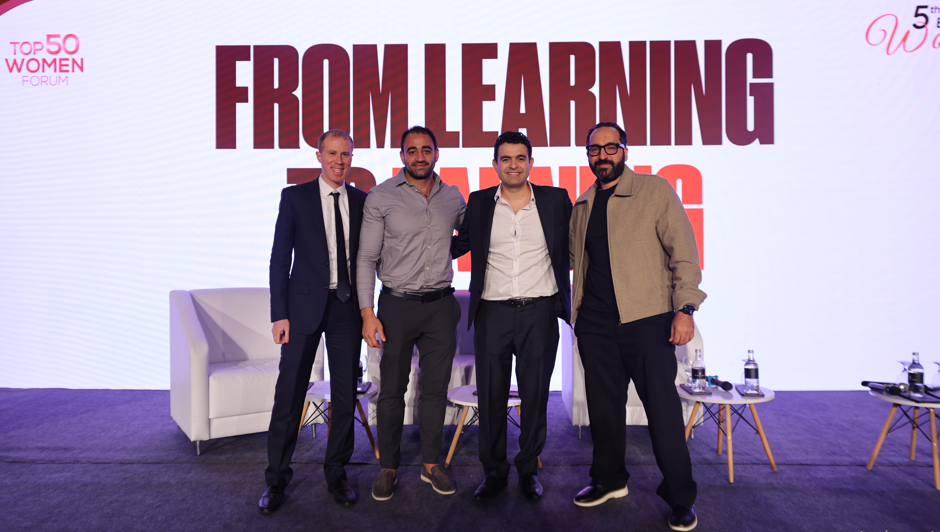
An interactive interview titled “Her and Him: The Battle for Success in the Workplace” brought together entrepreneur Mohamed Abou El Naga, Co-Founder and Executive Chairman of Exits MENA, and Ahla El Sabban, Co-Founder of the company, to discuss the challenges women face in the workplace and entrepreneurship. The discussion explored the opportunities available to women to establish businesses, secure funding and reach leadership positions, as well as the differences between men’s and women’s professional experiences.
The discussion highlighted the importance of establishing a dedicated investment fund to finance women-led startups, addressing potential biases that may affect how women’s capabilities are assessed and their access to investment, and developing more flexible workplaces that enable women to balance family responsibilities with their professional careers.
Mohamed Abou El Naga said that women have significant capabilities to succeed and sustain their careers, noting that they may face greater challenges than men at the beginning of their professional journeys when it comes to proving their competence. However, once they demonstrate their abilities, they gain more room to showcase their skills and achieve success.
He added that women can accomplish great things when given a genuine opportunity, pointing to his own family experience as an example of the responsibilities women undertake. He explained that his three sisters work while also taking care of their families, demonstrating their ability to balance professional and family life.
He noted that women bear considerable responsibility for their children, supporting, raising and preparing them for the future while continuing to work and manage pressures over many years. He described this ability to persevere as one of their greatest strengths.
Abou El Naga also shared part of his entrepreneurial journey, explaining that his mother was the first person to believe in his business ventures and provide him with financial support. He said he would regularly present his ideas and projects to family members, and that his mother was his first investor, supporting and financing him to launch his business.
He stressed the importance of creating genuine opportunities for women to participate in economic activity and assume leadership positions. Empowerment, he said, should go beyond providing employment opportunities to include supporting women-led businesses, encouraging them to hire more women and ensuring women have opportunities for career progression and promotion.
Abou El Naga emphasized the importance of establishing a dedicated fund to support companies led by women, helping these businesses grow while opening the door for more women to reach leadership and management positions.
For her part, Ahla El Sabban called for the establishment of a specialized investment fund to finance women-led startups in Egypt. Such a fund, she explained, would help address the funding gap faced by women entrepreneurs and improve their access to the investment needed to establish and expand their businesses.
She explained that women-led startups face additional challenges in securing funding compared with businesses led by men. This calls for financing mechanisms specifically designed to support companies led by women or those with women among their founding teams. She noted that specialized funds of this kind already operate in several markets, including Europe, the United States and the Gulf countries.
She emphasized that these challenges begin in the earliest stages of establishing a business and extend beyond access to financing. They also include building professional networks and gaining access to investors and support organizations, all of which are essential to helping women entrepreneurs develop their ideas and turn them into businesses with growth potential.
El Sabban noted that women often carry multiple responsibilities that can affect their professional journeys and their ability to focus on managing their businesses. These may include working, raising children, caring for parents or siblings, and fulfilling other family obligations. Such pressures can become even greater in cases of divorce or when women bear sole responsibility for raising their children.
She stressed the importance of family support, particularly from siblings and relatives, and urged families not to regard requests for assistance as a burden or a source of embarrassment. Family support, she said, is an important factor in enabling women to remain in the workforce and manage their businesses alongside their other responsibilities.
Regarding workplace culture, El Sabban pointed out that some women encounter situations in which their opinions and expertise are not given sufficient recognition, even when they are the specialists or the people directly responsible for the subject under discussion. She explained that such situations reflect the different experiences men and women may have within the same workplace.
She cited a personal experience during an online meeting in which a company founder directed his comments and answers to her male colleague, despite the fact that she was the one asking the questions and leading the discussion. She said such practices reveal forms of bias that women may encounter in professional interactions.
She added that these challenges also extend to certain investors’ preconceived notions about women’s ability to manage businesses and sustain them over the long term. Some investors may hesitate to invest in women-led companies because of concerns about the founder’s potential marriage, starting a family and family commitments, considerations that may not be raised to the same extent when evaluating businesses led by men.
She noted that such assumptions can affect women-led startups’ chances of securing funding, even when their business ideas are promising. Some women entrepreneurs, she explained, may feel compelled to have male colleagues take the lead in dealing with certain clients and investors to overcome situations in which their opinions or capabilities are not adequately recognized.
She also referred to a professional experience in which she noticed a difference in the way a client interacted with her compared with her male colleague. This prompted her to adjust her communication approach and delegate some tasks involving direct contact with the client to her colleague, given the importance of the client and the expected commercial return. The client later proved to be unreliable, and the company was ultimately deceived.
El Sabban emphasized that empowering women does not mean asking them to give up their family lives or choose between work, marriage and having children. Women have the right to build families, pursue their professional careers and reach leadership positions without being forced to sacrifice either aspect of their lives.
She explained that the private sector bears much of the responsibility for creating suitable working environments for women, particularly amid declining government recruitment and the growing need for companies to play a leading role in providing employment opportunities. She noted that certain recruitment practices continue to create barriers for women, including asking female job applicants about their plans for marriage and having children during job interviews. She described this as a form of discrimination that should not be used as a criterion for assessing an applicant’s competence or suitability for a position.
She also stressed the need to change professional perceptions of women who take career breaks to care for their families and children. Such periods should not be treated as negative gaps in their CVs or grounds for excluding them from employment opportunities.
As an example, she cited the experience of a woman who returned to the workforce after taking a break of approximately 30 years to care for her family. After returning, the woman proved her capabilities and progressed in her career until she became the manager of the establishment where she worked. The experience, El Sabban said, demonstrates the importance of giving women opportunities rather than judging their abilities based on the time they spent away from work.
El Sabban concluded by emphasizing the need to create a professional environment in which women feel safe and confident, enabling them to fulfil their different roles without marriage or having children becoming obstacles to their career prospects.
The interview was part of the fifth edition of the Egyptian Women’s Summit 2026, organized by the 50 Most Influential Women Forum under the theme “From Learning to Earning”. The summit brings together around 4,000 students and graduates from various academic disciplines, alongside leaders from the economic, financial, technology and industrial sectors, entrepreneurs and policymakers.
The summit is held under the patronage of seven ministries: Finance; Social Solidarity; Agriculture and Land Reclamation; Housing, Utilities and Urban Communities; Communications and Information Technology; Industry; and Investment and Foreign Trade. It also involves the National Council for Women, the Micro, Small and Medium Enterprise Development Agency (MSMEDA), the United Nations Population Fund (UNFPA) and the Italian Agency for Development Cooperation. The event also features an employment, training and career counselling fair with the participation of more than 70 exhibitors.