
Finance Minister: EGP 5 Million for Each Winner in Competition to Support Youth Innovation and Develop Financial and Tax Services
MSMEDA CEO: An Idea Alone Does Not Make a Successful Business… Execution Is the Key to Success
Lobna Helal: Artificial Intelligence Is Reshaping the Labor Market, Making Continuous Learning Essential to Keeping Pace with Emerging Jobs
Germaine Haddad: Retaining Women in the Workforce Is No Longer a Luxury, but a Necessity to Maximize Returns on Government Investments in Their Education and Training
Cairo, November 26, 2026
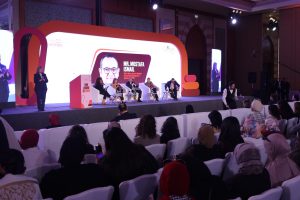
Under the title “Nations Are Built by Individuals: What Do You Need to Shape the Future?”, the opening session of the Egyptian Women’s Summit 2026, organized by the 50 Most Influential Women Forum under the theme “From Learning to Earning,” explored ways to empower young people and women, promote entrepreneurship, and keep pace with technological transformations and labor market requirements. Discussions also addressed mechanisms for turning innovative ideas into viable projects and the role of the government in providing opportunities and the necessary support for entrepreneurs.
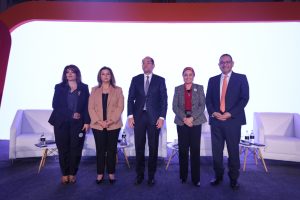
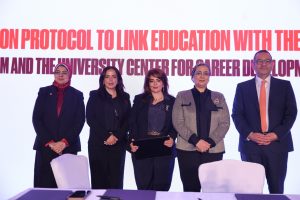
The session featured Ahmed Kouchouk, Minister of Finance; Mostafa Hassan, CEO of the Micro, Small and Medium Enterprise Development Agency (MSMEDA); Lobna Helal, Chairperson of Telecom Egypt; and Germaine Haddad, Acting Representative of the United Nations Population Fund (UNFPA).
Ahmed Kouchouk, Minister of Finance, announced the launch of a competition in cooperation with the Ministry of Communications and Information Technology to support youth innovation and leverage innovative ideas to develop financial, tax, and government services. Each winner will receive EGP 5 million, while the winning projects will be incubated and their ideas developed into practical, implementable solutions.
Kouchouk said the competition aims to harness young people’s ideas to improve services provided to taxpayers, investors, and users of government services through five key areas focused on developing innovative solutions to simplify procedures, enhance service quality, and accelerate decision-making.
He explained that entrepreneurs can participate individually, in groups, or through companies, with an eight-to-twelve-week period to submit their ideas and initiatives. The proposed projects will then undergo review and evaluation to select the five best entries.
He added that support will extend beyond financial prizes, as the competition will include a one-year incubation period for the two initiatives winning first and second place. Their owners will work alongside the relevant teams to develop their ideas into practical solutions, gaining hands-on experience and a track record of working with a major government entity.
The Minister of Finance stressed that these initiatives deliver mutual benefits by providing the government with innovative solutions to improve its services while opening up opportunities for young people to enter the labor market and expand their business ventures.
In a related context, Kouchouk urged young people interested in establishing their own businesses to carefully assess their ideas and benefit from available government initiatives. He highlighted the introduction of a simplified tax regime for businesses with annual turnover not exceeding EGP 20 million, aimed at facilitating their integration into the formal economy and reducing the burdens on business owners.
He explained that registering in the formal system from the outset of business operations helps entrepreneurs establish a clear transaction record and improves their access to financing and government initiatives, while supporting future expansion and export plans. He also noted the cooperation with MSMEDA to provide financial and technical support and help business owners develop their operations.
For his part, Mostafa Hassan, CEO of MSMEDA, emphasized that the Agency’s role is not limited to providing financing, but also extends to helping entrepreneurs address the challenges they face and providing the necessary support to sustain and develop their businesses. He stressed that financing alone is not a comprehensive solution to the challenges facing enterprises.
Hassan said that an idea by itself does not make a successful business, as success depends on an entrepreneur’s ability to execute it and turn it into a viable offering that the market accepts. He noted that ideas require hard work and commitment before customers can understand and engage with them.
He added that entrepreneurship requires courage and a willingness to take risks rather than waiting for ideal conditions to start. He urged entrepreneurs to develop their businesses gradually, launch with a minimum viable product, and then listen to market needs and refine their offerings accordingly.
He explained that the Agency and its team are available to support entrepreneurs, stressing that entrepreneurship involves more than simply having an idea. Entrepreneurs must also be able to present and market it and turn it into a business that gains market acceptance.
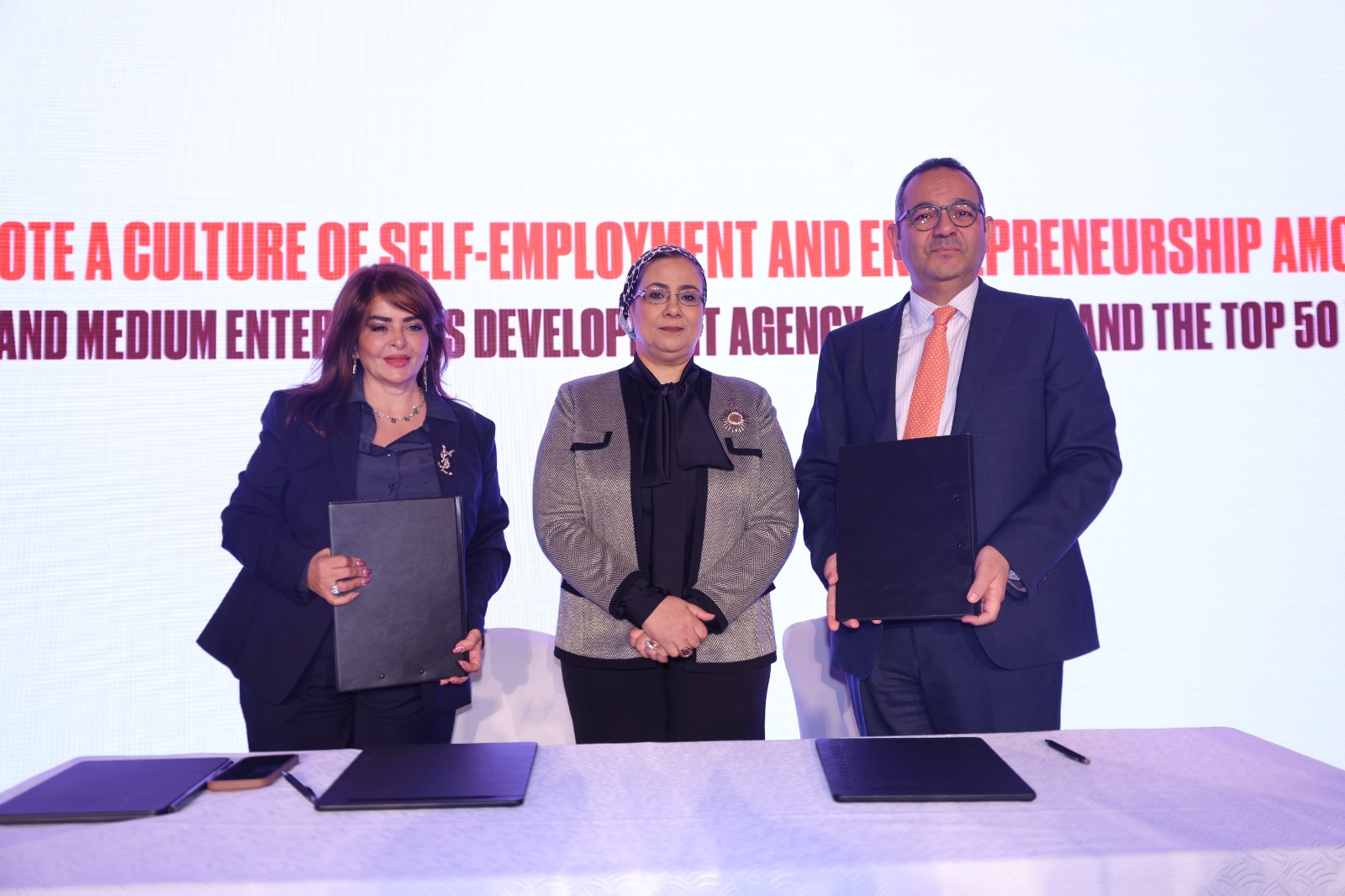
In a related development, Hassan revealed that a memorandum of understanding had been signed with Startup Egypt to facilitate the exchange of expertise between entrepreneurs who have successfully launched their businesses and those whose projects are still in their early stages, helping transfer practical experience and lessons learned.
He added that the Agency is preparing to launch an initiative in the first quarter of 2027, open to entrepreneurs from all governorates across Egypt. The initiative aims to attract more than 500 viable business ideas, which will undergo screening, evaluation, and qualification stages before a number of winners are selected following the completion of the elimination rounds.
For her part, Lobna Helal, Chairperson of Telecom Egypt, stressed that technological advancement and the growing use of artificial intelligence applications are reshaping labor market requirements. This makes continuous skills development essential for young people, who can no longer rely solely on their academic specialization or qualifications to keep pace with emerging jobs and companies’ needs over the next five years.
She added that the labor market, whether in the private or public sector, no longer relies exclusively on the specialized knowledge graduates acquire during their university studies. Instead, it requires a diverse set of skills, alongside the ability to learn continuously and adapt to changes in the nature of jobs.
She pointed out that analytical and critical thinking, as well as the ability to verify information, are among the most important skills young people need, particularly amid the vast flow of information and the growing number of sources. This requires the ability to assess information and make sound decisions, whether working within organizations or establishing their own businesses.
She noted that self-confidence is a fundamental element in building a professional career and is closely linked to acquiring knowledge and experience and learning from different experiences. These qualities help young people navigate professional challenges, overcome setbacks, and persevere.
Helal emphasized the importance of developing human skills alongside technological competencies, particularly effective communication, negotiation, empathy, analysis, and critical thinking. She explained that these skills distinguish human talent in a workplace increasingly shaped by artificial intelligence and automation.
She added that leadership and interpersonal skills are becoming increasingly important for both employees and entrepreneurs, given the human capabilities required to manage teams and build professional relationships, which go beyond technical and specialized knowledge.
She also stressed the importance of flexibility in choosing career paths rather than limiting oneself to a single specialization or specific job, given the continuous changes in the nature of work and the skills in demand. She noted that continuous learning and expanding one’s knowledge base give young people a greater ability to seize opportunities and adapt to labor market transformations.
For her part, Germaine Haddad, Acting Representative of UNFPA, emphasized the importance of strengthening women’s participation in Egypt’s labor market and addressing the challenges that lead many women to leave their jobs. She noted that retaining women in the workforce is no longer a luxury, but a necessity to benefit from their capabilities and offset the decline in the number of people entering the labor market.
She said that around 60% of Egypt’s population is under the age of 30, representing a demographic group that bears responsibility for supporting children and older people. However, this population segment is not fully engaged in the workforce, noting that only one in five women across different age groups is employed.
She added that Egypt has made progress in women’s education, with women accounting for approximately 53% of university graduates. However, the challenge emerges when women transition from education into the labor market. She explained that around 50% of working women leave the workforce within the first year of marriage.
She stressed the need to examine the reasons behind women’s departure from the labor market and develop solutions that enable them to remain employed and benefit from their experience. This would help preserve the returns on government investments in women’s education and training, particularly during the transition to marriage and the changes it brings in responsibilities and circumstances.
Haddad also highlighted the importance of investing in building young people’s capacities and preparing them for fields experiencing growing demand. She noted that some countries, including Germany, face workforce shortages in sectors such as healthcare, creating opportunities for qualified young Egyptian professionals to work in these fields either in Egypt or in international markets.
She emphasized that the coming period requires aligning youth capacity-building programs with labor market needs, while simultaneously strengthening women’s participation in the workforce, supporting their retention, and benefiting from their experience and skills.
The session was held as part of the fifth edition of the Egyptian Women’s Summit 2026, which brought together around 4,000 students and graduates from various academic disciplines, alongside leaders from economic, financial, technological, and industrial institutions, entrepreneurs, and policymakers.
The summit is held under the auspices of seven ministries: Finance; Social Solidarity; Agriculture and Land Reclamation; Housing, Utilities and Urban Communities; Communications and Information Technology; Industry; and Investment and Foreign Trade. It also involves the National Council for Women, MSMEDA, UNFPA, and the Italian Agency for Development Cooperation. The event further features a recruitment, training, and career counseling exhibition with the participation of more than 70 exhibitors.