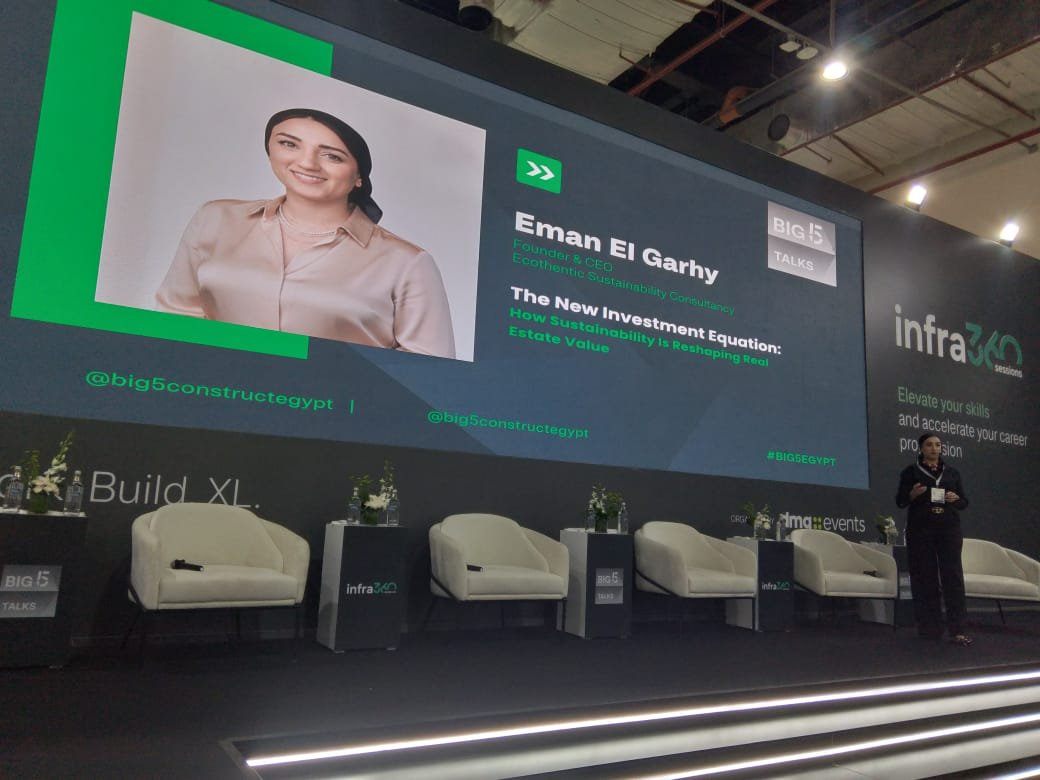


On the second day of Big 5 Construct Egypt 2026, one of the most thought-provoking discussions came from the Sustainability track, where industry leaders examined how environmental performance is no longer viewed as an optional feature, but as a factor that increasingly influences asset value, investor confidence, and long-term market competitiveness.
In a session titled *“The New Investment Equation: How Sustainability Is Reshaping Real Estate Value,”* Engr. Eman El Garhy, Founder & CEO of Ecothentic Sustainability Consultancy and an IFC Consultant and EDGE Expert, explored the growing role of sustainability in investment decisions and the changing expectations of both investors and end users.

Her message was clear: sustainability is no longer being driven solely by regulations. Market demand is increasingly leading the shift.
According to El Garhy, international investors, development finance institutions, and global funding organisations are placing greater emphasis on environmentally responsible assets. Green-certified buildings are attracting stronger attention from investment funds, while sustainability credentials are becoming an important consideration in financing decisions. This reflects a broader global movement in which environmental, social and governance (ESG) considerations are reshaping how real estate assets are evaluated and financed.
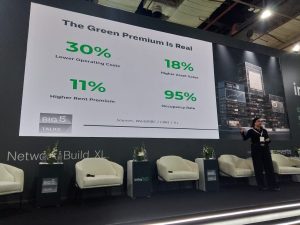
She also highlighted a significant shift in buyer behaviour. Today’s purchasers are paying closer attention to quality of life, energy efficiency, water management, indoor environmental quality, and long-term operating costs. As awareness grows, sustainable buildings are increasingly perceived as offering greater value than conventional developments.
The discussion also addressed the role of incentives and policy frameworks in encouraging sustainable development. El Garhy pointed to the gradual introduction of measures that reward higher-performing buildings and support developers willing to invest in greener construction practices.
Perhaps the most compelling part of the session focused on the business case for sustainability. While sustainable design may require additional upfront investment, El Garhy argued that developers can significantly reduce operational risks, improve building performance, and enhance long-term asset value by integrating sustainability considerations from the earliest design stages.
Advanced modelling tools, digital simulations, energy analysis platforms, and internationally recognised certification systems now allow developers to assess performance before construction begins. These technologies help project teams optimise energy consumption, improve environmental performance, and identify potential challenges long before they become costly issues on site.
The session reflected a broader theme emerging across the construction industry: sustainability is moving from compliance to competitiveness. Increasingly, the question is no longer whether developers should embrace sustainable practices, but how quickly they can integrate them into their investment and development strategies.
Other sessions throughout Day Two continued to explore the industry’s evolving priorities, from project management and leadership to BIM, technology, HVAC innovation, and sustainable construction practices. Big 5 Talks, which features more than 35 CPD-certified sessions, remains one of the exhibition’s key platforms for knowledge sharing and professional development.
Among the notable sustainability discussions taking place during the event is a featured presentation by the American Concrete Institute (ACI), examining innovations and standards supporting the transition towards carbon-neutral concrete and lower-emission construction practices.
As Day Two demonstrated, the future of construction is no longer defined solely by how buildings are designed and delivered, but by how effectively they respond to the environmental, financial, and social expectations shaping tomorrow’s market.