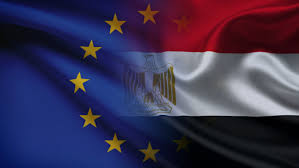

Egypt and the European Union are accelerating the economic pillar of their comprehensive strategic partnership, as Minister of Planning, Economic Development and International Cooperation Dr. Rania Al-Mashat met with EU Ambassador to Egypt Angelina Eichhorst to review reform implementation, development grant priorities for 2026–2027, and the expansion of blended finance to support private-sector growth.
The meeting highlighted the growing depth of Egyptian-European relations amid regional and global economic uncertainty, with both sides stressing the importance of aligning international financing with Egypt’s national development agenda to ensure long-term economic resilience and inclusive growth.

Strategic Cooperation Anchored in Reform
Dr. Al-Mashat described the Egypt–EU partnership as a model of modern development cooperation — one that prioritizes national ownership, structural reform, and tangible economic impact. She emphasized that cooperation spans key areas including economic governance, green transformation, macroeconomic stability, and private-sector empowerment.
Central to Egypt’s reform efforts is the Narrative for Comprehensive Development, the government’s overarching framework for inclusive growth. The strategy focuses on expanding investment in human development, advancing structural reforms, increasing the role of the private sector, improving public investment efficiency, and strengthening the link between planning, financing, and performance monitoring.
Stronger Growth Signals Economic Resilience
The minister highlighted improving macroeconomic indicators as evidence of reform progress. Egypt’s economic growth rate exceeded 5 percent during the first quarter of the current fiscal year, driven by stronger performance in industry, communications and information technology, and tourism.
Private investment and export indicators also improved, reinforcing confidence in the economy’s ability to withstand regional and international shocks.
“These positive trends reflect the effectiveness of policies aimed at achieving more sustainable and inclusive growth,” Al-Mashat noted, pointing to the growing contribution of productive sectors to overall economic performance.
Development Grants and Blended Finance for 2026–2027
The discussions also reviewed priorities for EU development grants during the 2026–2027 programming period. Both sides emphasized directing funding toward high-impact sectors that support sustainable development, climate action, and economic diversification.
A key focus was expanding blended finance and innovative financing mechanisms to mobilize domestic and foreign private capital. These tools — combining public resources with private investment — are increasingly seen as essential to scaling development projects while maintaining fiscal sustainability.
€1 Billion EU Disbursement Boosts Reform Momentum
The meeting addressed progress under the European Union’s Macro-Financial Assistance (MFA) and budget support programs. Dr. Al-Mashat confirmed that Egypt received €1 billion in January 2026 as the first tranche of the second phase of the MFA program, following the implementation of a comprehensive reform package.
She described the disbursement as a strong international endorsement of Egypt’s reform trajectory and a clear signal of confidence in the country’s economic policies.
The MFA and budget support framework includes 109 reform measures, now fully integrated into Egypt’s national structural reform agenda. The ministry is coordinating with relevant authorities to advance reforms linked to the second and third tranches, scheduled for disbursement later in 2026.
Strengthening a Long-Term Partnership
Dr. Al-Mashat reaffirmed the Egyptian government’s commitment to deepening its strategic partnership with the European Union, building on recent achievements to support sustainable development, enhance investor confidence, and promote inclusive economic growth.
As Egypt advances its reform agenda and positions itself as a regional center for investment and green transformation, cooperation with the EU remains a cornerstone of its economic development strategy.