
Women’s financial empowerment has emerged as a defining feature of Egypt’s recent economic transformation, as banking leaders report sharp gains in inclusion and call for deeper efforts to sustain inclusive and sustainable growth.
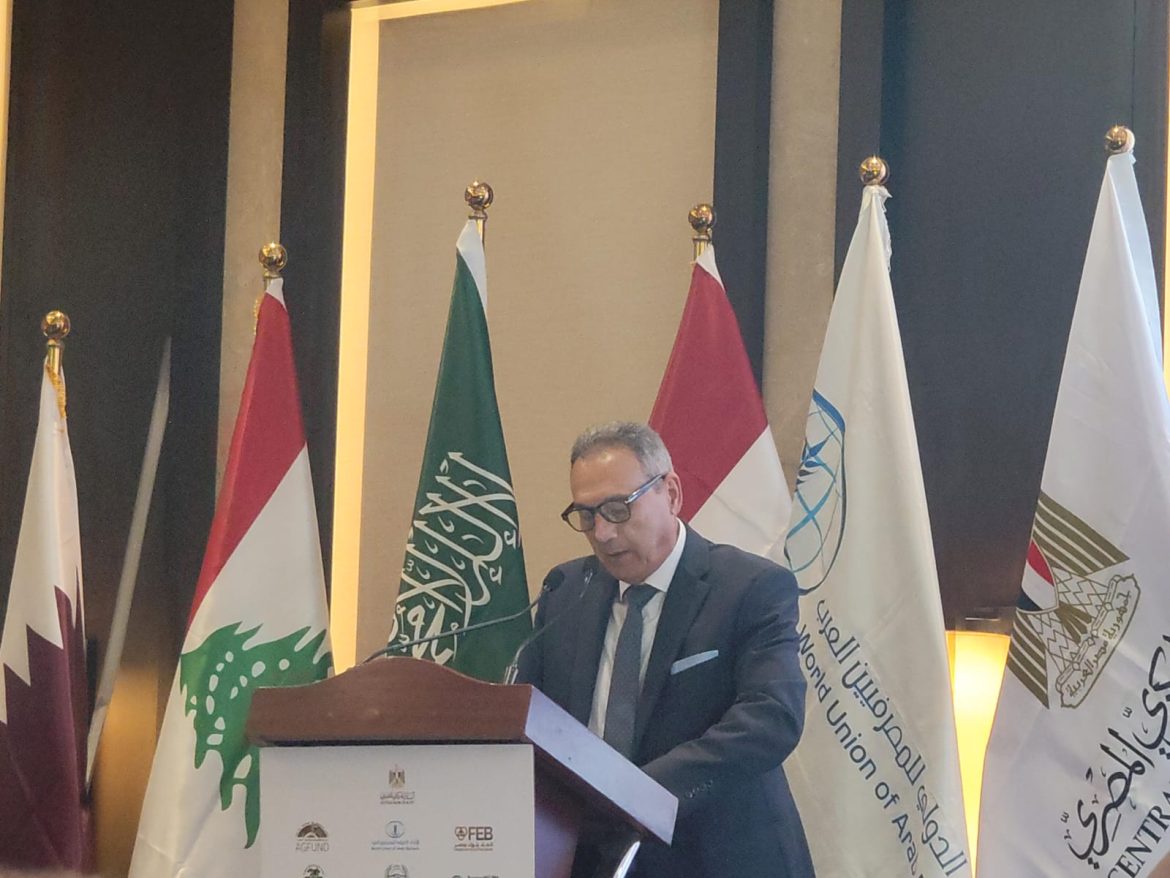
Speaking at the conference “From Financial Inclusion to Inclusive Growth,” Mohamed El-Etreby, chief executive of National Bank of Egypt and head of both the Federation of Egyptian Banks and the Union of Arab Banks, said financial inclusion has become a “strategic necessity” rather than a policy option, particularly in advancing women’s economic participation.

He highlighted a significant milestone in Egypt’s financial landscape: women’s inclusion in the formal financial system has risen from 9.1% in 2016 to 71.4% by the end of 2025, marking one of the region’s most notable advances in gender-focused financial access.
El-Etreby described this shift as a direct result of coordinated national efforts supported by the Central Bank of Egypt, which has prioritized expanding access to banking services, digital payments and financial literacy programs for women.
Overall financial inclusion in Egypt has reached 76.6%, bringing more than 54 million citizens into the formal financial system — a transformation that officials say is reshaping participation in the economy.
He stressed that financial inclusion is not only about access to banking services, but also about empowering women economically, enabling them to save, invest, and build or expand small businesses. “It is a tool of empowerment that translates directly into broader social and economic participation,” he said.
The expansion has been driven in part by rapid digital transformation. Since 2017, banks have opened around 9.8 million new accounts, issued 3.9 million prepaid cards, and launched 3.1 million electronic wallets. Mobile wallets alone have surged to nearly 60 million by the end of 2025, handling transactions worth approximately EGP4 trillion.
Women and young people have been among the biggest beneficiaries of this shift, gaining easier access to secure financial tools that reduce traditional barriers such as geography, documentation, and reliance on cash-based systems.
Microfinance has also played a key role in supporting women entrepreneurs. Lending to micro, small and medium enterprises has grown by 390% over the past decade, while microfinance financing jumped from EGP 6.4 billion in 2016 to more than EGP107 billion in 2025, reaching about 4.1 million beneficiaries.
Officials say a large share of these gains has supported women-led or women-owned businesses, particularly in informal and rural economies, where access to capital has historically been limited.
El-Etreby emphasized that the next phase of development must focus on deepening digital infrastructure, strengthening cybersecurity, and expanding financial literacy to ensure safe and sustainable participation in the financial system.
He also underscored the importance of regional cooperation among Arab banking institutions to replicate successful inclusion models and address shared economic challenges amid rising geopolitical and structural pressures.
The conference framed financial inclusion as a cornerstone of inclusive growth, with women’s participation at the center of Egypt’s broader development agenda.