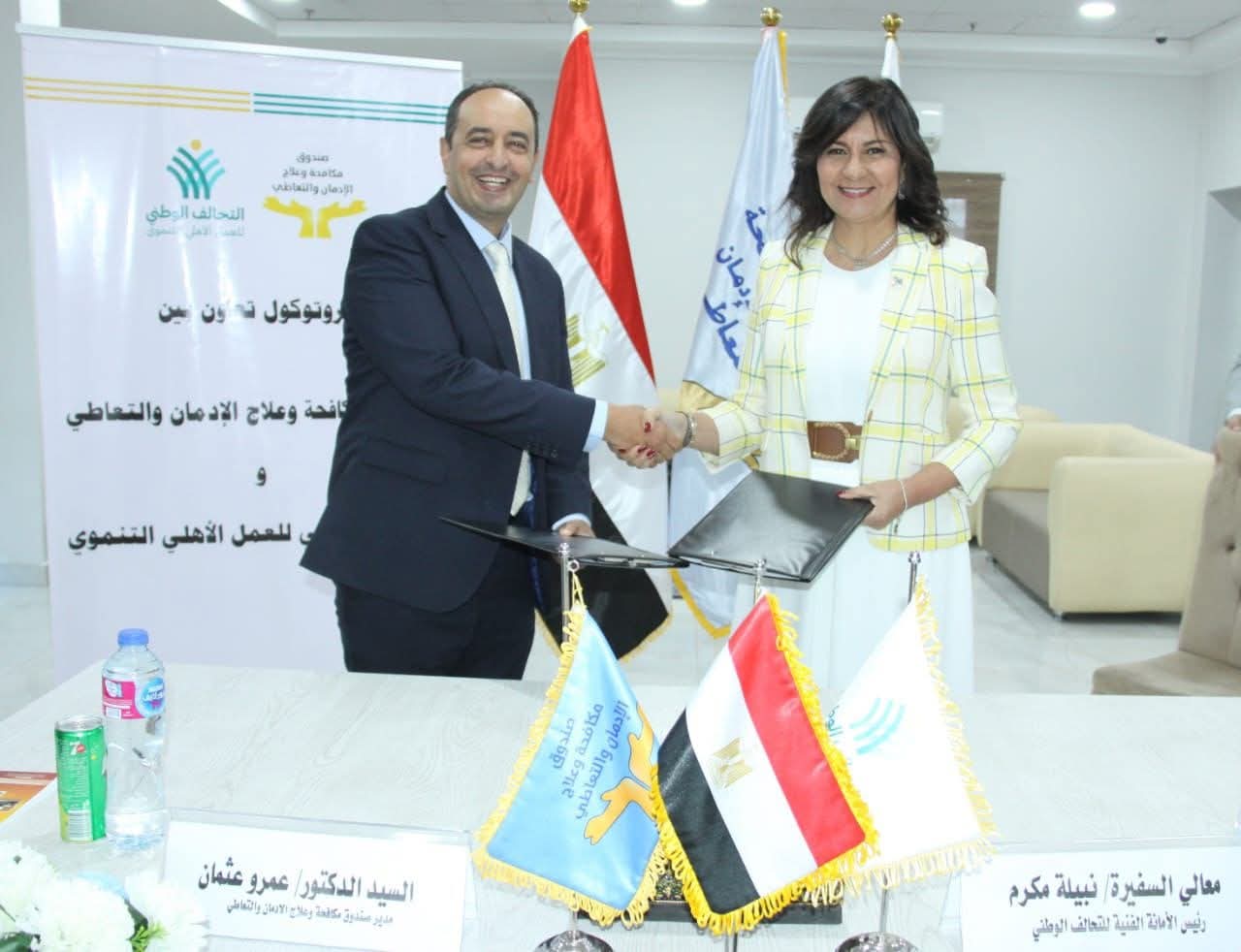

As part of Egypt’s National Strategy to Combat Drug Abuse and Reduce Addiction Risks, launched under the auspices of President Abdel Fattah El-Sisi, a new cooperation protocol has been signed between the Fund for Combating and Treating Addiction and Abuse (FCTAA) and the National Alliance for Civil Development Work (NACDW).
The agreement was signed during a high-level meeting between Amb. Nabila Makram, Head of the Technical Secretariat of the Alliance, Dr. Amr Othman, Director of FCTAA, with the participation of key leadership from both sides. The new partnership aims to strengthen national efforts in addressing the rising challenges of drug abuse and addiction across Egyptian communities.

Integrated Preventive Approach and Social Empowerment
The protocol outlines a comprehensive framework for prevention, awareness, and post-recovery support. It seeks to embed drug prevention messages within the Alliance’s various community service programs, including awareness caravans, economic empowerment projects, and social outreach activities targeting vulnerable populations.
Through this partnership, a broad package of preventive and educational interventions will be implemented for individuals benefiting from the Alliance’s services. These initiatives are designed to provide protection from drug-related risks, especially among youth, women, and economically marginalized communities.
Furthermore, joint training programs and bootcamps will be launched to equip Alliance volunteers with the knowledge and skills necessary to implement evidence-based prevention programs. These efforts will include behavioral training and psycho-social tools to address root causes of addiction and improve resilience within target groups.
Expanding Access to Free Treatment and Post-Recovery Support
A central component of the protocol is the provision of free, confidential treatment services for individuals suffering from substance use disorders. The fund will coordinate with the Alliance to raise awareness about available treatment services and facilitate direct referrals through a dedicated internal system. These services will be offered to any beneficiaries of the Alliance’s network who voluntarily seek help.
The agreement also emphasizes supporting individuals in recovery, particularly those who have completed treatment. This includes economic reintegration initiatives, such as access to microloans and financing opportunities for small and micro-enterprises. The two entities will collaborate with member organizations of the Alliance to create pathways for employment and self-sufficiency among those recovering from addiction.
Additionally, skill-building programs and entrepreneurial training will be launched for recovering individuals, ensuring that post-treatment support is not only medical but also socio-economic.
Targeted Awareness Campaigns and Community Outreach
The protocol includes joint implementation of mass media campaigns and on-the-ground awareness sessions to promote a culture of prevention. These campaigns will be tailored to different demographic groups, including customized programs for women and mothers. One major focus is helping mothers identify early signs of drug use within families and guiding them on intervention steps and treatment pathways.
Moreover, the partnership will support the production and dissemination of awareness films and educational materials, particularly targeting adolescents, youth, and families. These materials will highlight the health and social consequences of drug use and smoking, using scientifically backed messaging and practical guidance.
Both parties will share technical reports, data, scientific research, and training resources to ensure the alignment of efforts, maximize impact, and promote continuous learning and policy development in combating addiction.
Enhancing Institutional Collaboration and Knowledge Exchange
The partnership reflects a shared vision between the FCTAA and NACDW to tackle addiction through a multi-dimensional approach—one that integrates healthcare, education, economic empowerment, and civil society engagement. It also establishes a model for inter-agency collaboration within Egypt’s broader national framework for public health and sustainable development.
In addition to delivering direct services, the protocol will enable information exchange and coordinated planning between government-affiliated institutions, civil society organizations, and international development partners.
This initiative builds on Egypt’s long-standing commitment to social protection and community health, reinforcing its broader national agenda for human capital development, youth empowerment, and sustainable community engagement.