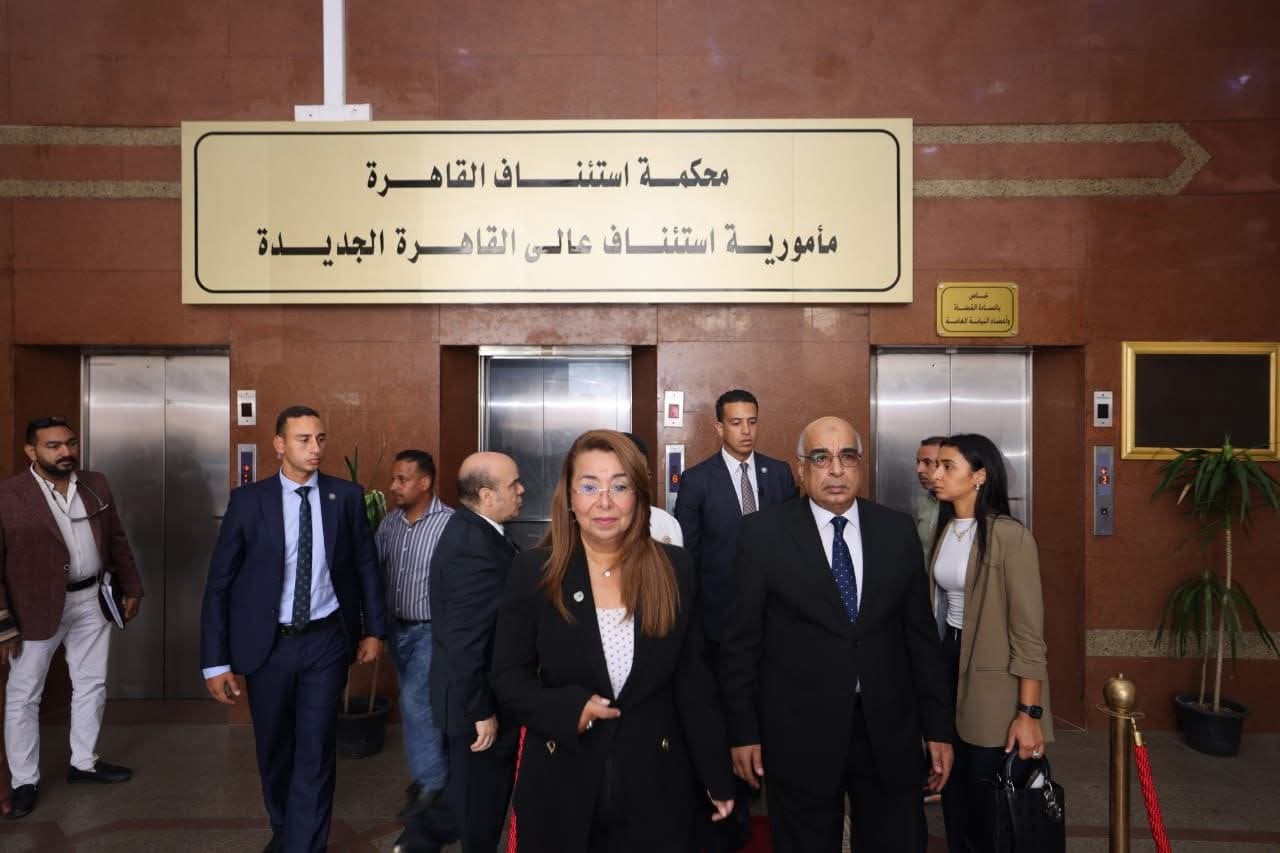

In a significant step toward strengthening women’s access to justice and protection from violence, Egypt’s Minister of Justice, Counselor Adnan Fanjari, officially inaugurated two newly established safe spaces for women victims of violence at the New Cairo Courthouse today. The initiative, implemented in collaboration with the United Nations Office on Drugs and Crime (UNODC), marks a pioneering effort in the Middle East to protect survivors during judicial proceedings.
The inauguration ceremony was held in the presence of several prominent figures, including Dr. Ghada Waly, United Nations Under-Secretary-General and Executive Director of UNODC, Counselor Abdel Akher Malqab Fawaz, President of the Cairo Court of Appeal and member of the Supreme Judicial Council, Ms. Cristina Albertin, UNODC Regional Representative for the Middle East and North Africa, and Counselor Amal Ammar, President of the National Council for Women, alongside other senior judiciary members and Ministry of Justice officials.

Empowering Women and Protecting Victims
The newly launched safe spaces are equipped with state-of-the-art technology to enable victims to testify safely, away from courtroom pressures or any potential intimidation by defendants or their representatives. These rooms are designed in accordance with international standards for victim protection and are part of Egypt’s broader strategy to combat violence against women and support survivors in accessing justice.
During the tour of the new facilities, attendees observed a simulated court session showcasing how a female survivor of violence could give her testimony via video link. This setup ensures the witness remains protected from direct confrontation, creating a trauma-informed environment that minimizes re-victimization during legal proceedings.
Counselor Fanjari emphasized the importance of this development during his opening remarks, stating:“This initiative is a reflection of Egypt’s steadfast commitment to empowering women and upholding their rights. It aligns with Egypt Vision 2030 and our broader goal of facilitating inclusive access to justice. Egypt was among the first nations to ratify the Convention on the Elimination of All Forms of Discrimination Against Women (CEDAW), and we continue to pioneer regional efforts in this field.”
International Recognition and Support
Dr. Ghada Waly lauded the Ministry of Justice for its progressive approach, noting that Egypt is the first country in the Middle East to implement such a project. She highlighted the significance of these Safe spaces in providing a safe space where women can share their experiences without fear, pressure, or retaliation:
Cristina Albertin added that these rooms are not just technical installations but crucial tools that enable the judicial system to operate more fairly and sensitively for vulnerable populations.
A Regional Model for Reform
In her statement, Counselor Amal Ammar described the opening as a “milestone in protecting women from gender-based violence,” calling the secure rooms a “pioneering model that can be replicated across the region.”
The rooms’ establishment is part of a wider collaboration between the Ministry of Justice and UNODC aimed at facilitating equitable justice access for vulnerable groups, particularly women and children. With continued support from national and international partners, the initiative is expected to expand to other courts throughout Egypt.
Looking Ahead
Today’s launch reflects Egypt’s evolving judicial infrastructure and commitment to legal reforms that prioritize human dignity and safety. As more secure spaces are integrated into Egypt’s court system, authorities hope to see increased reporting of violence and a stronger culture of accountability.
This initiative stands as a testament to Egypt’s dedication to achieving gender equality, supporting victims, and fostering a legal environment where justice is both accessible and compassionate.