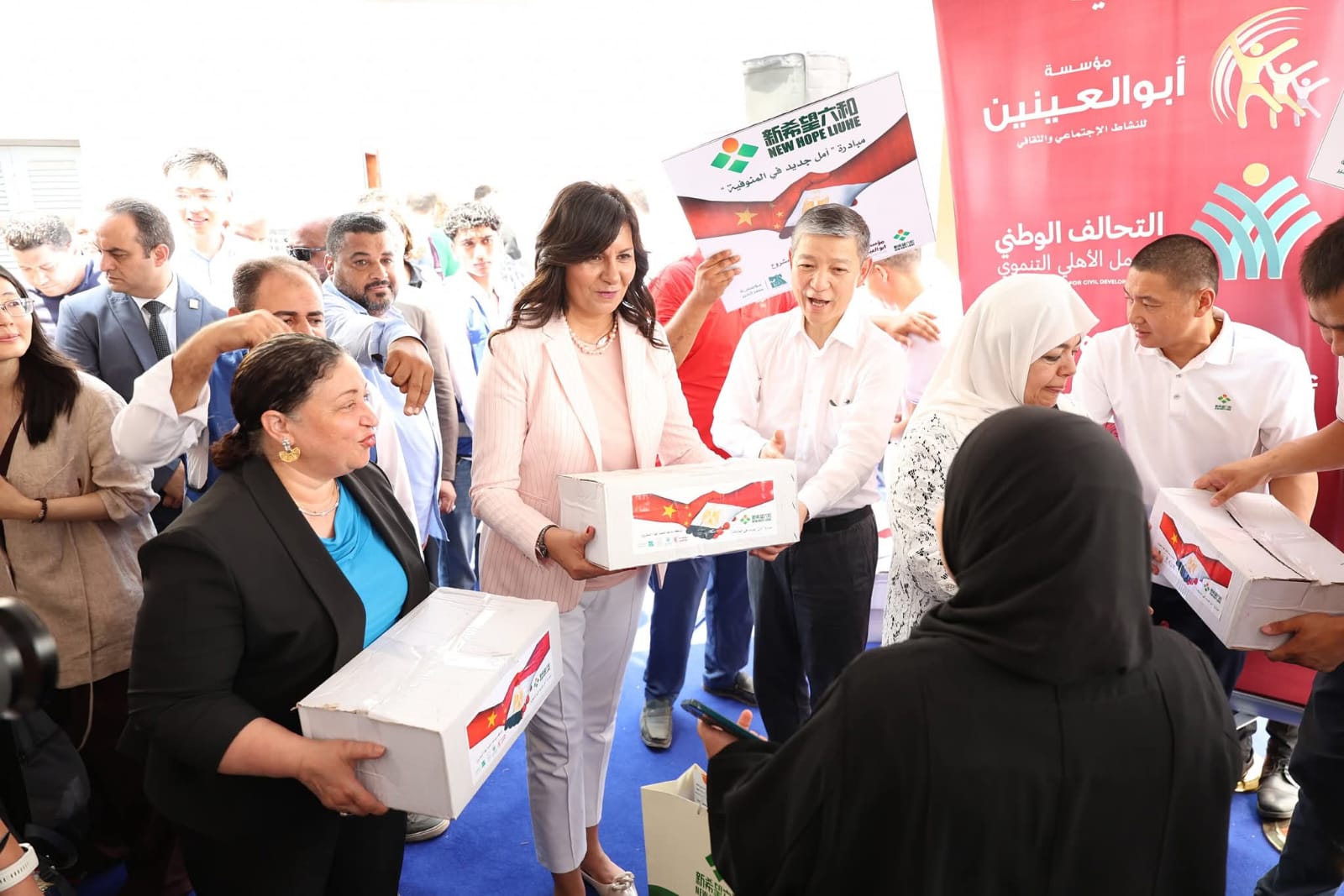

In a move underscoring Egypt’s commitment to inclusive economic growth, the Ministry of Social Solidarity on Sunday launched a new initiative titled “New Hope” (Amal Gadid) aimed at empowering low-income women through sustainable small-scale poultry projects, in strategic partnership with China and leading civil society organizations.
The program, launched in the village of Sebk El-Ahad in the Nile Delta governorate of Monufia, marks a significant step in Egypt’s broader strategy to address rural poverty, advance women’s economic participation, and enhance early childhood development. The initiative is being piloted at the Ministry’s Family and Child Development Center, one of 47 such centers across the country.

A Model for International Development Cooperation
The “New Hope” initiative is a joint effort between Egypt’s Ministry of Social Solidarity, the Chinese Embassy in Cairo, and several prominent NGOs including Misr El-Kheir, Haya Karima, and the Abou El-Enein Foundation. It also benefits from technical support provided by New Hope, a Chinese agribusiness firm specializing in modern poultry farming.
In launching the program, Deputy Minister of Social Solidarity Eng. Margret Sarofim praised the Egyptian-Chinese partnership as a model for effective development cooperation.
“This initiative reflects the strength of Egyptian-Chinese relations under the strategic leadership of Presidents Abdel Fattah El-Sisi and Xi Jinping,” Sarofim said. “We’re creating scalable, sustainable solutions that uplift families and communities through economic empowerment.”
Chinese Ambassador Liao Liqiang echoed this sentiment, highlighting that the initiative contributes directly to shared goals of poverty alleviation and sustainable development. The ambassador noted that next year marks the 70th anniversary of Egyptian-Chinese diplomatic relations, a milestone that further underscores the depth of the partnership.
Empowering Women Through Sustainable Agriculture
The first phase of “New Hope” focuses on training and equipping women in Sebk El-Ahad and Saqiet Abu Sha’ra villages with the skills and resources needed to manage small poultry businesses. Participants underwent a six-day training led by Chinese agricultural specialists, after which they received starter packages including feed, chicks, and access to veterinary care.
“This is more than just income generation,” said Dr. Mohamed Refai, CEO of Misr El-Kheir. “It’s about dignity, self-sufficiency, and long-term empowerment.”
The initiative aligns closely with Egypt’s national strategy for economic inclusion, as well as the United Nations Sustainable Development Goals (SDGs), particularly those related to gender equality (SDG 5), poverty reduction (SDG 1), and decent work (SDG 8).
Integrating Early Childhood Development
In parallel with the economic support component, the program also prioritizes early childhood development. Sarofim toured the affiliated nursery at the Family and Child Development Center, which operates under a Japanese educational model emphasizing holistic, play-based learning.
The Deputy Minister revealed that the government is currently conducting a nationwide census of nurseries as part of a presidential directive to modernize early childhood education in Egypt, signaling the importance of early learning environments in national development efforts.
Civil Society and Government: A Unified Vision
The event brought together senior representatives from the government, international diplomatic corps, and Egypt’s most influential civil society actors. Among them were Ambassador Nabila Makram, Chair of the National Alliance for Civil Development Work, Dr. Ahood Wafy, Chair of the Board at Haya Karima, and Sumaya Abou El-Enein, Deputy Chair of the Abou El-Enein Foundation.
Ambassador Makram emphasized the importance of linking national development efforts to local needs: “Our aim is to achieve a sustainable, human-centered impact. Economic empowerment must go hand-in-hand with dignity, opportunity, and social mobility.”
A Scalable Blueprint for Inclusive Growth
Observers note that “New Hope” could become a blueprint for similar public-private-international partnerships across Egypt and the broader MENA region. The initiative’s blend of technical training, grassroots implementation, and diplomatic coordination offers a replicable model for integrated development.