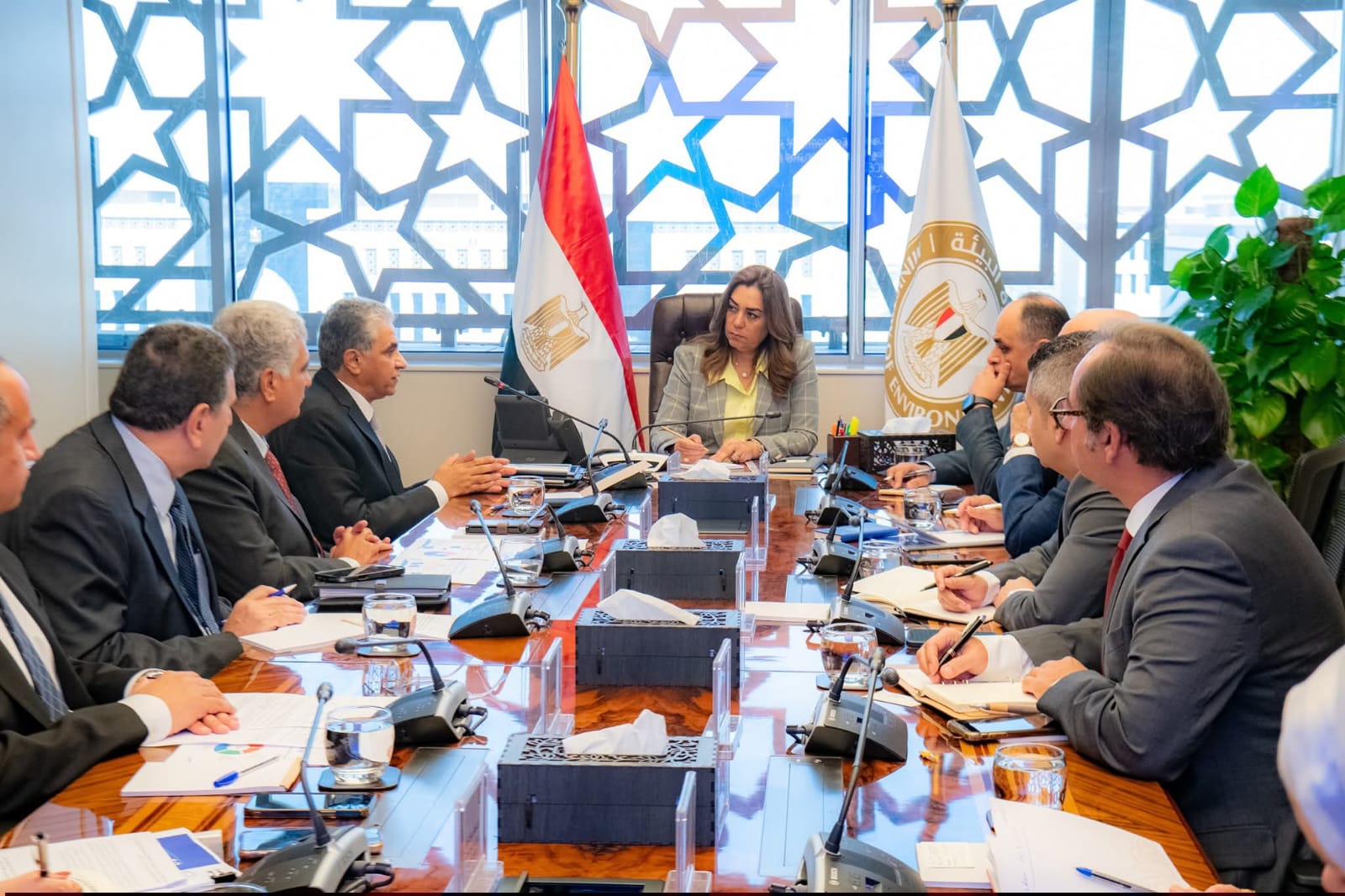

Strengthening Egypt’s climate resilience and environmental sustainability, Dr. Manal Awad, Egypt’s Minister of Local Development and Acting Minister of Environment, met with Dr. Khaled Fahmy, Executive Director of the Center for Environment and Development for the Arab Region and Europe (CEDARE), to explore joint initiatives on environmental and climate-related projects across Egyptian governorates.
The meeting, held in Cairo and attended by senior officials from the Ministry of Environment and CEDARE, focused on transitioning strategic environmental plans into on-the-ground, community-focused projects that address the dual challenges of environmental degradation and climate change.

Strategic Vision: From Policy to Real Impact
Minister Awad emphasized the urgent need to translate national environmental strategies into tangible projects tailored to the specific needs of each governorate. “We must bridge the gap between policy and people,” she said. “Environmental communication should be accessible and relatable, and our projects should have a visible impact on citizens’ lives.”
She also called for increasing field presence and community engagement in environmental projects, making sustainability efforts more participatory and relevant to local contexts.
CEDARE’s Track Record in Egypt: Climate, Waste, and Women Empowerment
Dr. Fahmy highlighted a number of successful CEDARE-led initiatives in Egypt, including:
- Climate Resilience in Beheira Governorate: A pioneering project helping farmers adopt solar-powered irrigation systems, reduce emissions, and improve water efficiency through land leveling and nature-based solutions.
- Electronic Waste Recycling: Over the past decade, with support from Switzerland, CEDARE has helped expand Egypt’s e-waste recycling sector from a single entity to over 30 formal businesses, prompting legal reforms and the introduction of Extended Producer Responsibility (EPR) in Egypt’s Waste Management Law.
- Waste to Fashion: In partnership with the EU and Egypt’s Clothing Bank, the project promotes sustainable textile production using recycled materials, aligning with global trends in circular fashion.
- Biodiversity and Desertification: CEDARE has successfully rehabilitated over 700 feddans (acres) of rangeland in Matrouh, reviving biodiversity and setting the groundwork for Egypt’s first draft anti-desertification law.
- Sustainable Agriculture: A comprehensive report on sustainable practices was also shared with the Minister as part of ongoing collaboration with the African Union and Egyptian environmental authorities.
Toward a Greener, More Resilient Egypt
Minister Awad and Dr. Fahmy discussed opportunities to expand cooperation on:
- National Adaptation Strategies tailored to each governorate’s geographic and socio-economic context.
- Ensuring Egyptian nature reserves such as Ras Mohammed and Wadi Al-Hitan remain on the IUCN Green List, and exploring the inclusion of additional sites.
- Enhancing the capacity of local environmental departments, including training and knowledge exchange programs.
- Institutionalizing successful pilot projects to ensure long-term sustainability and potential replication across the Arab region.
CEDARE’s Future Plans: A Regional Hub for Sustainability
Founded 30 years ago under the Council of Arab Environment Ministers in collaboration with UNDP and the Arab Fund, CEDARE is undergoing a strategic overhaul aimed at scaling its impact. Dr. Fahmy detailed plans for:
- A new five-year strategy (2025–2030) emphasizing private-sector partnerships, financial sustainability, and regional leadership.
- Collaborating with the New and Renewable Energy Authority (NREA) to establish Egypt as a regional hub for African carbon certification markets.
- Expanding job creation and green entrepreneurship through sustainable resource management.
“Our commitment is to support the Ministry of Environment and help bring Egypt’s environmental vision to life — not just for the nation, but as a replicable model for the Arab region,” Dr. Fahmy affirmed.
A Shared Environmental Future
This high-level meeting marks a critical step in aligning local development with climate action, a priority for Egypt as it navigates the impacts of rising temperatures, water scarcity, and ecosystem degradation.
By bridging policy, innovation, and community-based action, Egypt is not only advancing its own environmental agenda but positioning itself as a regional leader in sustainable development.