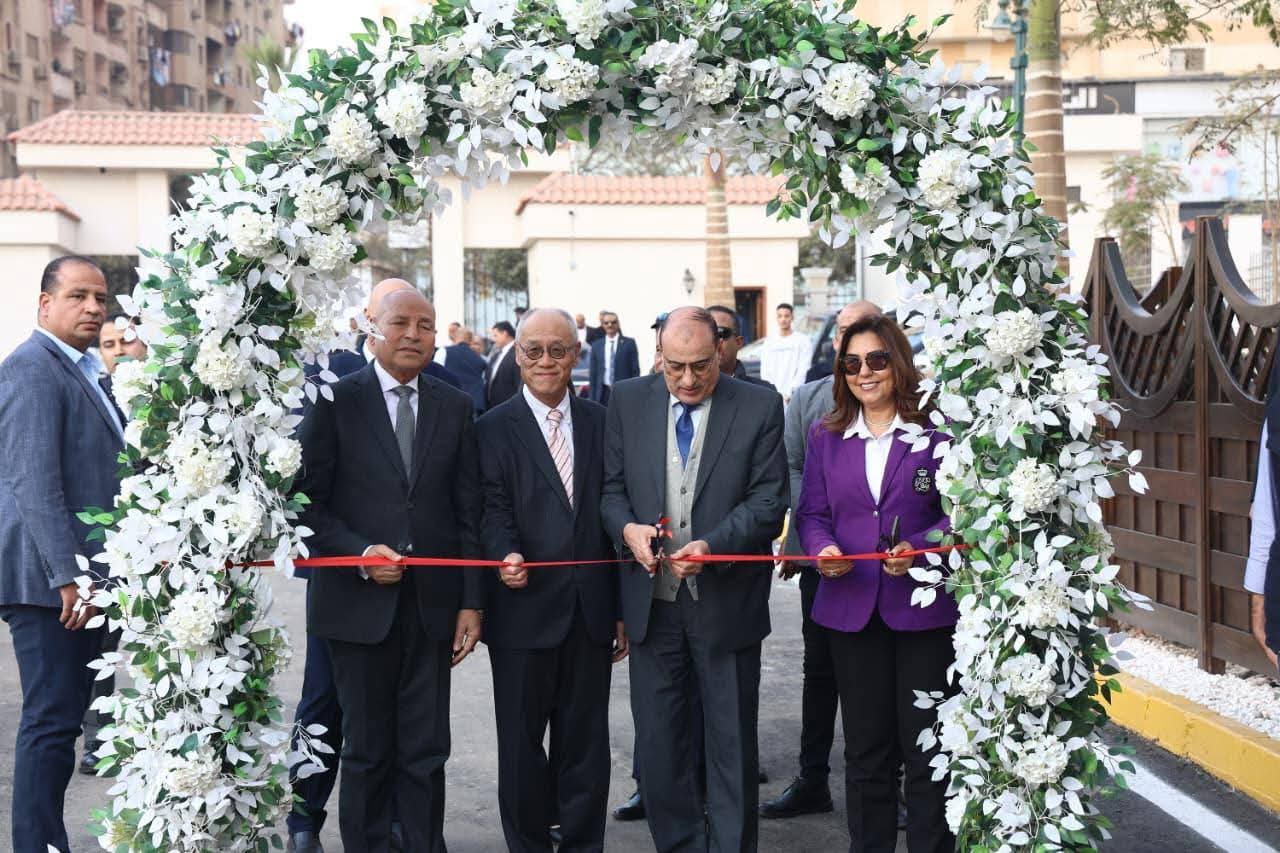

Egypt on Saturday inaugurated the newly revamped Helwan Kaberetage Park, marking a significant step in the government’s efforts to restore historic urban assets, expand green spaces, and enhance quality of life in the capital.
The opening ceremony was attended by Minister of Local Development Dr. Manal Awad, who is also serving as Acting Minister of Environment, alongside Maj. Gen. Amir Sayed Ahmed, Presidential Adviser for Urban Planning; Maj. Gen. Ahmed Ali, Chief of the Presidential Court and Treasurer of the Tahya Misr Fund; and Cairo Governor Dr. Ibrahim Saber. Also present were Japanese Ambassador to Egypt Fumio Iwai, senior government officials, and local leaders.

Preserving Heritage, Expanding Green Spaces
Speaking at the event, Awad said the redevelopment aligns with President Abdel Fattah el-Sisi’s directives to preserve Egypt’s historic heritage while expanding public parks and green areas, particularly historic gardens, across Egyptian governorates.
“The reopening of Helwan Kaberetage Park reflects the state’s commitment to improving citizens’ quality of life by providing safe, accessible, and culturally significant public spaces,” she said.
Awad described the project as a successful model of institutional cooperation, demonstrating how different state entities can work together to revive public assets and maximize their social and economic value. She added that the redevelopment prioritized environmental sustainability, infrastructure upgrades, and improved public services.
Role of Tahya Misr Fund and Japanese Partnership
The minister highlighted the role of the Tahya Misr Fund, through its investment arm Tahya Misr Holding for Investment and Development, in financing and implementing the project. The fund’s involvement, she said, underscores its growing role in supporting national development initiatives.
Awad also expressed particular satisfaction with the restoration of Tokyo Garden, noting that it symbolizes the long-standing friendship between Egypt and Japan and reflects the sister-city agreement between Cairo and Tokyo.
Part of Egypt’s Broader Development Vision
Cairo Governor Ibrahim Saber said the project forms part of Egypt’s comprehensive development vision, which places citizens at the center of policy priorities and seeks to achieve sustainable growth nationwide.
“Helwan is a city of deep historical value and unique character,” Saber said. “Its development is a core component of the state’s plan to preserve areas of heritage significance while reintegrating them into modern economic, tourism, and therapeutic pathways.”
He added that the Kaberetage area is one of Helwan’s most prominent historic landmarks and that its revival will help restore the city’s status as a destination for medical tourism and recreation, in line with Egypt Vision 2030.
Japanese Ambassador Praises Restoration Effort
Japanese Ambassador Fumio Iwai welcomed the reopening, recalling that the Tokyo Garden was originally established in 1990 to commemorate the friendship between Cairo and Tokyo and was designed in the style of central Tokyo gardens.
“Japan has continued to support the maintenance and development of the garden over the years,” Iwai said, expressing appreciation to the Egyptian presidency for ensuring its preservation as a lasting symbol of Egyptian-Japanese relations and cooperation.
Project Scope and Future Phases
According to Tahya Misr Holding officials, the Helwan Kaberetage redevelopment spans 60 feddans (approximately 62 acres). The first phase, inaugurated Saturday, covers 17 feddans and includes Helwan Kaberetage Park, Tokyo Garden, a public library equipped for educational and recreational activities, open-air performance spaces, and comprehensive security and surveillance systems.
Future phases aim to restore Helwan Kaberetage’s historical role as one of Egypt’s most important centers for wellness and therapeutic tourism, capitalizing on its sulfur-rich mineral waters. Ongoing work includes the restoration of heritage structures and the rehabilitation of the sulfur-water treatment hospital, expected to be completed in the coming months.
A Public Space With Social and Cultural Impact
During the tour, officials visited the Helwan Library, operated by the Egypt Association for Culture and Community Development, where they observed educational and cultural activities for children and families.
The project, officials said, reflects Egypt’s broader approach to urban development — combining heritage preservation, environmental sustainability, and social inclusion — while delivering tangible benefits to local communities and supporting long-term economic growth.