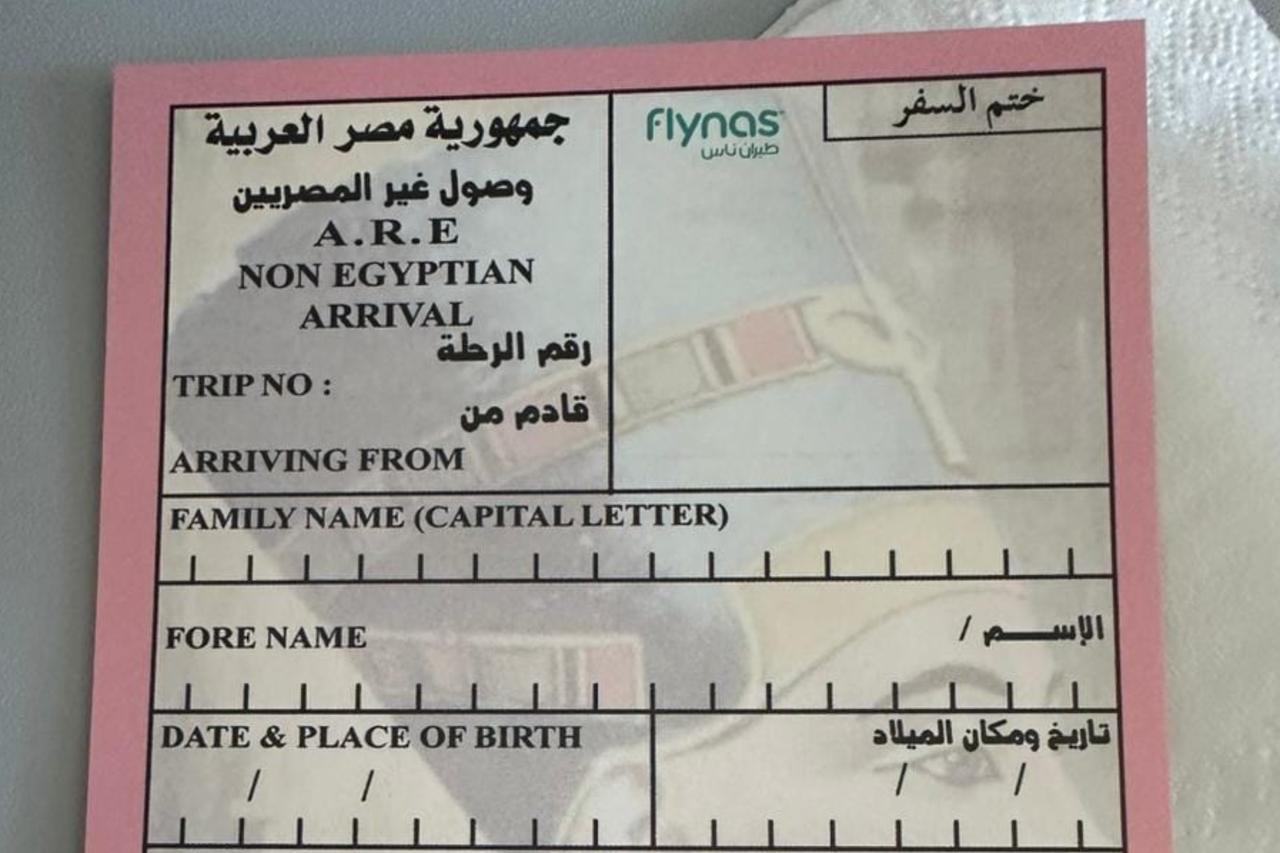


Egypt will abolish the paper “passport card” long used by arriving and departing passengers at its airports, replacing it with a fully digital system by the end of January, Civil Aviation Minister Pilot Sameh El-Henafy announced Sunday. The move is aimed at streamlining airport procedures, cutting waiting times at passport control and modernizing the travel experience for millions of visitors.
Speaking during a televised phone-in program, El-Henafy said the decision is part of a broader state plan to simplify arrival and departure procedures across Egyptian airports as authorities accelerate their shift toward digital governance.

“The alternative digital system is fully ready for operation,” the minister said, adding that the new approach will rely entirely on electronically recorded passport data, eliminating the need for travelers to fill out paper forms by hand.
What was the ‘passport card’?
For decades, the “passport card” was a familiar part of travel to and from Egypt, particularly for foreign tourists. The paper form was typically distributed on airplanes shortly before landing or handed out in arrival and departure halls. Travelers were required to complete basic personal and trip details, including their name, passport number, nationality, flight number, destination and, in some cases, a local address or purpose of visit.
While the card was a routine requirement, it was often seen as an inconvenience — especially during peak travel seasons when long lines formed at passport control. For foreign visitors unfamiliar with the process, missing or incorrectly filled forms could add stress and delays at immigration counters.
Tourism industry officials have long argued that removing such paperwork would improve first impressions of Egypt as a destination and align the country with international best practices.
Digital shift to speed up travel
Under the new system, immigration officers will access travelers’ information directly through secure digital databases linked to passport chips and airline records. According to El-Henafy, this will significantly reduce processing times and ease congestion in airport terminals.
The move coincides with expanded installation of electronic gates (e-gates) at major airports, allowing eligible passengers to pass through immigration using automated checks rather than manual inspection. Authorities have also upgraded security systems and strengthened digital connectivity between airports and the Passports Authority.
“These upgrades are about improving services for travelers and tourists alike,” the minister said, stressing that the goal is to make Egyptian airports faster, more efficient and more welcoming.
Linked to E-visa Expansion
The decision to scrap the paper card comes as Egypt advances its integrated electronic visa (e-visa) system. El-Henafy noted that the Cabinet, during its weekly meeting chaired by Prime Minister Mostafa Madbouly, reviewed the latest developments in the pilot rollout of the e-visa platform.
Egypt has been expanding its e-visa program in recent years to cover more nationalities, allowing visitors to apply and receive visas online before arrival. Officials say combining e-visas with digital passport processing will create a seamless travel chain from booking to border control.
Rollout Timeline and airport upgrades
The new digital passport processing system is expected to be fully implemented across all of Egypt’s international airports in February. The rollout will begin at Cairo International Airport before extending to major tourism hubs such as Hurghada and Sharm El-Sheikh, which together handle millions of leisure travelers each year.
Cairo International Airport is itself undergoing major upgrades. Terminal 2 is scheduled for a soft opening in November, with an official inauguration expected in March 2016, according to previous announcements. The terminal’s modernization is designed to accommodate rising passenger numbers and integrate advanced security and digital processing technologies.
Boost for Tourism Infrastructure
Aviation and tourism experts say eliminating the paper “passport card” sends a strong signal that Egypt is serious about modernizing its travel infrastructure. Faster immigration procedures could help airports handle growing passenger volumes while improving the overall visitor experience — a key factor for a country where tourism is a vital source of foreign currency and employment.
For travelers, especially foreigners, the change means one less form to fill out and a smoother passage through arrival and departure halls. For authorities, it represents another step toward fully digitized border management.
As El-Henafy put it, the goal is simple: “less waiting, fewer procedures and better service” — a shift that could reshape how travelers experience Egypt from the moment they land.