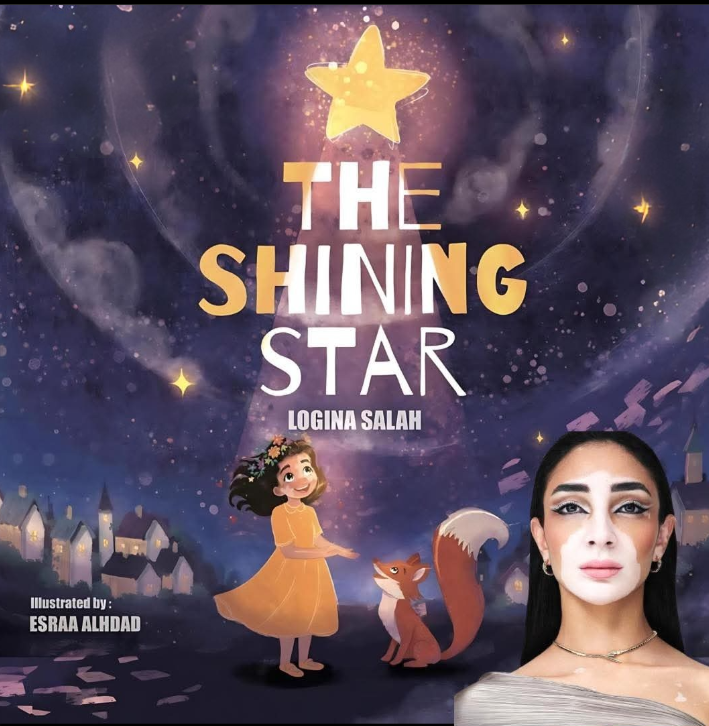

Egyptian model and vitiligo-awareness advocate Logina Salah has released her first children’s book, The Shining Star, a heartfelt story that explores bullying, difference, and the power of self-acceptance. Published by Kalamon and now available at Madbouly Bookstores across Egypt, the book is already drawing attention for its message of empathy and emotional resilience.
Salah describes writing The Shining Star as “one of the most emotional journeys” of her life. The story is inspired by her own childhood experiences growing up with vitiligo—moments marked by confusion, fear, and the harsh realities of bullying.

“As a child with vitiligo, I wished someone had told me this wasn’t the end of the world,” she said. “I needed to hear that I was still worthy of love and acceptance—even if I looked different.”
Through her book, Salah hopes to be that voice for the next generation.
“To every child who reads this, I want to say: you are special, you are loved, and you are enough—just as you are.”
A Rising Voice for Representation and Self-Love
Logina Salah has become one of the most recognizable advocates for vitiligo awareness in the Middle East. She made history as the first Miss Universe semi-finalist with vitiligo, breaking barriers in an industry where beauty standards have long been narrowly defined.
Beyond modeling, Salah uses her platform to spotlight issues related to bullying, diversity, and confidence-building. She has collaborated with UNICEF, the United Nations, and other international organizations on campaigns encouraging inclusion and self-empowerment. Her TED talks—where she candidly discusses her journey with vitiligo—have inspired audiences around the world.
On social media, Salah maintains an active presence on Instagram and TikTok, where she shares daily reflections, educates followers about vitiligo, and partners with global brands including Bvlgari.
A New Chapter in Advocacy
With The Shining Star, Salah expands her mission into children’s literature, aiming to reach readers at an age when bullying and self-doubt often begin.
The book aligns with a growing global push for representation in children’s storytelling—particularly stories that help young readers understand difference, build compassion, and embrace their identities.