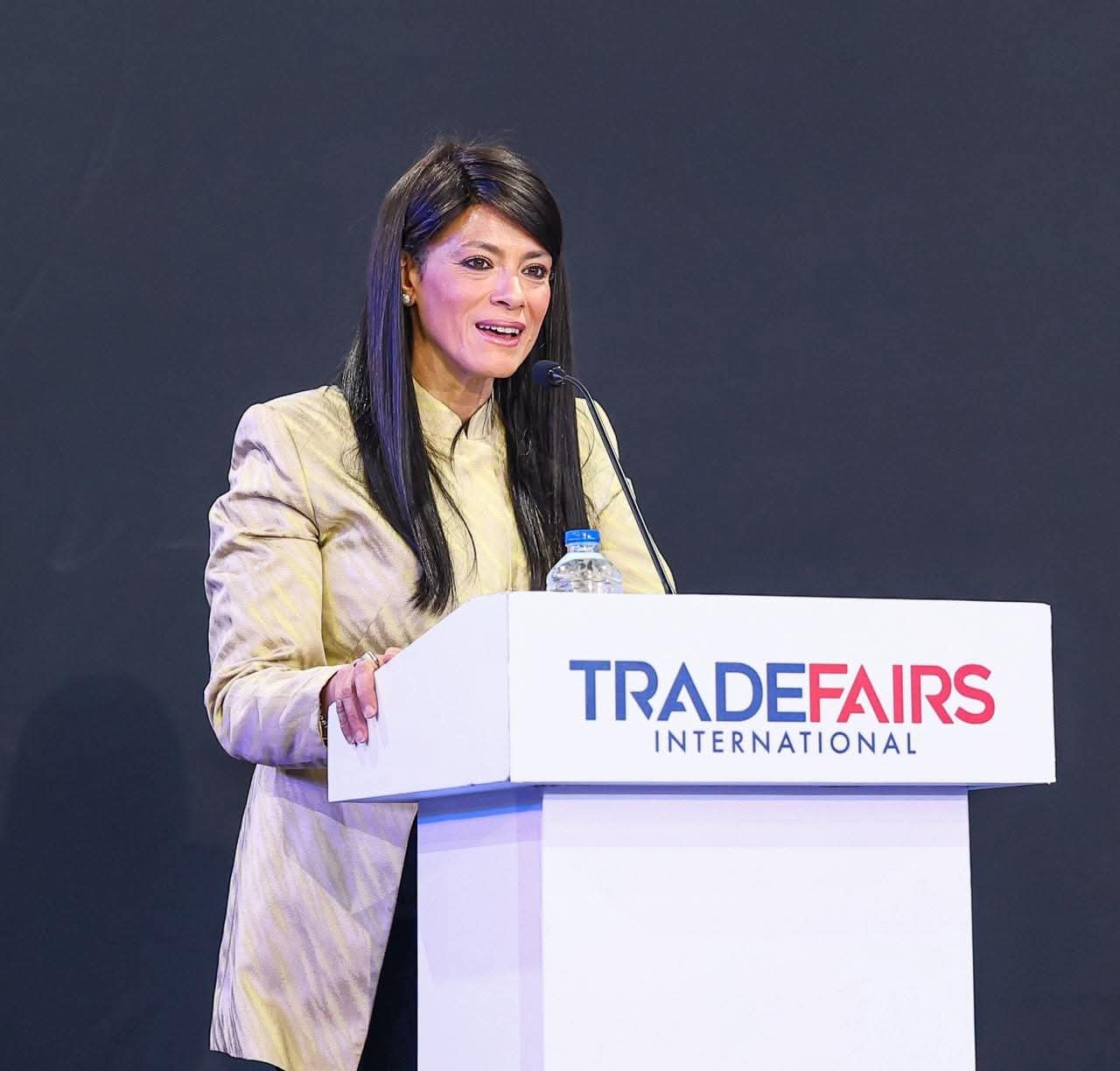

During the second day of the Cairo ICT 2025 Conference and Exhibition, Dr. Rania Al-Mashat, Egypt’s Minister of Planning, Economic Development, and International Cooperation, emphasized that investing in human capital is essential in a world increasingly shaped by artificial intelligence and advanced technology.
Speaking in a high-profile session titled “Investing in Human Capital in a Tech- and AI-Driven World,” Al-Mashat outlined Egypt’s strategic priorities for integrating AI into national development while ensuring that human talent remains at the center of progress.

AI as a Cross-Cutting Engine for Development
Al-Mashat underscored that artificial intelligence has become one of the most powerful drivers of global economic transformation, intersecting with all sectors and contributing substantially to reducing development gaps. However, she stressed that AI’s success ultimately depends on human creativity, skills, and ability to innovate.
“AI expands human capabilities, but its impact hinges on the skills and ingenuity of people who develop and deploy it,” she said.
She added that the relationship between AI and human development is complementary, not competitive—an argument she said is crucial amid global debates over automation and the future of work.
A Human-Centered Digital Transformation Strategy
Highlighting Egypt’s national priorities, Al-Mashat noted that public investments in human development sectors have risen from 17% in 2014/2015 to 28% in 2025/2026, reflecting the state’s commitment to placing citizens at the core of economic planning.
She affirmed that AI is no longer a luxury tool but an essential instrument for:
- Improving public-service delivery
- Enhancing resource efficiency
- Supporting evidence-based policymaking
- Increasing productivity and competitiveness
Egypt’s National AI Strategy, endorsed by President Abdel Fattah El-Sisi, aims to accelerate the transition toward a fully digital and knowledge-driven economy.
A New Model for Economic Growth
The minister presented Egypt’s updated National Economic Development Narrative, a comprehensive policy framework aligning the government’s program with Egypt Vision 2030. This framework prioritizes:
- Information technology
- Manufacturing
- Tourism
- Agriculture
- Energy
These sectors, she said, offer the highest productivity potential and strongest export competitiveness.
Egypt’s Startup Charter and Innovation Priorities
Al-Mashat highlighted the work of Egypt’s Ministerial Committee for Entrepreneurship, which identified 12 priority sectors for innovation, including digital education, health tech, renewable energy, mobility solutions, and tourism technology.
Following consultations with over 250 entrepreneurs, investors, and experts, the committee developed Egypt’s Startup Charter, soon to be announced, featuring more than 80 measures to facilitate:
- Regulatory simplification
- Access to financing
- Global market expansion
- Participation of startups in public-sector projects
AI, the Future of Jobs, and the Data Advantage
Addressing concerns about AI’s impact on the job market, Al-Mashat noted that the issue is not about replacing human workers but creating new career pathways that rely on AI-related skills. She predicted the emergence of high-value jobs that enhance productivity by merging human insight with technological capability.
With a population exceeding 110 million, Egypt possesses an enormous reservoir of big data, she said—an asset that can significantly improve public services when analyzed effectively. Current national initiatives in health, education, laboratory testing, and vocational training generate massive datasets primed for AI applications.
She referenced outcomes from the recent Health, Population and Human Development Conference, which underscored AI’s growing impact on healthcare delivery and citizen services.
AI as a Development Engine for the 21st Century
Al-Mashat reiterated that AI is not merely an emerging technology but a foundational engine of 21st-century development, and called for broader collaboration among government, private sector, and civil society to ensure sustainable growth.
“Human beings will always remain at the heart of development—even as AI evolves at unprecedented speed. Investing in human capital is the highest-return, longest-lasting investment any nation can make.”
She concluded that Egypt has the resources, population base, and government support needed to become a regional leader in AI, technology, and innovation.