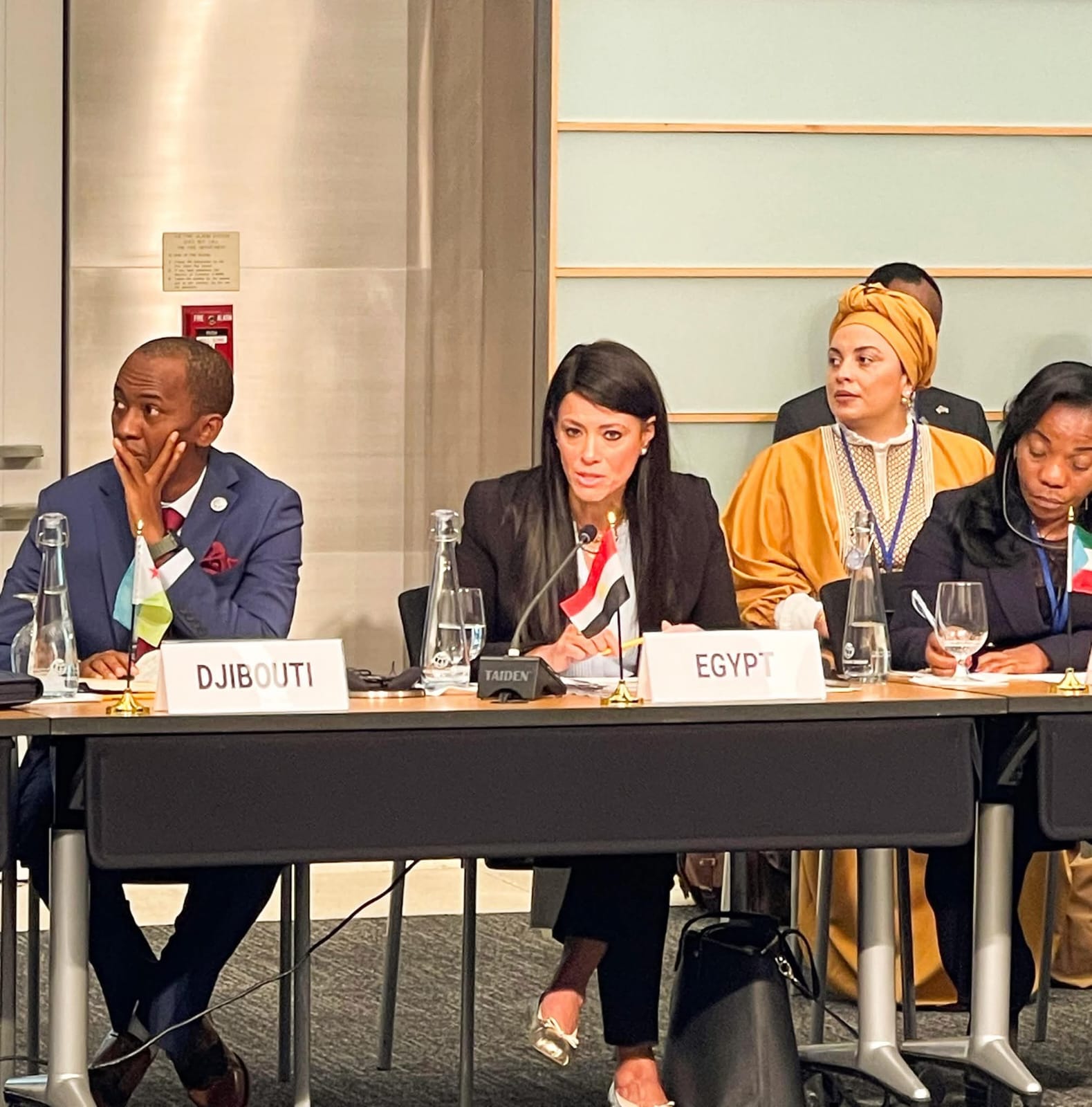

Egypt’s Minister of Planning, Economic Development, and International Cooperation, Dr. Rania Al-Mashat, took part in the African Caucus of World Bank Governors, held as part of the 2025 Annual Meetings of the World Bank and International Monetary Fund. The high-level gathering, attended by World Bank President Ajay Banga, focused on Africa’s push toward economic transformation, healthcare resilience, and pharmaceutical self-sufficiency.
During her remarks, Dr. Al-Mashat praised the World Bank’s AIM2030, Africa’s Integrated Manufacturing for Health) initiative, describing it as a strategic and game-changing effort that could reshape the continent’s health landscape and stimulate long-term growth.

“Africa imports over 90% of its vaccines and medicines, making it highly vulnerable to global supply chain disruptions,” said Al-Mashat. “Localizing pharmaceutical manufacturing is no longer optional—it’s a necessity for our health security and economic sovereignty.”
Africa’s Health Crisis: A Manufacturing Deficit
Despite being home to 1.4 billion people and shouldering 25% of the global disease burden, Africa produces only 3% of its medicines and 0.1% of its vaccines, the minister noted. The COVID-19 pandemic exposed the continent’s overdependence on foreign imports, heightening the urgency for local manufacturing.
Dr. Al-Mashat highlighted the AIM2030 pilot program—currently active in 9 African countries—as a foundational model for building a resilient, self-sustaining pharmaceutical ecosystem. The initiative seeks to:
- Develop regional manufacturing hubs
- Establish integrated supply chains and logistics networks
- Promote technology transfer and skills development
- Create hundreds of thousands of skilled jobs
Bridging the Infrastructure and Investment Gap
Africa faces an estimated $155 billion annual gap in infrastructure needs—spanning electricity, transport, water, and medical facilities—which remains a significant barrier to scaling pharmaceutical production.
While Africa’s pharmaceutical market is valued at $30 billion, the continent attracts less than 5% of global foreign direct investment (FDI) in the sector. Dr. Al-Mashat called for bold, coordinated action, including:
- Investment in cold chain infrastructure and digital tracking systems
- Full production enablement through technology licensing and regulatory harmonization
- Mobilization of innovative financing mechanisms
- Alignment with the African Continental Free Trade Area (AfCFTA) and African Medicines Agency
From Health Security to Economic Empowerment
The minister emphasized that AIM2030 represents more than a health intervention—it is a transformational opportunity to:
- Secure affordable, accessible medicines
- Foster industrial growth and regional integration
- Empower a new generation of African scientists, engineers, and health professionals
“If implemented strategically, AIM2030 can double Africa’s local pharmaceutical production by 2030, and by 2040, meet 60% of the continent’s vaccine demand,” she said. “That’s the vision of the African Union—and it’s within reach.”
World Bank Praises Egypt’s Green Leadership
Also speaking during the session, Anna Bjerde, Vice President of the World Bank, commended Egypt’s leadership in renewable energy and green industrialization. She highlighted Egypt’s progress in scaling wind and solar power, and in localizing clean energy technologies.
Continent Poised for Transformation
Dr. Al-Mashat expressed Egypt’s support for the formal launch of the AIM2030 initiative in early 2026, and urged continued collaboration among African nations, international partners, and development banks to realize the vision of a health-secure, industrially empowered Africa.