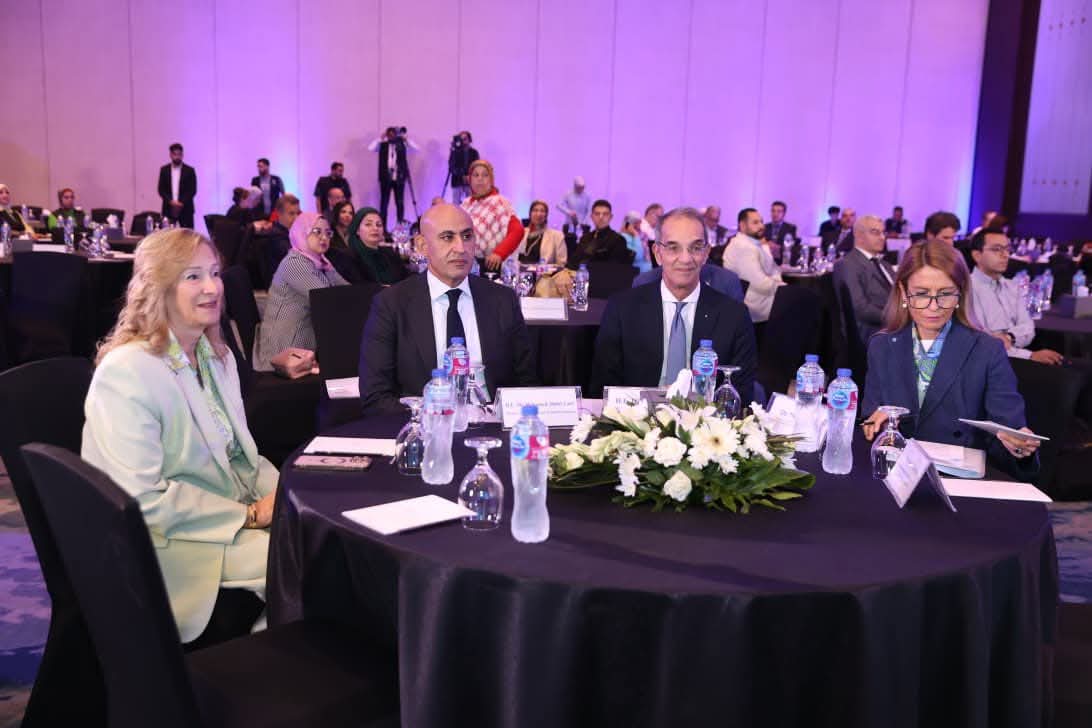

Marking World Teachers’ Day, Egypt took a major step in its digital education strategy by launching the National Artificial Intelligence Competency Framework for Teachers (AI CFT). The initiative, jointly led by the Ministry of Education and Technical Education and the Ministry of Communications and Information Technology (MCIT), was developed in close collaboration with the UNESCO Regional Office in Cairo.
This framework equips educators with the skills, ethical grounding, and technical fluency needed to integrate artificial intelligence meaningfully into classrooms. It reflects Egypt’s broader vision to position teachers not just as adopters of technology but as drivers of innovation in the age of generative AI.

Egypt Puts AI at the Core of Classroom Transformation
At the national workshop in Cairo, Minister of Communications and Information Technology Dr. Amr Talaat emphasized that AI is transforming the traditional education model. No longer just a tool, AI now forms a triad with teachers and students at the heart of the learning process.
Talaat stressed that the framework focuses on responsible, innovative, and ethical uses of AI—not just technical training. He also spotlighted Egypt’s investments in education technology through partnerships with HP, Microsoft, IBM, and Huawei, as well as national platforms like Maharat-Tech, which recently earned the 2025 UNESCO Prize for ICT in Education.
Teachers at the Center of Responsible AI Use
Minister of Education Mohamed Abdel Latif reaffirmed that educators remain the cornerstone of any reform, calling them “engineers of knowledge and builders of capacity.” He underscored the urgency of preparing Egypt’s teachers to lead, not follow, the rapid evolution of AI in education.
Egypt has already introduced AI curricula at middle and secondary levels in the 2025/2026 academic year, paired with a clear progression pathway for digital skills across grade levels. The framework itself is grounded in four pillars: a human-first design, ethical awareness, technical fluency, and the capacity to design AI systems aligned with educational goals.
UNESCO Recognizes Egypt’s Regional Leadership
Dr. Nuria Sanz, Director of the UNESCO Regional Office in Cairo, commended Egypt for putting teachers at the forefront of AI integration. She highlighted Egypt’s mention in the 2024/2025 Global Education Monitoring Report, which cited the country’s progress in teacher training, student attendance, and digital education innovation.
Egypt trained over 90% of primary school teachers in reading assessments, raised school attendance to 87%, and reduced classroom overcrowding. The National Digital Content Excellence Award also saw more than 600 teachers present creative tech-powered learning solutions.
International and Cross-Sector Collaboration
The workshop demonstrated strong multi-stakeholder engagement, with key figures from both ministries and international institutions attending. These included Dr. Hoda Baraka, advisor to the ICT minister; Dr. Ahmed Daher, deputy education minister; and experts from UCL and various regional AI education bodies.
Participants reviewed Egypt’s customized version of UNESCO’s global AI CFT and examined pilot programs like the Technology-Enabled Open School Systems (TEOSS) project, co-developed with Huawei and UNESCO to enhance access to quality education in remote communities.
Driving Innovation with Purpose
Dr. Talaat also spotlighted Digitopia, Egypt’s national innovation competition that engages young people—from grade school to age 35—in solving real-world challenges through tech-driven solutions. He reiterated that while AI is a powerful tool, teachers remain the compass guiding its application in schools.
A Model for Regional Replication
By localizing UNESCO’s AI CFT framework, Egypt is emerging as a regional model for responsible and ethical AI use in education. The initiative aligns with the national AI strategy and reinforces the country’s commitment to Sustainable Development Goal 4 (SDG 4) — ensuring inclusive, equitable, and quality education for all.