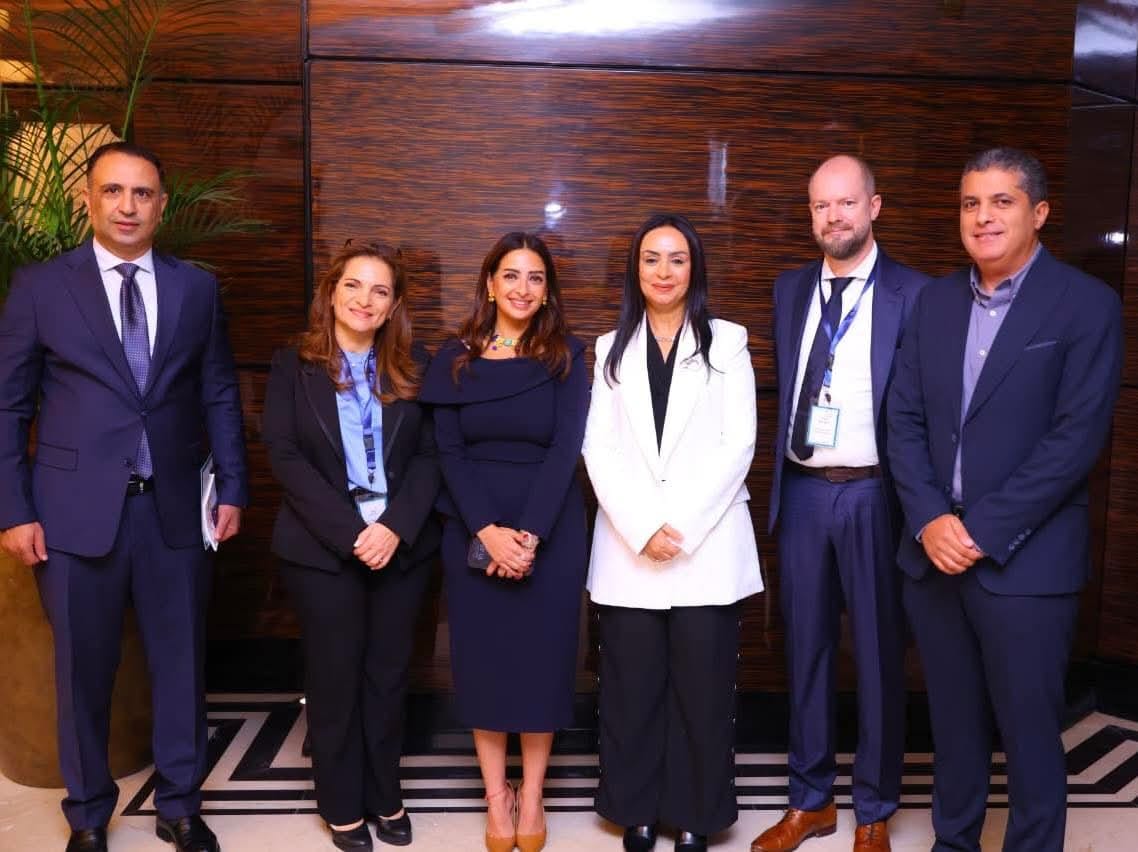

Egypt’s Minister of Social Solidarity, Dr. Maya Morsy, launched an international exchange visit this week to showcase the Bab Amal (Door of Hope) program—one of Egypt’s most ambitious efforts to transform the lives of economically vulnerable families in Upper Egypt. The forum, hosted in collaboration with key development partners, welcomed official delegations from Jordan, Djibouti, and Somalia, alongside leading experts in social protection.
Among the prominent participants were Marco Schafer, Head of Social Protection at the United Nations ESCWA, Laila Hosny, Executive Director of the Sawiris Foundation for Social Development, and Dr. Ahmed El‑Sayed, Executive Director of the Abdul Latif Jameel Poverty Action Lab (J‑PAL MENA). Egyptian senior officials including Dr. Mohamed El‑Aqbi, spokesperson and strategic communication advisor at the Ministry, and Raafat Shafik, head of social protection and director of the Takaful & Karama cash assistance program, also played leading roles in the event.

In her opening remarks, Dr. Morsy emphasized that the Bab Amal program represents a strategic evolution in Egypt’s social protection policies—moving beyond temporary cash assistance toward sustainable economic empowerment. The program targets families already enrolled in the Takaful & Karama scheme, offering them a pathway to independence through micro-enterprise support, financial literacy training, and targeted livelihood interventions. Of the 7.8 million households who have received cash support to date, 4.7 million remain active recipients, while over 3 million families have exited the program after improving their income levels or launching successful small businesses.
She also stressed that this knowledge exchange reflects a wider shift in Egypt’s development model—one centered on collaborative, cross-border learning. Egypt’s partnerships with countries like Jordan, Djibouti, and Somalia reflect a shared regional commitment to fighting poverty, empowering women, and protecting vulnerable groups. While each country follows its own developmental pathway, the common goal of inclusive growth and economic justice brings them together in forums like this.
Dr. Morsy further noted that economic empowerment now stands at the heart of Egypt’s approach to social protection. The Ministry’s efforts are designed to address not only financial needs, but also the broader developmental challenges facing Egypt’s poorest communities. This includes access to universal healthcare, food subsidies, free education support, and services for people with disabilities, as well as integration into national initiatives like Hayah Karima (Decent Life) and “New Beginning for Human Development.” These programs, she said, work in tandem to give families a true foundation for lasting self-sufficiency.
The Minister highlighted two major achievements in 2025 that underscore Egypt’s commitment to institutional reform. First is the enactment of Social Security Law No. 12 of 2025, which legally guarantees families’ rights to receive integrated social protection and economic support, while enhancing transparency and accountability across delivery systems. Second, Dr. Morsy announced that Egypt’s Prime Minister has officially designated the Ministry of Social Solidarity as the lead agency overseeing the National Financial Strategy for Economic Empowerment. This initiative unifies the work of banks, NGOs, and government institutions to offer a comprehensive financial inclusion framework, linking microloans, insurance, investment, and business support services for low-income families and entrepreneurs.
At the heart of Bab Amal is a women-centered vision. The program prioritizes the empowerment of women in rural areas—many of whom are heads of households—by equipping them with tools to generate income, build credit, and take control of their economic future. The combination of localized training, seed capital, and mentorship makes Bab Amal one of the most transformative tools for lifting families out of chronic poverty in Upper Egypt and beyond.
As the week-long exchange continues, Egypt positions itself not only as a beneficiary of global expertise, but as a leader in designing scalable, evidence-based social protection systems that are adaptable across the Global South. The Bab Amal experience demonstrates that with the right investment and political will, it is possible to move families from vulnerability to resilience—one project, and one woman, at a time.