
An Egyptian archaeological mission has unearthed one of the largest New Kingdom fortresses ever discovered in the Sinai Peninsula, a remarkable find that highlights the military sophistication of ancient Egypt.
The newly uncovered stronghold, located at Tell El-Kharouba near Egypt’s northeastern coast, once stood as a key defense post along the ancient Horus Military Road, the vital corridor that connected Pharaonic Egypt to Palestine.

Egypt’s Minister of Tourism and Antiquities, Sherif Fathy, praised the discovery, calling it a powerful testament to Pharaonic Egypt’s defensive planning and a vivid reminder of Sinai’s historic role in safeguarding Egypt’s eastern borders.
“This find brings a forgotten chapter of our military heritage back to life,” said Fathy. “It’s more than an archaeological discovery—it’s a symbol of the ingenuity and resilience of the ancient Egyptians.”
A Fortress Three Times Larger Than Its Predecessor
According to Dr. Mohamed Ismail Khaled, Secretary-General of Egypt’s Supreme Council of Antiquities, the new fortress spans approximately 8,000 square meters, making it three times the size of the fortress previously found on the same site in the 1980s.
Archaeologists uncovered parts of the southern wall, stretching 105 meters long and 2.5 meters wide, with a secondary entrance measuring 2.2 meters. The team also documented 11 defensive towers, as well as portions of the northern and western walls, and the northwest tower.
“Each fortress we uncover deepens our understanding of how ancient Egypt structured its military defenses,” said Dr. Khaled. “This discovery proves the civilization wasn’t only about temples and tombs—it was a powerful state with a capable army and advanced infrastructure.”
The team faced significant challenges due to shifting sand dunes that had obscured parts of the site for centuries.
Architectural Ingenuity Meets Harsh Terrain
The mission, led by Mohamed Abdel-Badie, Head of the Egyptian Antiquities Sector, also uncovered a rare zigzag-shaped wall stretching 75 meters along the western side of the fortress. The wall divides the site from north to south and surrounds a residential zone for soldiers—a defensive design that reflects the adaptability of ancient Egyptian architects in desert environments.
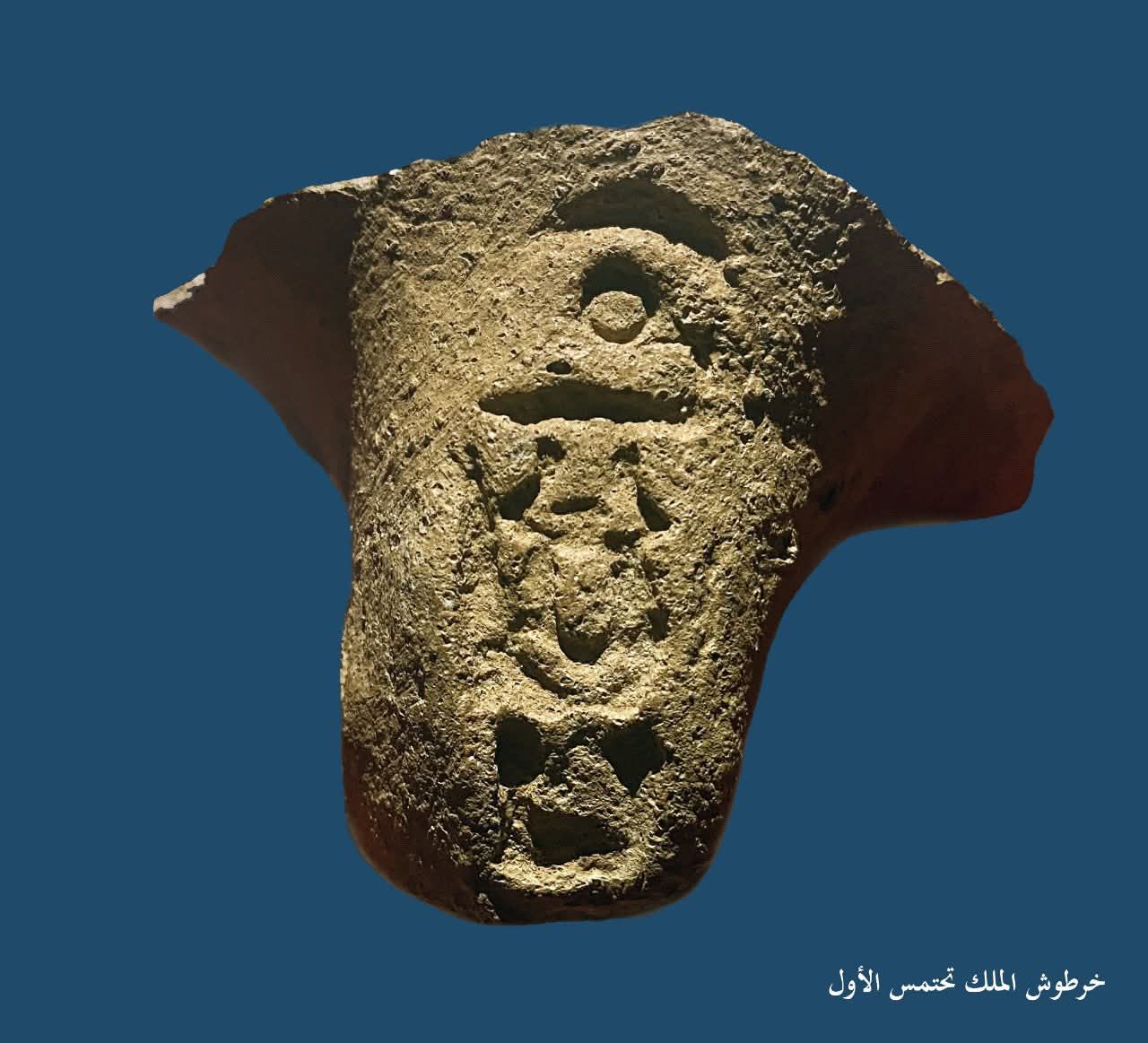
Archaeologists also unearthed a variety of pottery shards, including foundation deposits beneath one of the towers, dating to the early 18th Dynasty. Among the most striking finds: a jar handle stamped with the cartouche of King Thutmose I, suggesting royal oversight of the site’s construction.
Nearby, the team discovered volcanic stones believed to have arrived by sea from Greek islands, along with a large bread oven and fossilized dough, offering rare insights into the daily life of New Kingdom soldiers.
Fortress May Have Had Its Own Military Port
Dr. Hisham Hussein, Director of Northern Egypt’s Antiquities Department, revealed that initial studies show the fortress underwent multiple phases of renovation, including repeated redesigns of its southern gate.
He confirmed that the archaeological team hopes to continue excavations to locate the remainder of the defensive walls, related buildings, and possibly a military port that once served the garrison—likely situated near the nearby Mediterranean coast.
Strengthening the Horus Road Legacy
This latest fortress adds to a growing network of ancient military sites discovered along the Horus Road, including key forts at Tell Heboua, Tell Borg, and Tell el-Obeid, all dating to Egypt’s New Kingdom (c. 1550–1070 BCE).
Together, these sites form a comprehensive military corridor that once protected Egypt’s vulnerable northeastern frontier and controlled trade and troop movements between the Nile Valley and the Levant.
Sinai: A Living Archive of Egypt’s Military Past
Fathy concluded that this discovery enhances Sinai’s status as a region of unique historical and strategic significance, home to archaeological evidence that spans thousands of years of Egyptian civilization.
“Sinai is not only a gateway to Egypt but also a witness to its strength, resilience, and mastery of defense,” he said.
The find is expected to boost both archaeological research and cultural tourism in the region, offering a new lens through which visitors and scholars can explore Egypt’s enduring legacy.